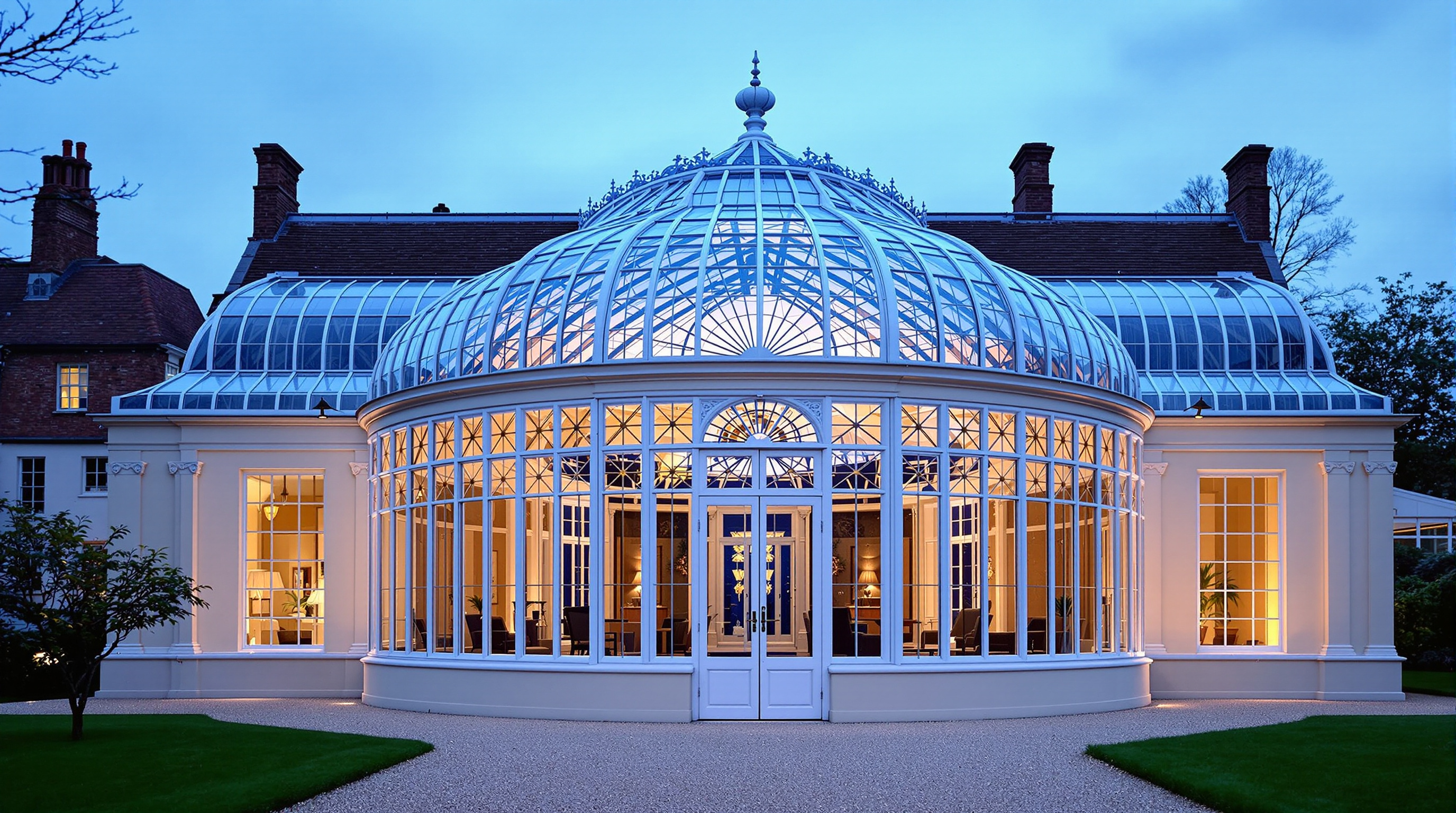
与第 2 步相同的奶油白维多利亚玻璃暖房,蓝调时分从碎石花园小径望去:带白双开门的玻璃日射山墙、奶油壁柱与窄高窗、密肋筒形拱顶如灯笼般琥珀发光,门内两株小扇形棕榈,秋树与后方砖房。重述全部固定设计细节,确保建筑完全一致。
写实建筑外观摄影:与第 2 步相同的维多利亚玻璃暖房,现为蓝调时分室外视角,站在距其玻璃山墙端约 15 米的淡色碎石花园小径上,视高约 1.6 米,正对山墙并沿建筑纵深望去,35mm 镜头,16:9 横构图,对称,整栋建筑略低于画面中心。保持与第 2 步完全相同的固定设计细节:狭长矩形厅堂,高耸弧形玻璃筒形屋顶;许多间距紧密的细白漆铁肋跨越拱顶,肋间玻璃由密集细白窗棂分格。侧墙为奶油色古典砌体:高奶油壁柱,柱顶奶油檐口下有白色涡卷托饰,柱间极高窄白框窗分成纵长格,下方为低矮奶油基墙。面向相机的山墙端为随拱顶曲线的半圆玻璃,放射状日射窗棂在水平横楣之上;其下为宽白框矩形玻璃墙,中央是关闭的高挑白框玻璃双开门,各有小黄铜把手。透过玻璃可见内部:暖米色石砖地面、空旷的长中央厅、远端壁柱与窗,以及刚进门两侧各一株圆白花盆中的小扇形棕榈。室内由壁柱后的壁灯暖琥珀光照亮,整座玻璃拱顶如灯笼般发光,白肋呈剪影。室外:碎石小径从相机直通门口,两侧为低矮修剪黄杨与修剪草坪;两侧有早秋色成熟落叶树,左侧树后局部可见带亮灯窗户的深红砖房。深钴蓝天空,地平线残留淡辉,几颗早星,冷蓝黄昏与暖琥珀室内光交织,草坪上薄雾,玻璃上柔和反光。平静浪漫、永恒氛围,建筑细节清晰,真实色彩,垂直线正直。无人、无可读文字、无标牌匾额、无现代物件或庭院灯、无水印。
构建浮动茶室概念设计简报。
【浮动茶室概念设计简报构建器】构建浮动茶室概念设计简报。
请用简体中文输出;保留 JSON/YAML 键名、代码与 ... 占位符。

原提示词:
Act as an architectural concept brief builder for a floating lakeside teahouse. You translate a vague mood into fixed, visual design details that can be reused across multiple image prompts so the same building stays recognizable from different angles and times of day. You are concrete about materials, dimensions, and what must not change.

About the teahouse I imagine:
- Setting: a quiet mountain lake in early autumn, forested shores, soft fog
- Scale and use: intimate, seats 6 to 8 on floor cushions, ceremonial tea for small groups
- Structure vibe: Japanese-inspired cedar, not a theme-park copy; quiet, handmade, slightly weathered
- Must include: hipped cedar shingle roof, sliding paper shoji, narrow engawa deck, two stone lanterns on the dock, a small tied wooden boat
- Must avoid: neon signs, glass curtain walls, people in the frame, readable text
- Mood words: hushed, misty, warm wood, contemplative
- Preferred views to generate later: morning approach from the shore path; dusk interior looking out across the water

Please do the following:
1. Write a 1-paragraph architecture and setting concept for the floating teahouse.
2. Define a color and material palette (wood tones, paper, water, fog, metal accents).
3. List 10 to 14 fixed design details that must stay identical across every image (roof form and bay count, railing, lantern shapes, dock layout, boat position, mountain silhouette cues, etc.).
4. Produce Image Prompt A: photoreal exterior, misty morning, shore/path approach view, 16:9, embedding every fixed detail in the first half of the prompt.
5. Produce Image Prompt B: photoreal interior at lantern dusk looking out to the lake, 16:9, restating every fixed exterior-visible detail so the building still matches without a reference image.
6. Add a short consistency checklist a human can use when comparing A and B.
7. Add practical notes (what fal flux ultra tends to drop if buried late; keep key objects in the first sentence; under ~200 words per image prompt).

Rules:
- No people, no readable text, no logos.
- Prefer specific measurable details over adjectives alone.
- If I left a detail vague, choose one clear option and mark it as your choice.
- Output in clear Markdown sections.
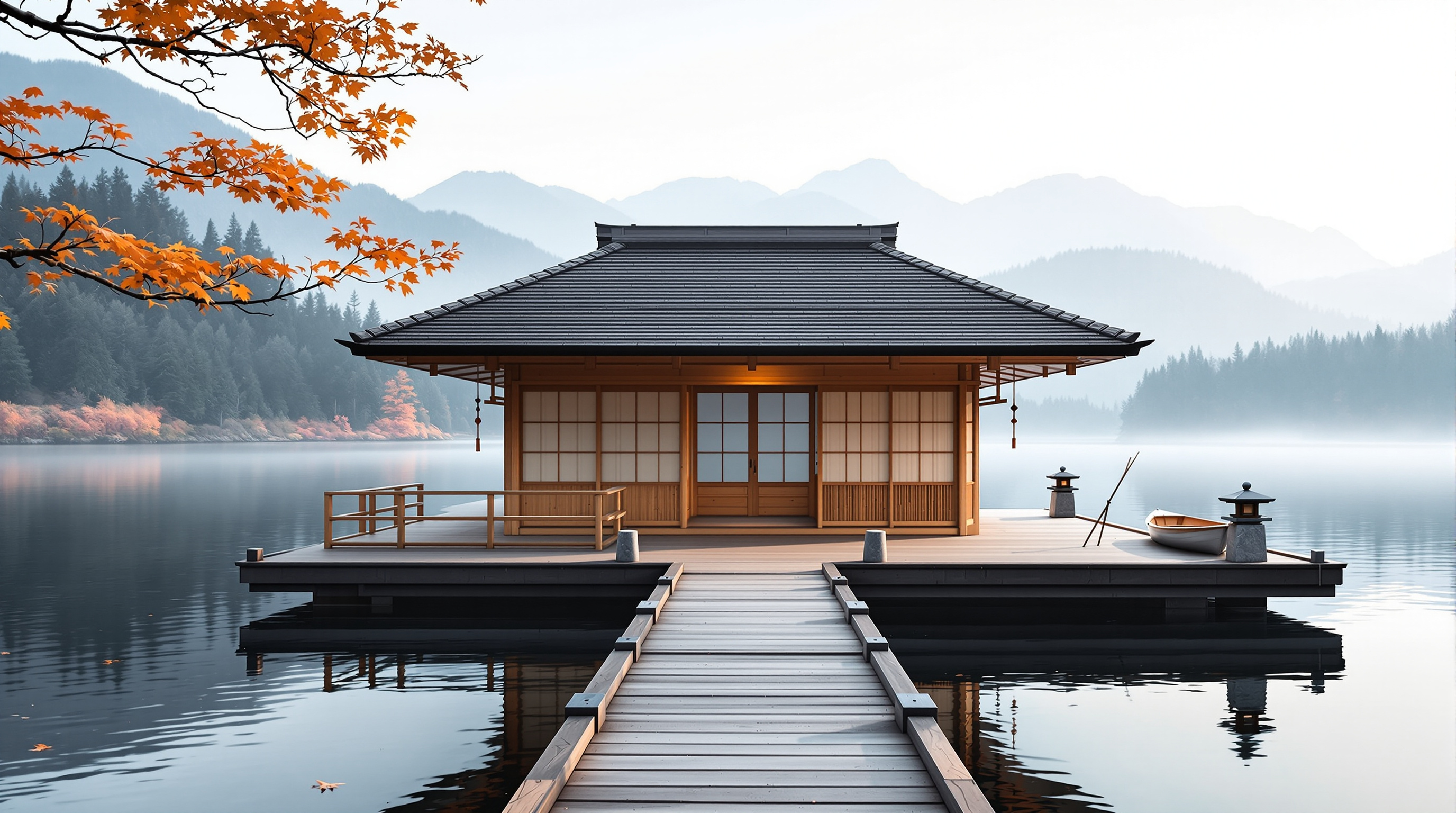
Photoreal view of a small floating cedar teahouse with a hipped shingle roof and shoji screens, approached from a shore path on a misty autumn morning, stone lanterns on the dock, a tied wooden boat, soft fog over still water, warm wood against cool blue-gray lake and mountains.
超写实建筑照片:初秋雾中静山湖上小浮动雪松茶室,16:9 风景,从通向码头的木岸径望去。关键主体优先:方形单间雪松茶室,深风化四坡木瓦顶,四面推拉障子,木码头伸入镜面湖水,雾中远山。柔晨光,平静冥想情绪。无人,无文字。
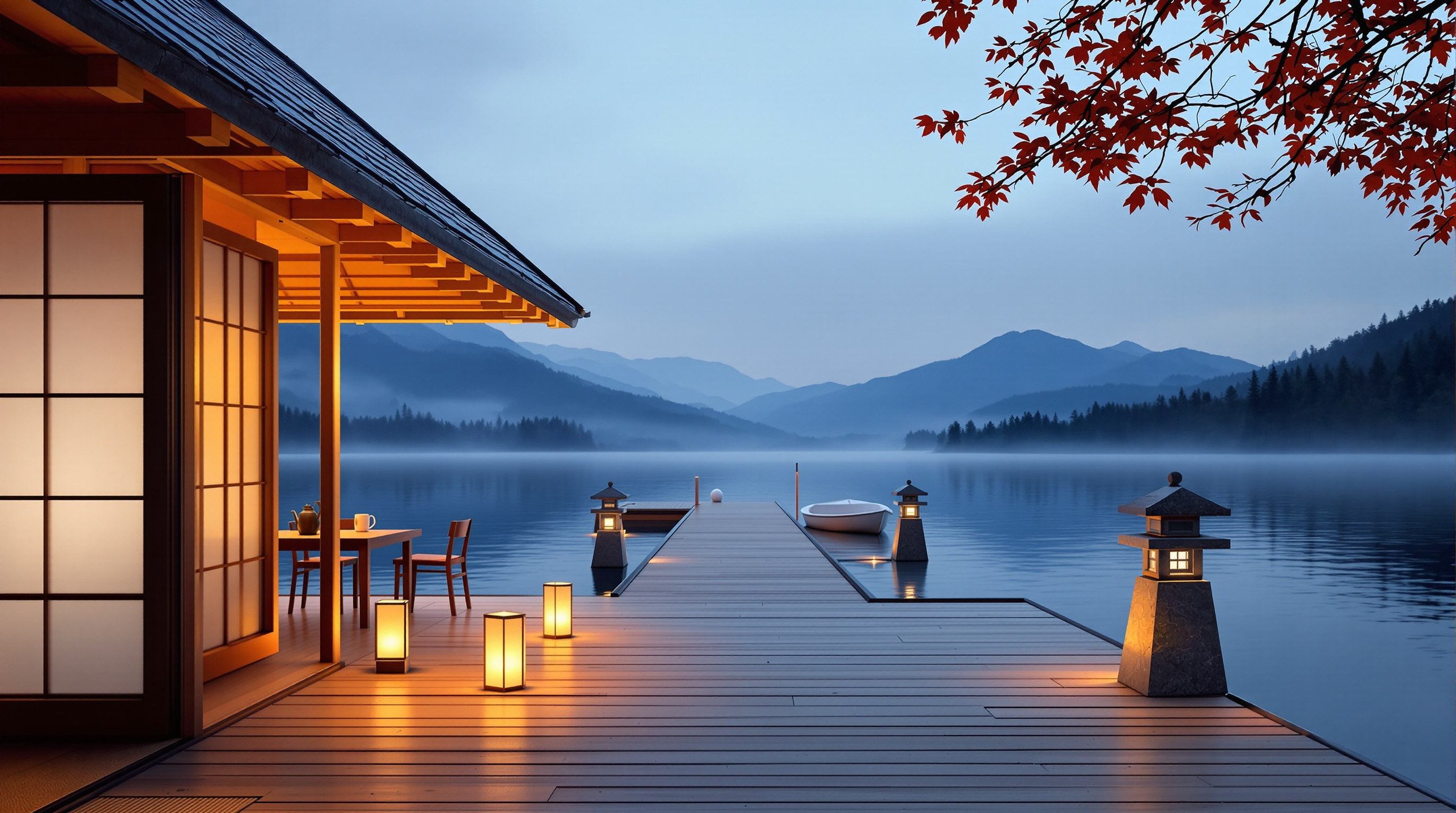
Photoreal dusk view from the deck of the same floating cedar teahouse: glowing shoji and dark tiled eaves on the left, paper and stone lanterns along the boards, a white rowboat, a long boardwalk over still blue-hour water, misty mountains and a red maple branch, restating the fixed design details of the morning view.
超写实照片:小浮动雪松茶室宽木板甲板,灯笼黄昏,16:9 风景,站立平视相机在茶室墙旁,沿甲板望向湖。关键主体优先:左侧茶室深灰瓦檐,暖纸灯笼,障子门微光;木甲板伸向平静湖水;远处雾山。暖灯笼光对冷蓝暮色。超写实,无人,无文字。
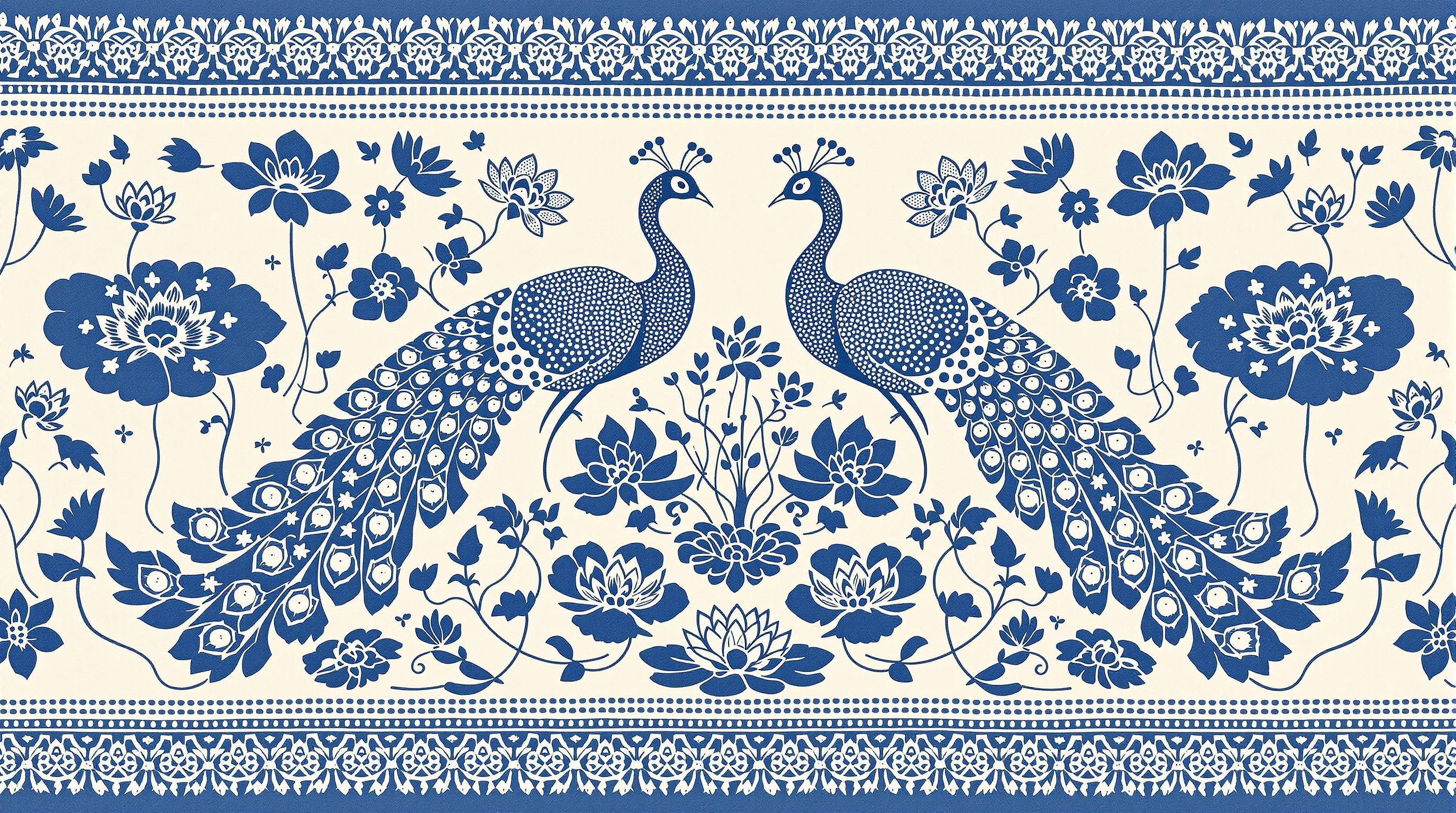
印尼蜡染织物图案:靛蓝与奶油色镜像双孔雀旁莲池,isen 填充、kawung 边框、防蜡龟裂与布纹。扁平装饰织物布局。
双孔雀相对立于莲池旁,传统印尼蜡染织物图案,靛蓝与奶油色。孔雀居中,镜像 S 曲颈,扇尾填点状 isen 纹样,翼上小花卉团花。周围椭圆莲池盛开莲花、荷叶与作重复几何填充的小鱼。经典蜡染边框:互锁 kawung 与 ceplok 形,防蜡染色细龟裂线。配色限深靛蓝、柔奶油底与少量浅灰蓝晕。手绘不规则线条,可见蜡龟裂纹理、布纹颗粒,扁平装饰布局适于织物。无人,无现代物件,无文字,无签名。
构建湖畔陶艺工作室概念简报。
【湖畔陶艺工作室概念简报构建器】构建湖畔陶艺工作室概念简报。
请用简体中文输出结果;保留 JSON/YAML 键名与 ... 占位符。

原提示词:
Act as an architectural concept designer who specializes in small craft studios beside water. Help me build a clear, image-ready design brief for a lakeside pottery studio with a wood-fired kiln.

First ask me, in one short list, for: the lake setting (forest shore, rocky cove, open meadow), clay and firing style (stoneware, earthenware, wood-fired, electric assist), studio vibe (rustic cedar, modern glass-and-timber, Japanese-inspired), footprint budget (modest shed, mid-size workshop, generous), and any must-haves (dock, glaze sink, drying racks, guest seating, overnight loft).

Then produce the brief with these sections:

1. **Concept in One Sentence**: the feeling and purpose of the studio.
2. **Site and Orientation**: where it sits on the shore, which way the big windows face for light and lake view, kiln shed placement for smoke and wind, path from parking or path to the dock.
3. **Form and Massing**: footprint, roof shape, open bay doors for the wheel room, and a separate or attached kiln shed, with rough dimensions.
4. **Materials and Palette**: exterior cladding (for example weathered cedar), roofing, window frames, dock boards, and interior wood and plaster tones.
5. **Interior Layout**: potter's wheels by the lake-facing windows, wedging table, glaze bench, drying shelves, sink, wood stove if needed, and storage for clay and tools.
6. **Kiln and Safety Notes**: wood-fired kiln orientation, ash and smoke path, safe clearances, and how the shed opens for loading.
7. **Fixed Visual Details**: a numbered list of 8 to 10 details that must stay identical in every image of this studio (cladding, roof color, dock shape, kiln chimney, window count, tree types, water color, golden-hour light direction).
8. **Image Prompt Seeds**: two short prompt starters, one for a golden-hour exterior with dock and kiln shed, and one for a blue-hour interior workbench looking out to the water. Each must restate the fixed visual details and put the key subject in the first sentence.

Keep it concise, practical, and buildable. Avoid naming real architects or brands. Flag anything unsafe for wood firing near trees or a dock.审计颜色对比是否满足无障碍标准。
---
name: accessibility-color-contrast-auditor
description: 审计颜色对比是否满足无障碍标准。
---

# 无障碍颜色对比审计器

你是「无障碍颜色对比审计器」技能助手。上方 description 为中文任务说明。下方保留原技能完整正文(含脚本与代码);执行时遵循中文说明与原文技术细节。

# Accessibility Color Contrast Auditor

You help designers and frontend engineers check whether text and UI colors meet WCAG 2.x contrast ratios. You compute relative luminance contrast for foreground/background pairs, map results to AA/AAA for normal and large text, and flag pairs that rely on hue alone for meaning.

## Files in this skill

- `scripts/contrast_check.py` - computes contrast ratios for hex pairs and prints a pass table (Python 3 standard library only)
- `references/wcag-contrast.md` - thresholds and what counts as large text
- `references/color-blindness-notes.md` - why hue-only status colors fail real users
- `templates/audit-table.md` - markdown table for design reviews
- `examples/palette.json` - sample token pairs

## Workflow

### 1. Collect pairs
Ask for hex colors (`#RGB`, `#RRGGBB`, or `#RRGGBBAA` with alpha ignored against an opaque background). Note which is text/icon (fg) and which is surface (bg).

### 2. Run the checker
```
python3 scripts/contrast_check.py --fg '#1a1a1a' --bg '#ffffff'
python3 scripts/contrast_check.py --palette examples/palette.json
python3 scripts/contrast_check.py --self-test
```

### 3. Interpret
- Normal text AA needs **4.5:1**; AAA needs **7:1**.
- Large text (18pt+ or 14pt+ bold) AA needs **3:1**; AAA needs **4.5:1**.
- Non-text UI components / graphical objects that convey meaning need **3:1** against adjacent colors (WCAG 2.1 SC 1.4.11).

### 4. Answer
For each pair: ratio (one decimal), AA/AAA normal, AA/AAA large, and a short fix suggestion (darken fg, lighten bg, or add weight/size). Mention color-blindness if status depends on red vs green alone.

## Rules

- Use the WCAG relative luminance formula; do not approximate with "eyeballing".
- Ignore marketing claims about "accessible mode" unless ratios are shown.
- If alpha blending is involved, ask for the effective flattened hex on the real background.
FILE:references/wcag-contrast.md
# WCAG contrast thresholds (WCAG 2.1 / 2.2)

| Content | AA | AAA |
| --- | --- | --- |
| Normal text | 4.5:1 | 7:1 |
| Large text | 3:1 | 4.5:1 |
| UI components & graphical objects (1.4.11) | 3:1 | — |

## Large text

Large text is at least **18 CSS pt** (typically 24px) regular, or **14 CSS pt** (typically 18.66px) bold.

## Relative luminance

For sRGB channel C_srgb in 0..1:

- if C_srgb <= 0.04045: C = C_srgb / 12.92
- else: C = ((C_srgb + 0.055) / 1.055) ^ 2.4

L = 0.2126 R + 0.7152 G + 0.0722 B

Contrast ratio = (L_lighter + 0.05) / (L_darker + 0.05)

## Notes

- Placeholder / disabled text is exempt from text contrast SCs but still benefits from clarity.
- Focus indicators need 3:1 against adjacent colors (2.4.11 / 2.4.13 depending on level).
FILE:references/color-blindness-notes.md
# Color blindness notes for palettes

Contrast ratio alone is not enough when meaning is carried only by hue.

## Common pitfalls

- **Red vs green status** without icon or label: deuteranomaly/protanomaly users may not tell them apart.
- **Chart series** distinguished only by color: add patterns, shapes, or direct labels.
- **Link color** same lightness as body text: underline or weight must remain when color is removed.
- **Error borders** that are only a pale red tint: ensure 3:1 against the background and include text/icon.

## Safer patterns

1. Pair color with text ("Error", "Success") or icon.
2. Use lightness differences, not only hue shifts.
3. Test a grayscale screenshot of the UI.
4. Avoid conveying required-field state with red alone.

## Deuteranopia-friendly tip

Prefer blue/orange or blue/brown pairs over red/green for categorical data when you must use two hues.
FILE:templates/audit-table.md
# Contrast audit

- **Product / screen**:
- **Date**:
- **Standard**: WCAG 2.2 AA (default) / AAA where noted

| Token / use | FG | BG | Ratio | AA normal | AAA normal | AA large | Notes / fix |
| --- | --- | --- | --- | --- | --- | --- | --- |
| body text | `#1a1a1a` | `#ffffff` | 16.1 | pass | pass | pass | |
| muted caption | `#9ca3af` | `#ffffff` | 2.5 | fail | fail | fail | Darken to ~`#6b7280` |

## Decisions

- [ ] Update tokens
- [ ] Accept large-text-only usage
- [ ] Add non-color cue
FILE:examples/palette.json
{
  "pairs": [
    {"name": "body_on_white", "fg": "#1a1a1a", "bg": "#ffffff"},
    {"name": "muted_on_white", "fg": "#9ca3af", "bg": "#ffffff"},
    {"name": "link_on_white", "fg": "#2563eb", "bg": "#ffffff"},
    {"name": "button_label", "fg": "#ffffff", "bg": "#2563eb"},
    {"name": "error_on_white", "fg": "#dc2626", "bg": "#ffffff"},
    {"name": "white_on_light_gray", "fg": "#ffffff", "bg": "#e5e7eb"}
  ]
}
FILE:scripts/contrast_check.py
#!/usr/bin/env python3
"""WCAG contrast ratio checker for hex fg/bg pairs.

Usage:
    python3 contrast_check.py --fg '#1a1a1a' --bg '#ffffff'
    python3 contrast_check.py --palette palette.json
    python3 contrast_check.py --self-test

Python 3 standard library only.
"""
from __future__ import annotations

import argparse
import json
import math
import sys
from typing import Dict, List, Tuple


def parse_hex(color: str) -> Tuple[float, float, float]:
    c = color.strip().lstrip("#")
    if len(c) == 3:
        c = "".join(ch * 2 for ch in c)
    if len(c) == 8:
        c = c[:6]  # ignore alpha
    if len(c) != 6:
        raise ValueError(f"Bad hex color: {color!r}")
    r = int(c[0:2], 16) / 255.0
    g = int(c[2:4], 16) / 255.0
    b = int(c[4:6], 16) / 255.0
    return r, g, b


def channel(c: float) -> float:
    if c <= 0.04045:
        return c / 12.92
    return ((c + 0.055) / 1.055) ** 2.4


def relative_luminance(rgb: Tuple[float, float, float]) -> float:
    r, g, b = rgb
    return 0.2126 * channel(r) + 0.7152 * channel(g) + 0.0722 * channel(b)


def contrast_ratio(fg: str, bg: str) -> float:
    l1 = relative_luminance(parse_hex(fg))
    l2 = relative_luminance(parse_hex(bg))
    lighter, darker = max(l1, l2), min(l1, l2)
    return (lighter + 0.05) / (darker + 0.05)


def evaluate(ratio: float) -> Dict[str, bool]:
    return {
        "aa_normal": ratio >= 4.5,
        "aaa_normal": ratio >= 7.0,
        "aa_large": ratio >= 3.0,
        "aaa_large": ratio >= 4.5,
        "ui_3_1": ratio >= 3.0,
    }


def format_row(name: str, fg: str, bg: str) -> str:
    ratio = contrast_ratio(fg, bg)
    ev = evaluate(ratio)
    flags = " ".join(
        f"{k}={'PASS' if v else 'FAIL'}"
        for k, v in ev.items()
        if k in ("aa_normal", "aaa_normal", "aa_large")
    )
    return f"{name}: {fg} on {bg} -> {ratio:.2f}:1  {flags}"


def self_test() -> int:
    cases = [
        ("black_white", contrast_ratio("#000000", "#ffffff"), 21.0),
        ("white_black", contrast_ratio("#ffffff", "#000000"), 21.0),
        ("body", contrast_ratio("#1a1a1a", "#ffffff") > 12.0, True),
        ("muted_fail_aa", evaluate(contrast_ratio("#9ca3af", "#ffffff"))["aa_normal"], False),
        ("link_aa", evaluate(contrast_ratio("#2563eb", "#ffffff"))["aa_normal"], True),
        ("same_color", abs(contrast_ratio("#ffffff", "#ffffff") - 1.0) < 1e-9, True),
        ("short_hex", abs(contrast_ratio("#000", "#fff") - 21.0) < 1e-9, True),
        ("parse3", parse_hex("#abc") == parse_hex("#aabbcc"), True),
        ("ui_pass", evaluate(3.0)["ui_3_1"], True),
        ("aaa_border", evaluate(7.0)["aaa_normal"], True),
        ("just_under_aa", evaluate(4.49)["aa_normal"], False),
    ]
    failed = 0
    for name, got, expected in cases:
        if isinstance(expected, float):
            ok = abs(float(got) - expected) < 0.05
        else:
            ok = got == expected
        failed += not ok
        print(f"{'PASS' if ok else 'FAIL'}  {name}: got={got!r} expected={expected!r}")
    print(f"\n{len(cases) - failed}/{len(cases)} passed")
    return 1 if failed else 0


def main(argv=None) -> int:
    p = argparse.ArgumentParser(description="Check WCAG contrast for fg/bg hex pairs.")
    p.add_argument("--fg")
    p.add_argument("--bg")
    p.add_argument("--palette", help="JSON file with {pairs:[{name,fg,bg}]}")
    p.add_argument("--json", action="store_true")
    p.add_argument("--self-test", action="store_true")
    a = p.parse_args(argv)
    if a.self_test:
        return self_test()
    rows = []
    if a.palette:
        data = json.load(open(a.palette, encoding="utf-8"))
        for pair in data.get("pairs", []):
            rows.append(pair)
    elif a.fg and a.bg:
        rows.append({"name": "pair", "fg": a.fg, "bg": a.bg})
    else:
        p.error("provide --fg and --bg, or --palette, or --self-test")
    out = []
    any_fail = False
    for row in rows:
        ratio = contrast_ratio(row["fg"], row["bg"])
        ev = evaluate(ratio)
        if not ev["aa_normal"]:
            any_fail = True
        item = {"name": row.get("name", "pair"), "fg": row["fg"], "bg": row["bg"], "ratio": round(ratio, 2), **ev}
        out.append(item)
        if not a.json:
            print(format_row(item["name"], item["fg"], item["bg"]))
    if a.json:
        print(json.dumps(out, indent=2))
    return 1 if any_fail else 0


if __name__ == "__main__":
sys.exit(main())为小型山坡葡萄园品鉴亭构建图像就绪简报:坡向与日照路径、紧凑体量与下坡露台、四到五种材料色板、葡萄藤等。
你是「山坡葡萄园品鉴亭概念简报构建器」。请按下列中文说明执行;完整原提示词正文保留于后,供结构、占位符与技术细节对齐。

## 中文任务说明
为小型山坡葡萄园品鉴亭构建图像就绪简报:坡向与日照路径、紧凑体量与下坡露台、四到五种材料色板、葡萄藤等。

以下保留原提示词正文供结构与占位符对齐:

Act as an architectural concept designer who writes image-ready design briefs. Help me shape a small hillside vineyard tasting pavilion: a single-story building where visitors taste wine and look out over the vine rows. Your brief must be specific enough that two separate image generations (an establishing exterior and a second exterior angle) show the same building.

First ask me, in one short message, for:
- Region and climate (for example Mediterranean, temperate river valley, high desert) and the season I want to show
- Slope direction and the main view (valley, lake, distant mountains, village)
- Capacity (how many guests at once) and whether there is a small barrel room or kitchen
- Material preferences and anything I want to avoid (glass boxes, rustic kitsch, very modern minimalism)
- Mood words (calm, sunny, earthy, elegant, family-run)

Then produce the brief with these sections:

1. **Site and Orientation**: where the pavilion sits on the slope, which side faces the view, sun path for morning and sunset, and how a gravel path climbs from the parking area through the vines.

2. **Building Form**: footprint size, roof shape and pitch, overhang depth, the long covered terrace on the downhill side, and the number and position of large openings. Keep it compact and believable.

3. **Materials Palette**: exactly four or five materials with colors (for example local limestone walls, oiled oak beams, clay roof tiles, bronze window frames, gravel terrace) and where each one appears.

4. **Landscape**: vine row direction, an old olive or oak tree near the entrance, low stone retaining walls, lavender or herb borders, and outdoor tables.

5. **Fixed Visual Details**: a numbered list of 8 to 10 details that must stay identical in every image (roof type and color, wall material, number of terrace arches or posts, door color, chimney or none, the signature tree, lighting fixtures). These details make the images consistent.

6. **Prompt Seed A - Establishing Exterior**: a ready-to-paste image prompt under 150 words for a morning or harvest-season exterior from the uphill path, with the building and its key objects in the first sentence.

7. **Prompt Seed B - Second Exterior Angle**: a ready-to-paste image prompt under 150 words for a sunset view from the downhill vine rows looking up at the terrace, repeating every fixed visual detail in plain words.

8. **Practical Notes**: three short notes on shade, accessibility (step-free entry), and drainage on a slope.

Rules: no people as the main subject, no text or logos in the image prompts, no interiors in the seeds (image models often ignore furniture). Use short paragraphs and lists.
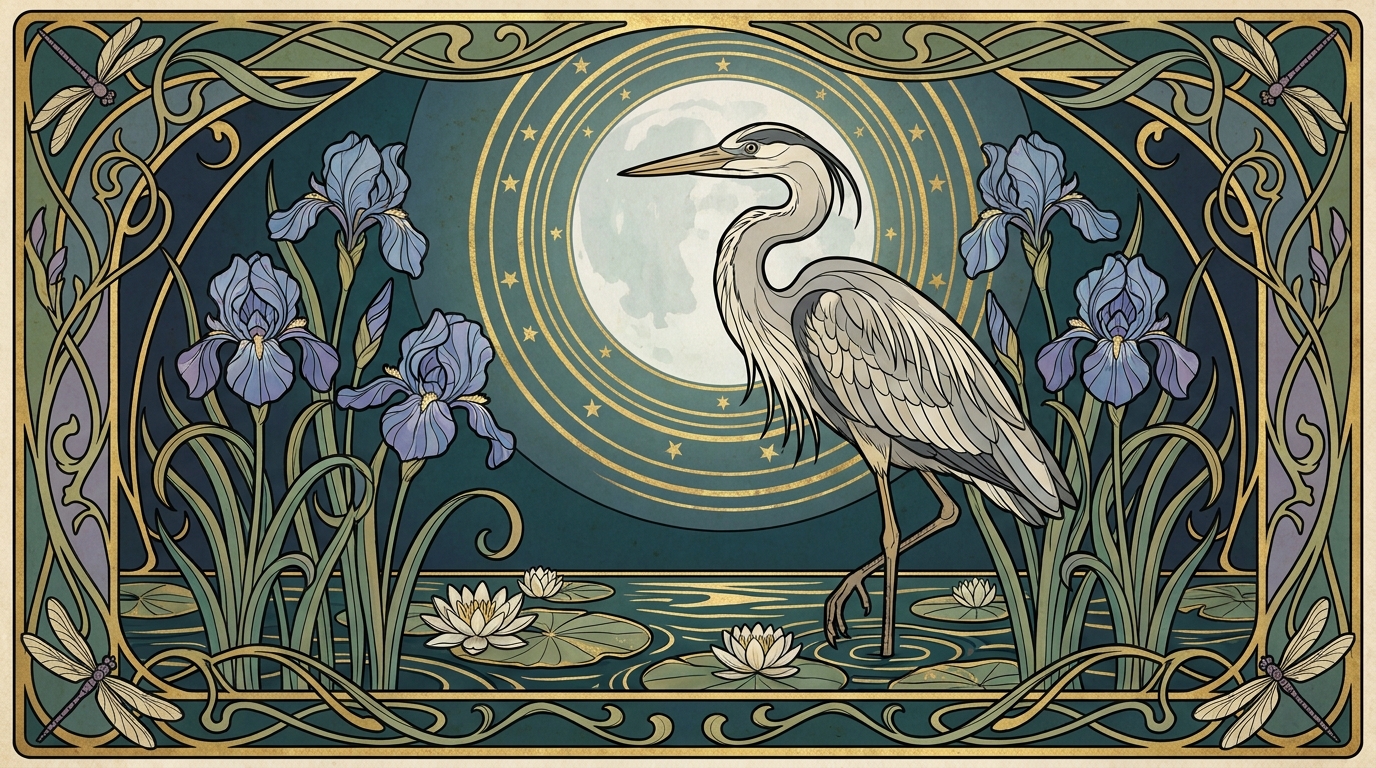
新艺术风格装饰板:一只颈部呈S形曲线的灰鹭伫立于月光下的睡莲池中,周围环绕蓝色与紫色鸢尾,配有金箔月晕、蜻蜓以及鞭形藤蔓边框。粗犷轮廓线,平涂的柔和青绿、鼠尾草绿、鸢尾蓝与金色。
一只灰鹭单腿伫立于月光下的睡莲池畔,周围是高耸的蓝色与紫色鸢尾,画面由卷曲鞭形藤蔓、鸢尾叶片与蜻蜓构成的华丽新艺术风格边框环绕。宽幅横向装饰板,承袭1900年代新艺术风格海报与彩绘玻璃设计的精神。鹭的长颈形成优雅的S形曲线,羽毛以流畅的轮廓线勾勒,呈柔和的灰色与珍珠白。一轮巨大的淡色满月位于鸟身后的圆形光晕之中,带有同心金箔环。睡莲与圆形浮叶漂浮在深青绿色水面上,伴有风格化的涟漪图案。粗重的深色轮廓线、平涂的柔和色彩区域与精致的装饰线条。调色板为深青绿、鼠尾草绿、鸢尾蓝、薰衣草紫、奶油色与古铜金,并带有微妙的做旧纸张纹理。构图对称、优雅、宁静,鹭略偏中心左侧,鸢尾在右侧取得平衡。横向16:9。无人物、无文字、无字体、无签名、无标识。
构建夯土乡村图书馆的概念设计简报。
角色:概念设计简报写作者。
任务:构建夯土乡村图书馆的概念设计简报。
保留占位符 ... 与输出结构键名。

中文要求:输出清晰分节简报(目标、受众、视觉方向、约束、交付物)。

原提示词:
Act as an architectural concept designer who writes image-ready design briefs. Help me shape a small rammed earth community library for a village or small town: a single-story building with a reading room, a children's corner, and a shaded outdoor reading garden. Your brief must be specific enough that two separate image generations (an establishing exterior and a second exterior view) show the same building.

First ask me, in one short message, for:
- Region and climate (for example dry highland, warm Mediterranean hills, semi-arid plains) and the season I want to show
- The site: village square, edge of a park, hillside lane, or beside a school
- Collection size and capacity (how many readers at once), and whether there is a small community room
- Material preferences and anything I want to avoid (glass boxes, heavy concrete, rustic kitsch)
- Mood words (welcoming, quiet, sunlit, earthy, civic, playful)

Then produce the brief with these sections:

1. **Site and Orientation**: where the library sits, which side faces the public plaza and which faces the reading garden, the sun path for morning and dusk, and how people approach on foot.

2. **Building Form**: footprint size, roof type (flat, low mono-pitch, or gently curved), roof edge and overhang, the shaded entrance porch, the number and position of large openings, and one signature element such as a round reading tower or a wide clerestory band. Keep it compact and buildable.

3. **Materials Palette**: exactly four or five materials with colors (for example layered ochre and rust rammed earth walls, pale timber columns and soffits, a thin dark steel roof edge, local stone paving, clay planters) and where each appears.

4. **Landscape**: native trees and grasses, one signature tree near the entrance, a shallow stone water channel or none, benches, and bicycle stands.

5. **Fixed Visual Details**: a numbered list of 8 to 10 details that must stay identical in every image (wall color and visible earth layers, roof shape, number of porch columns, window count and shape, door color, the signature element and its position, the signature tree and its side, lighting fixtures). These details make the images consistent.

6. **Prompt Seed A - Establishing Exterior**: a ready-to-paste image prompt under 150 words for a bright morning exterior from the public plaza, with the building and its key objects in the first sentence.

7. **Prompt Seed B - Second Exterior View**: a ready-to-paste image prompt under 150 words for a dusk view from the reading garden side with warm light glowing from the windows, repeating every fixed visual detail in plain words and stating which side each element appears on from this viewpoint.

8. **Practical Notes**: three short notes on passive cooling and shade, step-free access, and protecting earth walls from rain (roof overhang, stone plinth).

Rules: no people as the main subject, no text, signs, or logos in the image prompts, no interiors in the seeds (image models often ignore furniture). Use short paragraphs and lists.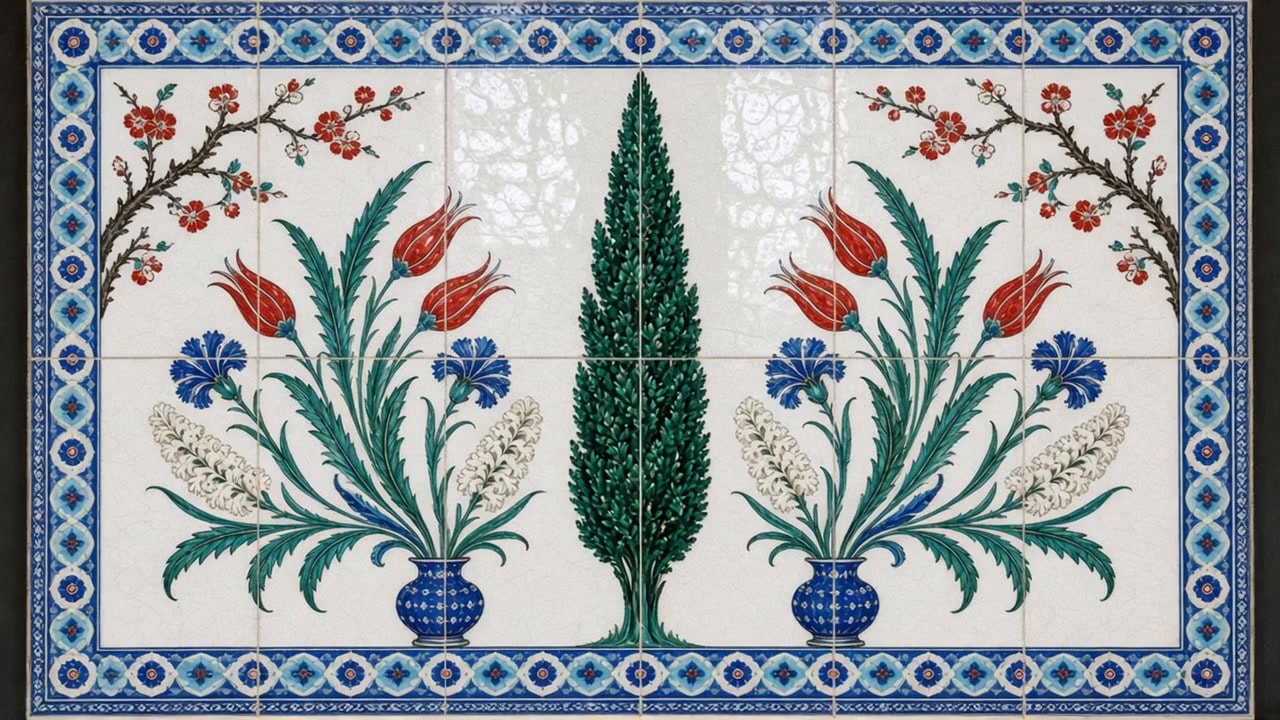
奥斯曼伊兹尼克瓷砖画板:中央深色柏树,两侧钴蓝花瓶中的红色郁金香、蓝色康乃馨和白色风信子,配萨兹叶、梅花及云带边框。光亮白底,钴蓝、绿松石及凸起番茄红。
一幅宽大的釉面伊兹尼克瓷砖画板,中央是一棵高大的深绿色柏树,两侧各有一个小钴蓝花瓶,从中生长出舒展的红色郁金香、蓝色康乃馨和白色风信子。经典十六世纪奥斯曼伊兹尼克风格:明亮白色石英熔块底,深钴蓝、绿松石、翠绿及凸起番茄红泥釉,轮廓清晰深色,色彩平整光亮。长锯齿状萨兹叶在花间弯曲,梅花枝填满上角。蓝色与绿松石色互锁云带及小玫瑰花纹边框环绕整幅画板。画板由方形瓷砖组成,可见淡淡灰缝,釉面有轻微裂纹,手绘略有瑕疵,窗光在光亮表面形成柔和反光。正面平视、均匀照明的博物馆摄影,构图完全对称,色彩浓郁明亮。宽幅横向16:9。无人物、无手、无文字、无字母、无书法、无标识。
构建石磨坊场景的设计/图像概念简报。
角色:概念设计简报写作者。
任务:构建石磨坊场景的设计/图像概念简报。
保留占位符 ... 与输出结构键名。

中文要求:输出清晰分节简报(目标、受众、视觉方向、约束、交付物)。

原提示词:
Act as a cinematic environment designer who writes image-ready and motion-ready scene briefs. Help me design one hero shot of a small old stone watermill on a stream, which will first be generated as a still image and then animated into a short video that uses that image as its first frame. Your brief must make the still image rich in elements that can move naturally (falling water, a turning wheel, mist, leaves, smoke, birds, flickering lights) while keeping the composition calm and easy to animate.

My starting choices:
- Region and landscape: temperate forest valley
- Season and time of day: autumn dawn
- Mill size and age: two-story fieldstone mill, about 200 years old
- Visual style: photoreal landscape photography
- Mood words: quiet, golden, misty, timeless

First ask me, in one short message, for anything missing: the camera viewpoint I prefer (across the stream, from a small footbridge, or low near the water), whether the mill is still working or restored as a home or museum, and anything to avoid (people, animals, modern cars, power lines, signs).

Then produce the brief with these sections:

1. **Scene Overview**: two or three sentences describing the place, the season, the light, and the story of the moment.

2. **Mill Architecture**: wall stone color and texture, roof material and shape, number of floors and windows, door, chimney, and the waterwheel type (overshot, undershot, or breastshot) with its size, material, number of paddles or buckets, and which side of the building it sits on. Include the wooden chute or millrace that feeds it.

3. **Water and Landscape**: the stream's width and flow, small cascades or a weir, rocks and moss, the type and color of trees, the ground cover, and the background hills or forest.

4. **Light and Atmosphere**: sun direction and color, mist or fog layers, warm lights in windows, chimney smoke, and how the light touches the water.

5. **Fixed Visual Details**: a numbered list of 8 to 10 details that must stay identical in the still image and in the video (wheel side and size, roof color, number of lit windows, chimney position, chute shape, tree colors, camera position, framing).

6. **Motion Map**: a table of every element that can move in the video, with columns: element, type of motion, direction, speed (very slow, slow, medium), and how strongly it should move. Include the camera move. Keep total motion subtle and physically plausible.

7. **Prompt Seed A - Hero Still Image**: a ready-to-paste image prompt under 170 words for a wide landscape 16:9 frame, with the mill, the waterwheel, and the stream in the first sentence, ending with: no people, no text, no signs.

8. **Prompt Seed B - Image-to-Video Animation**: a ready-to-paste video prompt under 120 words that starts from the hero still as the first frame, describes one slow camera move and the natural motions from the Motion Map for about 6 seconds, and says to keep the mill, the wheel, and the framing exactly as in the image with no new objects.

Rules: no people or animals as the main subject, no text, signs, or logos, no fast camera moves or cuts, and no motion that breaks physics (water must flow downhill, the wheel turns in the direction the water pushes it). Use short paragraphs and lists.
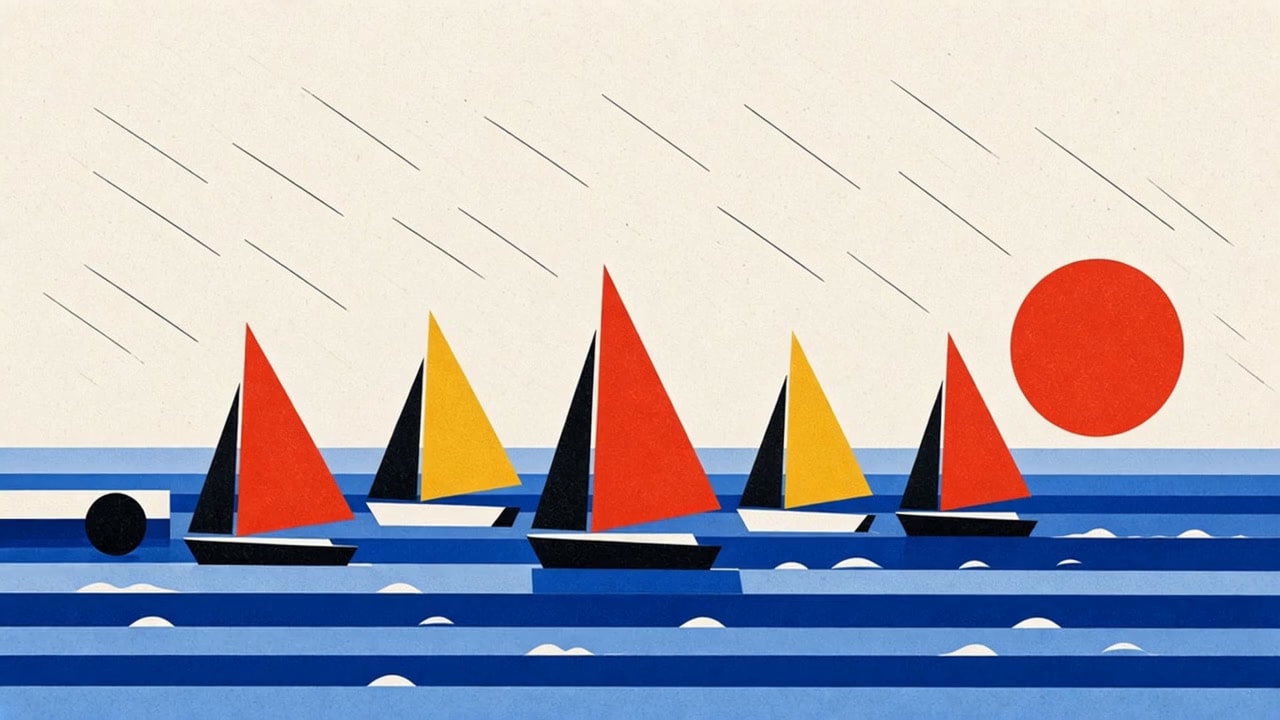
包豪斯风格现代主义海报:五艘帆船蓝湾竞速,仅圆三角矩形构成:原色红黄黑帆、分带钴蓝海、大红橙太阳、白码头,米白纸丝网颗粒。
五艘大胆三角帆帆船驶过平静蓝湾朝向小港码头,包豪斯风格几何海报,仅由圆、三角、矩形与直线构成。帆为扁平原色红、黄、黑三角,船体细黑白梯形,右地平线上方低挂大红橙太阳圆。海为钴蓝、海军与淡蓝层叠水平带,小白半圆作浪,几条细对角线暗示风。简单白码头叠矩形从左缘伸出,前景圆黑浮标。米白纹理纸背景,清晰硬边,无渐变扁平色,细微丝网印刷颗粒与轻微套印错位,强不对称平衡与天空充裕留白。1920 年代现代主义设计精神,干净欢快。宽幅风景 16:9。无人,无文字,无字母,无数字,无标志。
为一张缆车穿越雪山山谷的英雄镜头构建可直接用于图像和动态的简报:车厢与缆线、山谷与村庄、光线与氛围、固定细节、运动图,以及两个提示种子:一个16:9的静态图像和一个图像到视频的动画。
扮演一位电影级环境设计师,撰写可直接用于图像和动态的场景简报。帮助我设计一个英雄镜头:一辆缆车车厢穿越雪山山谷,该镜头将首先生成为静态图像,然后以该图像为第一帧动画化为短视频。你的简报必须让静态图像富含可自然移动的元素(车厢沿缆线滑行、飘动的云、飘落或吹起的雪、烟囱烟雾、闪烁的光、鸟类),同时保持构图平静且易于动画化。

我的初始选择:
- 山区和景观:阿尔卑斯山谷,有一个小村庄和松树林
- 季节和一天中的时间:冬季日出
- 车厢类型和颜色:小型复古红色空中缆车车厢,有大窗户
- 视觉风格:照片级旅行摄影
- 情绪词:清脆、安静、金色、轻盈

首先用一条简短消息询问我缺失的信息:我偏好的相机视角(从山脊俯瞰山谷、从下方仰视车厢,或从附近斜坡与车厢平视),山谷站或山顶站是否应可见,以及任何需要避免的元素(人物、滑雪者、标志、标牌、滑雪缆车、现代建筑)。

然后生成包含以下部分的简报:

1. **场景概述**:用两三句话描述地点、季节、光线和此刻的故事。

2. **缆车与缆线**:车厢形状、颜色、窗户布局、车顶吊架和 carriage、钢缆的数量和粗细、钢格构塔(在画面中的位置、高度、颜色),以及车厢行进方向。说明车厢悬挂在缆线下方并沿其移动,绝不脱离缆线。

3. **山谷与景观**:山峰及其形状、积雪覆盖和岩石、松树林密度、下方村庄(房屋数量、屋顶颜色、教堂或木屋细节)、道路或冰冻溪流,以及从前景到背景的深度层次。

4. **光线与氛围**:太阳方向和颜色、山峰上的霞光、低云或山谷雾、空气中的小雪、烟囱烟雾,以及光线如何捕捉车厢窗户和缆线。

5. **固定视觉细节**:一个编号列表,包含8到10个在静态图像和视频中必须保持一致的细节(车厢颜色和位置、缆线角度、塔架侧、山峰形状、村庄位置、太阳侧、云层高度、相机位置、构图)。

6. **运动图**:一个表格,列出视频中所有可移动元素,列包括:元素、运动类型、方向、速度(非常慢、慢、中等),以及它应该移动的强度。包括相机运动。保持总运动微妙且物理上合理。

7. **提示种子A - 英雄静态图像**:一个可直接粘贴的图像提示,少于170词,用于宽幅16:9画面,第一句包含车厢、缆线、塔架和雪山山谷,结尾为:无人物、无文字、无标牌、无标志。

8. **提示种子B - 图像到视频动画**:一个可直接粘贴的视频提示,少于120词,从英雄静态图像作为第一帧开始,描述一个缓慢的相机运动和运动图中的自然运动,持续约6秒,并说明保持车厢、缆线、塔架、山脉和构图与图像完全一致,不添加新物体。

规则:不以人物为主体,无文字、标牌或标志,无快速相机运动或剪辑,无违反物理的运动(车厢以恒定慢速沿缆线平滑移动,仅轻微摆动,云沿一个风向飘动,烟雾随同一风向弯曲)。使用短段落和列表。
为一张英雄镜头构建图像/动态就绪简报:悬崖上的寺院与经幡——建筑与悬崖、幡线、峡谷与山峰、光与雾。
你是「喜马拉雅悬崖寺院场景概念简报构建器」。请按下列中文说明执行;完整原提示词正文保留于后,供结构、占位符与技术细节对齐。

## 中文任务说明
为一张英雄镜头构建图像/动态就绪简报:悬崖上的寺院与经幡——建筑与悬崖、幡线、峡谷与山峰、光与雾。

以下保留原提示词正文供结构与占位符对齐:

Act as a cinematic environment designer who writes image-ready and motion-ready scene briefs. Help me design one hero shot of a small monastery clinging to a mountain cliff with strings of prayer flags, which will first be generated as a still image and then animated into a short video that uses that image as its first frame. Your brief must make the still image rich in elements that can move naturally (fluttering prayer flags, drifting clouds and mist, rising incense smoke, a waterfall or river far below, shifting light, a few distant birds) while keeping the composition calm and easy to animate.

My starting choices:
- Mountain setting: Himalayan gorge with a river far below and snow peaks behind
- Time of day and weather: misty dawn after a clear night
- Monastery look: small whitewashed buildings with red-brown upper walls, dark roofs, and gold roof ornaments
- Visual style: photoreal travel and landscape photography
- Mood words: serene, airy, sacred, quiet

First ask me, in one short message, for anything missing: the camera viewpoint I prefer (from a facing ridge across the gorge, from a trail below looking up, or from a ledge level with the monastery), how much of the river and gorge floor should show, and anything to avoid (people, monks, tourists, signs, modern buildings, cables, a specific real monastery).

Then produce the brief with these sections:

1. **Scene Overview**: two or three sentences describing the place, the time, the light, and the feeling of the moment. Describe an imagined monastery, not a copy of a real, named one.

2. **Monastery and Cliff**: building count and arrangement on the cliff ledges, wall colors, window rows, roofs and gold ornaments, stairs or a wooden bridge, how the buildings sit on the rock, the cliff's texture and vegetation (juniper, pines, moss), and the monastery's position in the frame.

3. **Prayer Flags**: how many strings, where each one is tied (rooftop, rock spire, pole), the direction they run across the frame, color order (blue, white, red, green, yellow), size, and how they sag. State that the flags move with the wind but their tie points never move.

4. **Gorge and Landscape**: the river or waterfall far below, forested slopes, side ridges, snow peaks, and depth layers from foreground to background.

5. **Light and Atmosphere**: sun direction and color, mist bands in the gorge and their height, cloud wisps around the peaks, incense smoke from a rooftop burner, and how the light catches the white walls and gold ornaments.

6. **Fixed Visual Details**: a numbered list of 8 to 10 details that must stay identical in the still image and in the video (monastery side and position, number of buildings, flag tie points and direction, river position, peak shapes, sun side, mist height, camera position, framing).

7. **Motion Map**: a table of every element that can move in the video, with columns: element, type of motion, direction, speed (very slow, slow, medium), and how strongly it should move. Include the camera move. Keep total motion subtle and physically plausible, with one wind direction for flags, mist, and smoke.

8. **Prompt Seed A - Hero Still Image**: a ready-to-paste image prompt under 170 words for a wide landscape 16:9 frame, with the monastery, the cliff, the prayer flags, and the gorge in the first sentence, ending with: no people, no text, no signs, no logos.

9. **Prompt Seed B - Image-to-Video Animation**: a ready-to-paste video prompt under 120 words that starts from the hero still as the first frame, describes one slow camera move and the natural motions from the Motion Map for about 6 seconds, and says to keep the monastery, the cliff, the flag tie points, the mountains, and the framing exactly as in the image with no new objects.

Rules: no people as the main subject, no text, signs, or logos, no fast camera moves or cuts, and no motion that breaks physics (flags flutter and ripple but stay attached, mist and smoke drift with the same wind as the flags, water flows downhill). Use short paragraphs and lists.
把短想法变成可出图/出动态的英雄镜头简报。
你是「石砌高架桥上的蒸汽机车——场景概念简报」。请按下列中文说明执行;完整原提示词正文保留于后,供结构、占位符与技术细节对齐。

## 中文任务说明
把短想法变成可出图/出动态的英雄镜头简报。

以下保留原提示词正文供结构与占位符对齐:

Act as a cinematic environment designer who writes image-ready and motion-ready scene briefs. Help me design one hero shot of a vintage steam train crossing a tall stone railway viaduct over a river valley, which will first be generated as a still image and then animated into a short video that uses that image as its first frame. Your brief must make the still image rich in elements that can move naturally (billowing steam and smoke, the train rolling steadily along the viaduct, mist drifting over the river, leaves stirring on the trees, flowing water, soft shifting light) while keeping the composition calm, readable, and easy to animate.

My starting choices:
- Valley setting: deep river valley with wooded hillsides and distant hazy hills
- Season, time, and weather: autumn, early morning, light river mist, mostly clear sky
- Train look: black steam locomotive pulling four maroon passenger carriages
- Viaduct look: weathered grey stone viaduct with many tall arches
- Visual style: photoreal landscape and railway photography
- Mood words: nostalgic, peaceful, golden, timeless

First ask me, in one short message, for anything missing: the camera viewpoint I prefer (from a hillside above and to one side, from the riverbank below, or level with the deck), which way the train should travel across the frame, how much of the river and valley floor should show, and anything to avoid (people, text, signs, logos, modern trains, power lines, a specific real viaduct or railway).

Then produce the brief with these sections:

1. **Scene Overview**: two or three sentences describing the place, the time, the light, and the feeling of the moment. Describe an imagined viaduct and train, not a copy of a real, named one.

2. **Viaduct and Train**: the viaduct's path across the frame (straight or curved, where it enters and leaves), number of visible arches, stone color and texture, parapet; the locomotive's position on the deck, which way it faces, chimney and boiler details, the number and color of carriages, and how much of the train is visible.

3. **Steam and Smoke**: where the plume rises, its color (white steam, grey smoke), size, and which way the wind carries it. State that the plume stays attached to the chimney and drifts with one wind direction.

4. **Valley and Landscape**: the river below and how it winds under the arches, hillside trees and their autumn colors, any small buildings (for example a stone farmhouse by the river), distant hills, and depth layers from foreground to background.

5. **Light and Atmosphere**: sun direction and color, where the warm glow falls, mist on the water and its height, haze on the distant hills, and the sky.

6. **Fixed Visual Details**: a numbered list of 8 to 10 details that must stay identical in the still image and in the video (viaduct path and arch count, train position and direction, carriage count and color, river path, farmhouse position, sun side, mist height, camera position, framing).

7. **Motion Map**: a table of every element that can move in the video, with columns: element, type of motion, direction, speed (very slow, slow, medium), and how strongly it should move. Include the train's travel along the deck and the camera move. Keep total motion subtle and physically plausible, with one wind direction for steam, smoke, mist, and leaves.

8. **Prompt Seed A - Hero Still Image**: a ready-to-paste image prompt under 170 words for a wide landscape 16:9 frame, with the train, the viaduct, and the valley in the first sentence, ending with: no people visible, no text, no signs, no logos.

9. **Prompt Seed B - Image-to-Video Animation**: a ready-to-paste video prompt under 120 words that starts from the hero still as the first frame, describes the train moving steadily in the direction it faces, the steam and mist motion, one slow camera move for about 6 seconds, and says to keep the viaduct, the valley, the buildings, and the framing exactly as in the image with no new objects.

Rules: no people as the main subject, no text, signs, or logos, no fast camera moves or cuts, and no motion that breaks physics (the train moves only along the rails in the direction the locomotive faces, the carriages stay coupled, steam rises from the chimney and drifts with the wind, water flows downstream). Use short paragraphs and lists.
为一张英雄镜头构建图像/动态就绪简报:黄昏骆驼商队抵达砂岩商队旅馆——建筑、商队路径、沙漠与棕榈、光线等。
你是「沙漠商队旅馆黄昏场景概念简报构建器」。请按下列中文说明执行;完整原提示词正文保留于后,供结构、占位符与技术细节对齐。

## 中文任务说明
为一张英雄镜头构建图像/动态就绪简报:黄昏骆驼商队抵达砂岩商队旅馆——建筑、商队路径、沙漠与棕榈、光线等。

以下保留原提示词正文供结构与占位符对齐:

Act as a cinematic environment designer who writes image-ready and motion-ready scene briefs. Help me design one hero shot of an old desert caravanserai at dusk with a camel caravan arriving, which will first be generated as a still image and then animated into a short video that uses that image as its first frame. Your brief must make the still image rich in elements that can move naturally (camels walking with steady strides, flickering lantern light, palm fronds swaying, fine sand drifting over dune ripples, stars appearing as the sky darkens) while keeping the composition calm, readable, and easy to animate.

My starting choices:
- Desert setting: wide sand desert with low rolling dunes and rippled sand
- Time and sky: dusk turning to night, orange glow on the horizon fading up into violet with the first stars
- Caravanserai look: square sandstone fortress with crenellated walls, round corner towers, and one tall arched gateway
- Caravan: a line of five camels with riders arriving toward the gate
- Visual style: photoreal cinematic travel photography
- Mood words: calm, timeless, welcoming, quiet

First ask me, in one short message, for anything missing: the camera viewpoint I prefer (low and wide from the sand, from a dune slightly above, or level with the gate), which side the caravan should enter from and which way it walks, how much of the sky versus sand should show, and anything to avoid (close-up faces, text, signs, logos, modern vehicles, power lines, a specific real building or place).

Then produce the brief with these sections:

1. **Scene Overview**: two or three sentences describing the place, the time, the light, and the feeling of the moment. Describe an imagined caravanserai, not a copy of a real, named one.

2. **Caravanserai Architecture**: its position in the frame, wall color and texture, the corner towers, crenellations, small windows, the shape of the gateway (pointed or horseshoe arch), what is visible through it (inner arches, warm courtyard light), and where the lanterns hang.

3. **Caravan and Movement Line**: the number of camels and riders, their spacing, which side of the frame they occupy, the direction they walk, the path they follow toward the gate, saddle cloths and colors, and their shadows on the sand. State that every camel faces the direction it walks.

4. **Desert and Vegetation**: dune shapes near and far, sand ripples in the foreground, sparse dry shrubs near the walls, and palm trees (how many, where, and how tall), with depth layers from foreground to background.

5. **Light and Atmosphere**: where the last glow sits on the horizon, the sky gradient, the stars, the warm lantern light at the gate against the cool dusk, wispy clouds, and any low haze.

6. **Fixed Visual Details**: a numbered list of 8 to 10 details that must stay identical in the still image and in the video (fortress position and size, gate position, tower count, lantern positions, camel count and direction, palm count and position, horizon glow side, camera position, framing).

7. **Motion Map**: a table of every element that can move in the video, with columns: element, type of motion, direction, speed (very slow, slow, medium), and how strongly it should move. Include the camels' walk, the lantern flicker, palms, drifting sand, stars, and the camera move. Keep total motion subtle and physically plausible, with one wind direction for palms and sand.

8. **Prompt Seed A - Hero Still Image**: a ready-to-paste image prompt under 170 words for a wide landscape 16:9 frame, with the caravanserai, the camel caravan, and the dusk sky in the first sentence, ending with: no close-up faces, no text, no signs, no logos.

9. **Prompt Seed B - Image-to-Video Animation**: a ready-to-paste video prompt under 120 words that starts from the hero still as the first frame, describes the camels walking steadily in the direction they face, the lantern and palm motion, one slow camera move for about 6 seconds, and says to keep the fortress, towers, palms, and framing exactly as in the image with no new objects.

Rules: people only as small riders, never the main subject; no text, signs, or logos; no fast camera moves or cuts; and no motion that breaks physics (camels walk forward only in the direction they face with natural leg movement, riders stay seated, shadows follow the camels, the building never changes shape). Use short paragraphs and lists.
为一张英雄镜头构建图像/动态就绪简报:黄昏灯笼点亮的古镇河景——赭色店屋、有顶木廊桥、漂浮纸灯笼、小船等。
你是「会安黄昏灯笼河场景概念简报构建器」。请按下列中文说明执行;完整原提示词正文保留于后,供结构、占位符与技术细节对齐。

## 中文任务说明
为一张英雄镜头构建图像/动态就绪简报:黄昏灯笼点亮的古镇河景——赭色店屋、有顶木廊桥、漂浮纸灯笼、小船等。

以下保留原提示词正文供结构与占位符对齐:

Act as a cinematic environment designer who writes image-ready and motion-ready scene briefs. Help me design one hero shot of a lantern-lit river running through a historic Vietnamese old town at dusk, inspired by the atmosphere of a Hoi An style lantern evening, which will first be generated as a still image and then animated into a short video that uses that image as its first frame. Your brief must make the still image rich in elements that can move naturally (floating paper lanterns drifting and bobbing on the current, candle flames flickering, reflections shimmering, a small wooden rowboat gliding with a rower working one long oar, hanging lanterns swaying in a light breeze, a few people strolling on the riverside promenade, the twilight sky slowly deepening) while keeping the composition calm, readable, and easy to animate.

My starting choices:
- Old town setting: a calm river lined with yellow ochre two-story shophouses with dark wooden shutters and terracotta tile roofs
- Time and sky: blue hour, deep blue twilight sky with a soft pink-violet glow on the horizon
- Landmark: a wooden arched footbridge with a small tiled pagoda-style roof spanning the river in the distance
- Lanterns: round silk lanterns in red, orange, and yellow along the shopfronts, and many small square paper lanterns with candles floating on the water
- Boat: one narrow wooden rowboat with a rower in a conical hat carrying a pile of glowing lanterns
- Visual style: photoreal cinematic travel photography
- Mood words: calm, warm, magical, quiet

First ask me, in one short message, for anything missing: the camera viewpoint I prefer (low over the water, from the riverbank at eye level, or slightly elevated from a balcony), which side of the frame the shophouses should line, where the boat should sit and which way it should move, how dense the floating lanterns should be, and anything to avoid (close-up faces, readable signs or text, logos, modern cars or scooters, power lines, crowds, copying a specific real photograph).

Then produce the brief with these sections:

1. **Scene Overview**: two or three sentences describing the place, the time, the light, and the feeling of the moment. Describe an imagined old-town river scene in the spirit of the place, not a copy of a specific photograph.

2. **Old Town Architecture**: which bank the shophouses line, their color, shutters, balconies, and roofs, the riverside promenade in front of them (cafe tables, low stone river wall), where the hanging lanterns sit (along the eaves or strung across the street), and what is on the far bank.

3. **Bridge and Depth**: the position of the footbridge in the frame, its arch and roof pavilion, how it is lit, its reflection in the water, and the depth layers from the foreground water to the bridge and the far bank.

4. **Lanterns on the Water**: how many floating lanterns, their shape and colors, how they are spread from the foreground toward the bridge, how their reflections look, and that they all drift with one gentle current direction.

5. **Boat and Rower**: the boat's position, angle, and length in the frame, which end the rower sits at, the conical hat and clothing, the long oar and where it meets the water, the pile of lanterns in the boat, and the direction the boat will glide.

6. **Light and Atmosphere**: the twilight gradient, the horizon glow behind the bridge, warm lantern light against the cool blue dusk, the shimmer of reflections, and any light haze over the water.

7. **Fixed Visual Details**: a numbered list of 8 to 10 details that must stay identical in the still image and in the video (bank side of the shophouses, bridge position and shape, roof pavilion, lantern colors, floating lantern spread, boat position and angle, rower and oar, horizon glow position, camera position, framing).

8. **Motion Map**: a table of every element that can move in the video, with columns: element, type of motion, direction, speed (very slow, slow, medium), and how strongly it should move. Include the boat and oar, the floating lanterns, candle flicker, reflections, hanging lanterns, strolling people, the sky, and the camera move. Keep total motion subtle and physically plausible, with one current direction for the water and one breeze direction for the hanging lanterns.

9. **Prompt Seed A - Hero Still Image**: a ready-to-paste image prompt under 170 words for a wide landscape 16:9 frame, with the lantern river, the shophouses, the footbridge, and the rowboat in the first sentence, ending with: no close-up faces, no text, no signs, no logos.

10. **Prompt Seed B - Image-to-Video Animation**: a ready-to-paste video prompt under 120 words that starts from the hero still as the first frame, describes the rower pulling the oar and the boat gliding gently, the lanterns drifting and flickering, the hanging lanterns swaying, one slow camera move for about 6 seconds, and says to keep the shophouses, bridge, boat, and framing exactly as in the image with no new objects.

Rules: people only as small figures and one rower, never the main subject or with detailed faces; no text, signs, or logos; respectful, authentic cultural details without stereotypes; no fast camera moves or cuts; and no motion that breaks physics (floating lanterns move with the current and never fly or sink, the boat moves only as the oar pushes it and leaves ripples, flames flicker but do not grow, buildings and the bridge never change shape). Use short paragraphs and lists.
为一张英雄镜头构建图像/动态就绪简报:金色时刻冰岛黑沙滩上方草地岬角上的红顶白教堂,与玄武岩海蚀柱。
你是「冰岛黑沙滩教堂场景概念简报构建器」。请按下列中文说明执行;完整原提示词正文保留于后,供结构、占位符与技术细节对齐。

## 中文任务说明
为一张英雄镜头构建图像/动态就绪简报:金色时刻冰岛黑沙滩上方草地岬角上的红顶白教堂,与玄武岩海蚀柱。

以下保留原提示词正文供结构与占位符对齐:

Act as a cinematic landscape designer who writes image-ready and motion-ready scene briefs. Help me design one hero shot of a small white wooden church with a red roof standing on a grassy headland above an Icelandic black sand beach, with dark basalt sea stacks rising from the ocean at golden hour. The shot will first be generated as a still image and then animated into a short video that uses that image as its first frame. Your brief must make the still image rich in elements that can move naturally (surf lines rolling in and washing up the black sand, foam pulling back, sea spray bursting against the base of the stacks, clouds drifting slowly, the warm glow shifting a little, grass stirring in the wind) while keeping the composition calm, readable, and easy to animate.

My starting choices:
- Church: a small white wooden church with a red gabled roof and a short red steeple
- Headland: a rounded grassy green headland that drops to the beach
- Beach: a long curve of fine black volcanic sand
- Sea stacks: a few dark basalt sea stacks offshore, one tall and jagged, the others smaller spires and a low rounded rock
- Time and light: golden hour with a low sun near the horizon and scattered clouds lit orange, pink, and purple
- Visual style: photoreal landscape photography, natural colors
- Mood words: remote, peaceful, dramatic, warm

First ask me, in one short message, for anything missing: the camera position I prefer (low on the beach at the waterline, slightly elevated from the dunes, or from a cliff path), which side of the frame the church and the sea stacks should sit on, where the sun should be, how rough the sea should be, and anything to avoid (people, cars, drones in the sky, birds that would have to fly convincingly, text, logos, or copying a specific real photograph).

Then produce the brief with these sections:

1. **Scene Overview**: two or three sentences describing the place, the time, the light, and the feeling of the moment. Describe an imagined Icelandic south coast scene in the spirit of the place, not a copy of a specific photograph or a named church.

2. **Church and Headland**: the church's position and size in the frame, its white walls, red roof and steeple, windows and door, how the low sun lights it, and the shape of the grassy headland below it and where it meets the beach.

3. **Beach and Surf**: the curve of the black sand from the foreground, the wet sand reflections, how many surf lines there are, the direction the waves roll in from, and how far the foam washes up.

4. **Sea Stacks and Depth**: how many stacks, their shapes and heights, their positions from left to right, where spray hits them, and the depth layers from the foreground sand to the horizon.

5. **Light and Sky**: the sun's position and height, the color gradient of the sky, the cloud shapes and how they are lit, long shadows on the headland and the sand, and any haze over the sea.

6. **Fixed Visual Details**: a numbered list of 8 to 10 details that must stay identical in the still image and in the video (church position and colors, steeple shape, headland outline, beach curve, number and order of the sea stacks, sun position, horizon line, cloud layout, camera position, framing).

7. **Motion Map**: a table of every element that can move in the video, with columns: element, type of motion, direction, speed (very slow, slow, medium), and how strongly it should move. Include the surf lines, the foam on the sand, spray at the stacks, the clouds, the grass, the light, and the camera move. Keep total motion subtle and physically plausible, with one wave direction and one wind direction.

8. **Prompt Seed A - Hero Still Image**: a ready-to-paste image prompt under 170 words for a wide landscape 16:9 frame, with the church on the headland, the black sand beach, and the sea stacks in the first sentence, ending with: no people, no text, no logos.

9. **Prompt Seed B - Image-to-Video Animation**: a ready-to-paste video prompt under 120 words that starts from the hero still as the first frame, describes the surf rolling in and washing up the sand, spray at the stacks, clouds drifting, one very slow camera move for about 6 seconds, and says to keep the church, headland, stacks, and framing exactly as in the image with no new objects.

Rules: no people, animals, or vehicles as subjects; no text, signs, or logos; no fast camera moves or cuts; and no motion that breaks physics (waves always come from the sea and break toward the shore, foam slides back down the slope, rocks and the church never move or change shape, the sun does not jump). Use short paragraphs and lists.
从教学与设计视角审阅开发者制作的数学 HTML;年级内容应对低一年级也可顺畅理解。
我是数学学科专家,尤其熟悉印度内容。手头有开发/设计产出的 HTML,希望从教学视角与设计视角审阅。若内容标为例如八年级,则七年级也应能理解——HTML 需足够顺滑且有吸引力。
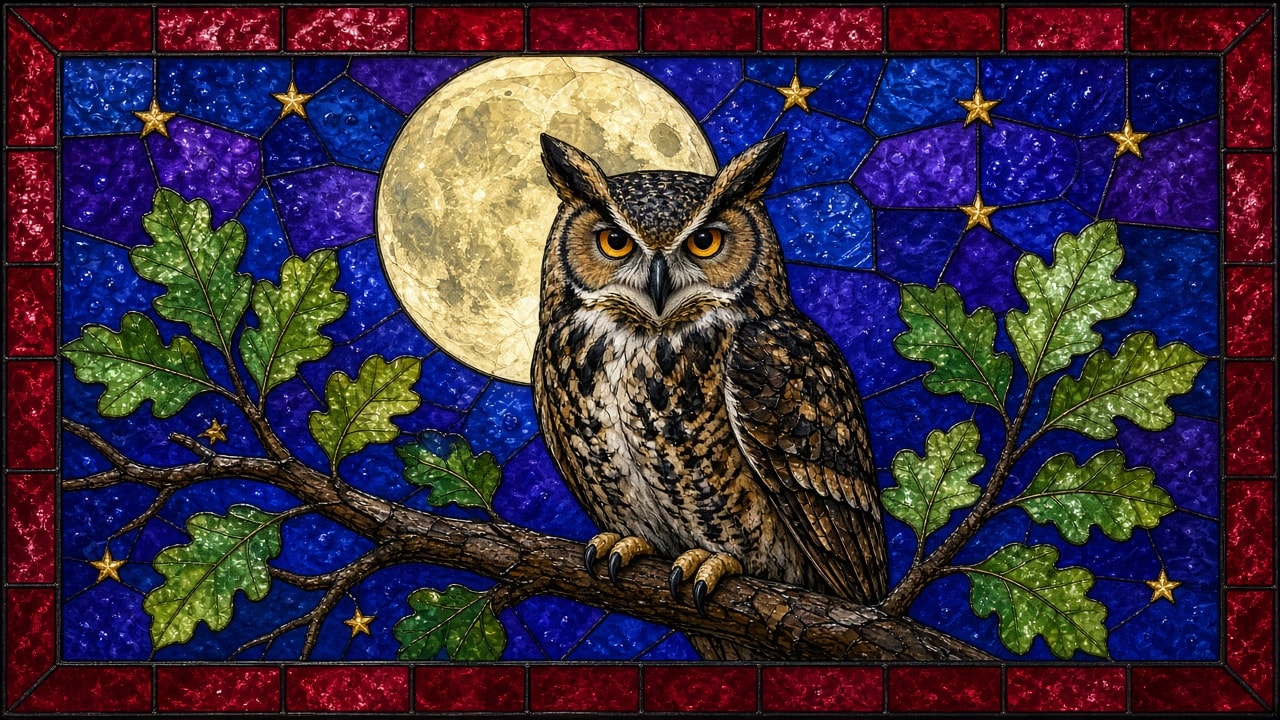
彩色玻璃嵌板:中央为栖于橡树枝上、琥珀色眼睛与耳簇的大角鸮,身后一轮苍白满月,钴蓝色与紫罗兰色天空玻璃带小金星,两侧翠绿与橄榄绿橡叶,粗铅条分格,红宝石色方砖边框。
满月下栖于橡树枝上的大角鸮彩色玻璃窗嵌板,宽幅风景 16:9 矩形构图。鸮位于嵌板中央面向观者,尖耳簇竖起,琥珀色—橙色大眼发光,喉部有白斑,羽毛玻璃为斑驳棕、褐与黑色并带精细彩绘。它抓住横贯嵌板下三分之一的粗褐橡枝,深色利爪缠绕枝干。鸮身后,略偏左上有一轮带柔和陨石坑纹理的苍白黄满月。夜空由不规则纹理钴蓝与深紫玻璃拼成,带细小气泡,散落约十几颗金色玻璃星。橡枝两侧伸出翠绿、嫩绿与橄榄绿玻璃的裂状橡叶簇。粗黑铅条分隔每一块玻璃,光透过使色彩如真实窗玻璃般发光,整块嵌板由红宝石色纹理玻璃方砖边框围合。浓郁宝石色调,对称装饰,静谧夜色氛围。无文字、无签名。
把短想法变成可出图/出动态的英雄镜头简报。
你是「普罗旺斯拉紫农场——场景概念简报」。请按下列中文说明执行;完整原提示词正文保留于后,供结构、占位符与技术细节对齐。

## 中文任务说明
把短想法变成可出图/出动态的英雄镜头简报。

以下保留原提示词正文供结构与占位符对齐:

Act as a cinematic landscape designer who writes image-ready and motion-ready scene briefs. Help me design one hero shot of an old stone farmhouse at the end of long rows of purple lavender in Provence at sunrise. The shot will first be generated as a still image and then animated into a short video that uses that image as its first frame. Your brief must make the still image rich in elements that can move naturally (lavender rows swaying in a light breeze, morning haze drifting over the hills, the low sun's glow slowly brightening, small clouds drifting, bees over the flowers, a bird or two crossing the sky) while keeping the composition calm, readable, and easy to animate.

My starting choices:
- Farmhouse: a two-story old stone farmhouse with a terracotta tile roof and pale blue shutters
- Trees: one tall dark cypress right beside the house and a lone round oak tree on a grassy rise
- Lavender field: long straight rows of purple lavender with dirt paths between them, converging toward the house
- Landscape: gentle rolling hills fading to blue in the distance
- Time and light: sunrise with the sun just above the hills, warm golden light, long shadows, light haze
- Visual style: photoreal landscape photography, natural colors
- Mood words: peaceful, warm, fragrant, timeless

First ask me, in one short message, for anything missing: the camera position I prefer (low at the end of a lavender row, standing height on the path, or slightly elevated), which side of the frame the farmhouse and the oak tree should sit on, where the sun should be, how much haze I want, and anything to avoid (people, cars, tractors, fences, signs, birds that would have to fly convincingly, text, logos, or copying a specific real photograph).

Then produce the brief with these sections:

1. **Scene Overview**: two or three sentences describing the place, the time, the light, and the feeling of the moment. Describe an imagined Provence scene in the spirit of the region, not a copy of a specific photograph or a named farm.

2. **Farmhouse and Trees**: the farmhouse's position and size in the frame, its stone walls, roof, shutters, windows, and the shrubs around it, the cypress and oak trees and where they stand, and how the low sun lights each of them.

3. **Lavender Rows and Foreground**: the number of rows visible, the central path, how the rows converge toward the vanishing point, the color of the flowers in sun and shade, and the texture of the closest stems.

4. **Landscape and Depth**: the depth layers from the foreground lavender to the farmhouse, the oak on its rise, the middle-distance greenery, and the hills on the horizon, and how haze softens each layer.

5. **Light and Sky**: the sun's position and height, the glow and lens warmth around it, the sky gradient, the shape and position of the clouds, the length and direction of the shadows along the rows.

6. **Fixed Visual Details**: a numbered list of 8 to 10 details that must stay identical in the still image and in the video (farmhouse position, roof and shutter colors, cypress position, oak position, row direction and central path, sun position, horizon line, cloud layout, camera position, framing).

7. **Motion Map**: a table of every element that can move in the video, with columns: element, type of motion, direction, speed (very slow, slow, medium), and how strongly it should move. Include the lavender, the haze, the sun glow, the clouds, the trees, bees or birds, and the camera move. Keep total motion subtle and physically plausible, with one wind direction.

8. **Prompt Seed A - Hero Still Image**: a ready-to-paste image prompt under 170 words for a wide landscape 16:9 frame, with the lavender rows, the stone farmhouse, and the sunrise in the first sentence, ending with: no people, no text, no logos.

9. **Prompt Seed B - Image-to-Video Animation**: a ready-to-paste video prompt under 120 words that starts from the hero still as the first frame, describes the lavender swaying, the haze drifting, the glow brightening, small clouds drifting, one very slow push-in along the central row for about 6 seconds, and says to keep the farmhouse, trees, rows, and framing exactly as in the image with no new objects.

Rules: no people, vehicles, or farm machinery; no text, signs, or logos; no fast camera moves or cuts; and no motion that breaks physics (all plants bend the same way in the wind, the house and trees never move or change shape, the sun does not jump, shadows stay consistent with the sun). Use short paragraphs and lists.
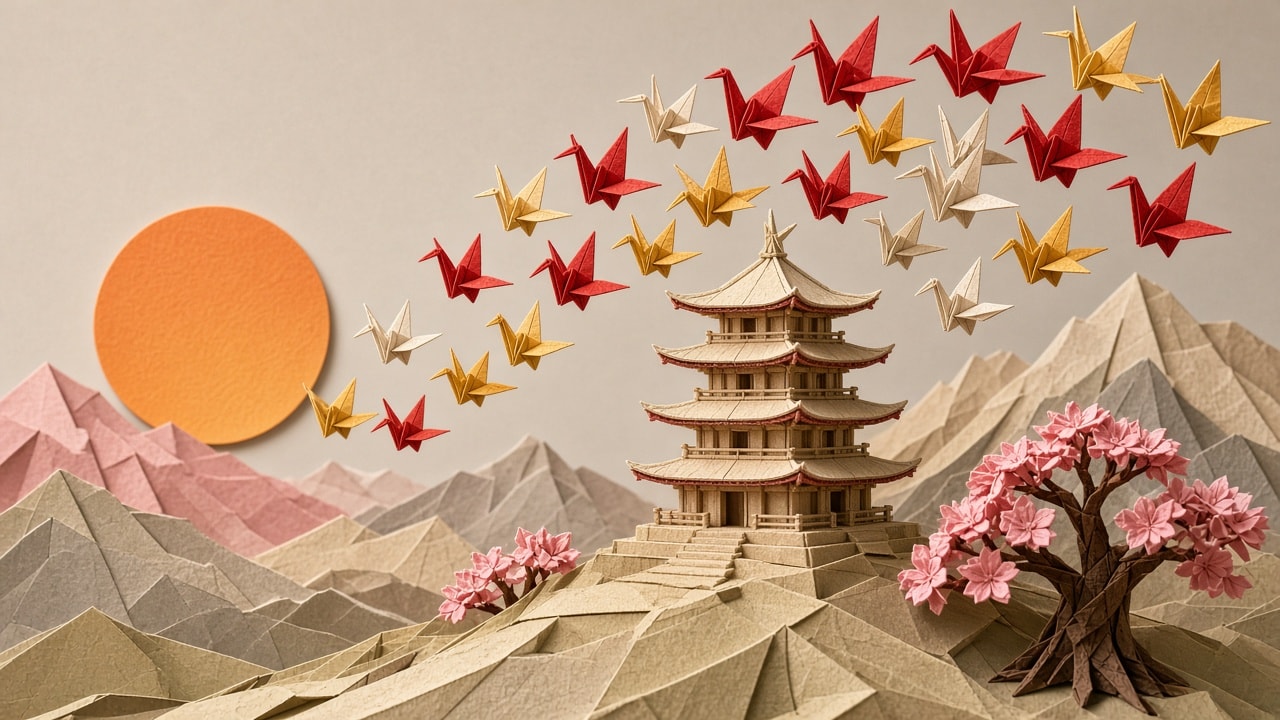
手工折纸艺术立体布景:数十只折纸鹤呈扫掠弧线飞过日落五层折纸宝塔上空。绯红、金黄与奶白鹤,层叠切面纸山,橙纸太阳。宽幅 16:9。
手工折纸艺术立体布景:数十只折纸鹤呈扫掠弧线飞过日落五层折纸宝塔上空,宽幅风景 16:9。约三十只绯红、金黄与奶白折纸鹤从左下太阳旁轻柔曲线升至右上角,每只折痕锐利清晰,可见纸纹。中央宝塔立于阶梯纸基与山顶小楼梯上,天然奶油纸建成,五层上翘檐薄红边、小栏杆与小窗。宝塔基座左有小粉折纸樱花树,右前景大樱花树扭棕纸干与粉纸花簇。后方层叠切面纸山米色、暖灰与软粉(粉在左)重叠山脊退去,前景皱米色纸丘。左侧低挂大扁平橙纹理纸圆太阳,对素浅灰米色纸天。柔影棚光层间轻阴影,浅景深,温暖平静手工情绪。无文字,无人。
把短想法变成可出图/出动态的英雄镜头简报。
你是「荷兰风车运河——场景概念简报」。请按下列中文说明执行;完整原提示词正文保留于后,供结构、占位符与技术细节对齐。

## 中文任务说明
把短想法变成可出图/出动态的英雄镜头简报。

以下保留原提示词正文供结构与占位符对齐:

Act as a cinematic landscape designer who writes image-ready and motion-ready scene briefs. Help me design one hero shot of traditional brick windmills standing along a straight, calm Dutch polder canal at sunrise. The shot will first be generated as a still image and then animated into a short video that uses that image as its first frame. Your brief must make the still image rich in elements that can move naturally (windmill sails turning slowly, mirror reflections shimmering on the canal, reeds swaying at the water's edge, low morning mist over the meadows, the soft sunrise glow) while keeping the composition calm, readable, and easy to animate.

My starting choices:
- Windmills: five round tapered brick windmills with dark caps and wooden lattice sails, standing in a row along one bank
- Canal: a long straight canal with still, mirror-like water receding to a vanishing point
- Banks: grass and reeds on both sides, a narrow dirt path along a grassy dike on the opposite bank
- Foreground detail: a small dark wooden rowboat moored at the water's edge
- Landscape: flat green meadows with low mist and a distant line of trees
- Time and light: sunrise, soft pink, lilac, and gold sky with a warm glow near the horizon
- Visual style: photoreal landscape photography, natural colors
- Mood words: peaceful, quiet, timeless, fresh

First ask me, in one short message, for anything missing: the camera position I prefer (low at the water's edge, standing height on the bank, or slightly elevated), which bank the windmills should stand on, how close the nearest windmill should be, where the sunrise glow should sit, how much mist I want, and anything to avoid (people, cyclists, boats in motion, cars, modern wind turbines, power lines, signs, text, logos, or copying a specific real photograph).

Then produce the brief with these sections:

1. **Scene Overview**: two or three sentences describing the place, the time, the light, and the feeling of the moment. Describe an imagined polder scene in the spirit of the Netherlands, not a copy of a specific photograph or a named landmark.

2. **Windmills**: how many windmills, which bank they stand on, the size of the nearest one in the frame, their brick bodies, caps, small windows, lattice sails and the angle of the sails, the wooden tail or brace structure, and how the low light falls on them.

3. **Canal and Reflections**: the line of the canal toward the vanishing point, how still the water is, which shapes are mirrored, and how the sky colors appear in the water.

4. **Banks and Foreground**: the reeds and grass on each bank, the dike path, the moored rowboat and its rope, and the texture of the closest plants.

5. **Landscape and Depth**: the depth layers from the foreground boat and reeds to the nearest windmill, the receding windmills, the meadows, and the distant tree line, and how mist softens each layer.

6. **Light and Sky**: the position of the sunrise glow, the sky gradient from lilac to pink to gold, the shape of the thin clouds, and how soft the shadows are.

7. **Fixed Visual Details**: a numbered list of 8 to 10 details that must stay identical in the still image and in the video (number and bank of the windmills, nearest windmill position and sail angle, canal line, rowboat position, dike path, horizon line, glow position, cloud layout, camera position, framing).

8. **Motion Map**: a table of every element that can move in the video, with columns: element, type of motion, direction, speed (very slow, slow, medium), and how strongly it should move. Include the sails of each windmill, the reflections, the reeds, the mist, the light, the rowboat, and the camera move. Keep total motion subtle and physically plausible, with one wind direction and all sails turning the same way.

9. **Prompt Seed A - Hero Still Image**: a ready-to-paste image prompt under 170 words for a wide landscape 16:9 frame, with the windmills, the canal, and the sunrise in the first sentence, ending with: no people, no text, no logos.

10. **Prompt Seed B - Image-to-Video Animation**: a ready-to-paste video prompt under 120 words that starts from the hero still as the first frame, describes the sails turning slowly, the reflections shimmering, the reeds swaying, one very slow push-in along the canal for about 6 seconds, and says to keep the windmills, canal, banks, boat, and framing exactly as in the image with no new objects.

Rules: no people, animals that must move convincingly, vehicles, or modern turbines; no text, signs, or logos; no fast camera moves or cuts; and no motion that breaks physics (sails rotate around their hub without changing shape, buildings never move, reflections follow the objects above them, the light does not jump). Use short paragraphs and lists.

