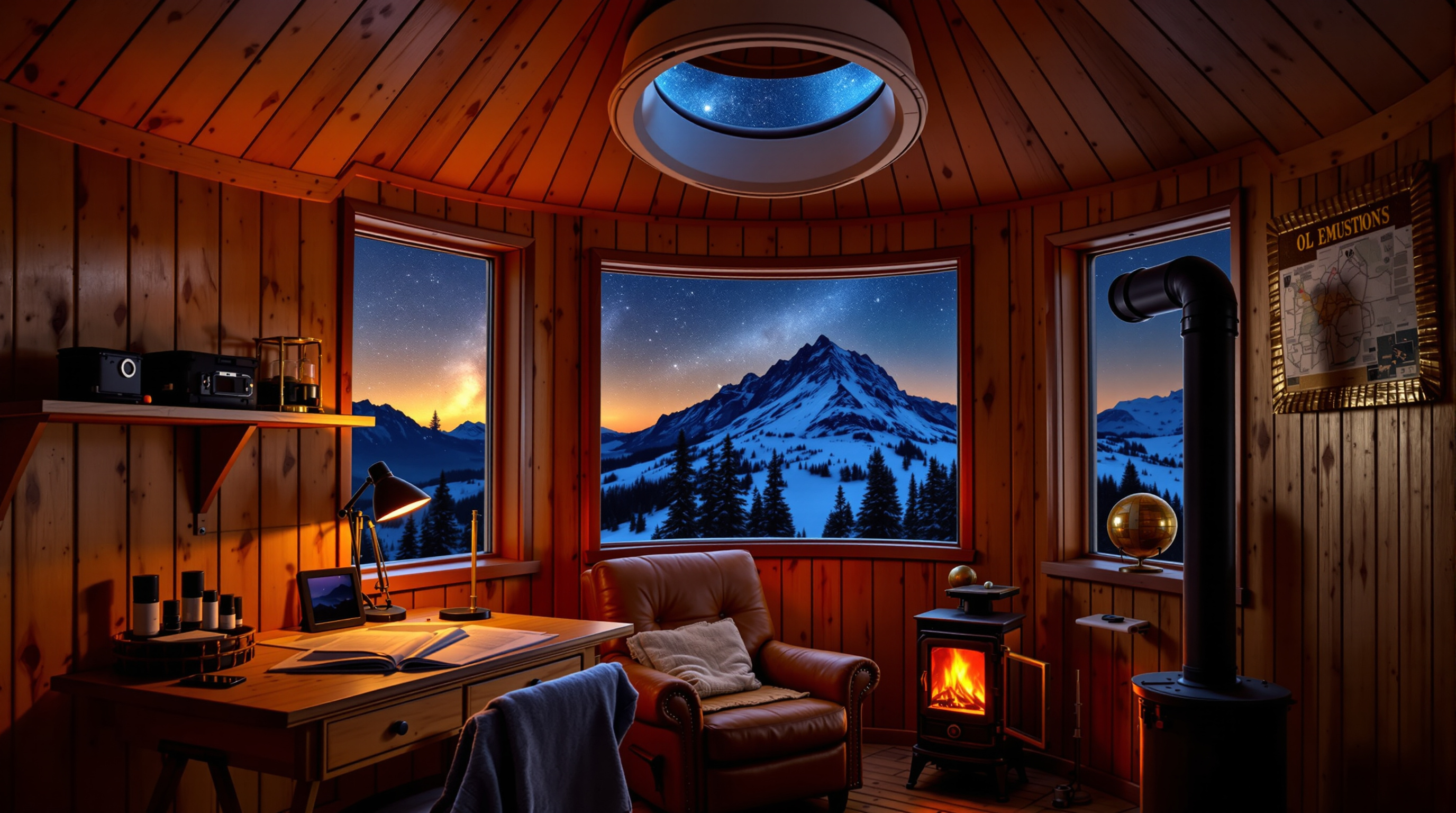
同一雪松天文台小屋超写实夜间内景:星图红灯桌、望远镜目镜对白穹舱口、铸铁木炉烟管、皮扶手椅,两扇琥珀前窗框住山脊与银河。山地天文台小屋工作流步骤 3。
小型雪松天文台小屋夜间内景:墙与天花板为匹配外观的温暖竖雪松板,木桌展开星图与红光台灯,望远镜目镜与黑色镜筒上斜穿过天花舱口进入上方白色半球穹顶,小黑铸铁木炉橙火光与黑钢烟管。磨损皮扶手椅配羊毛毯坐在桌与炉之间;壁架放目镜盒与黄铜星仪。相机在内望向两扇矩形前窗,内发琥珀光,框住锯齿山脊、矮松、陈雪与外明亮银河。光线混合暗红任务灯与暖火光;窗外更冷更暗。超写实内景摄影,24mm 镜头,16:9,舒适安静,无人,无文字。
构建湖畔陶艺工作室概念简报。
【湖畔陶艺工作室概念简报构建器】构建湖畔陶艺工作室概念简报。
请用简体中文输出结果;保留 JSON/YAML 键名与 ... 占位符。

原提示词:
Act as an architectural concept designer who specializes in small craft studios beside water. Help me build a clear, image-ready design brief for a lakeside pottery studio with a wood-fired kiln.

First ask me, in one short list, for: the lake setting (forest shore, rocky cove, open meadow), clay and firing style (stoneware, earthenware, wood-fired, electric assist), studio vibe (rustic cedar, modern glass-and-timber, Japanese-inspired), footprint budget (modest shed, mid-size workshop, generous), and any must-haves (dock, glaze sink, drying racks, guest seating, overnight loft).

Then produce the brief with these sections:

1. **Concept in One Sentence**: the feeling and purpose of the studio.
2. **Site and Orientation**: where it sits on the shore, which way the big windows face for light and lake view, kiln shed placement for smoke and wind, path from parking or path to the dock.
3. **Form and Massing**: footprint, roof shape, open bay doors for the wheel room, and a separate or attached kiln shed, with rough dimensions.
4. **Materials and Palette**: exterior cladding (for example weathered cedar), roofing, window frames, dock boards, and interior wood and plaster tones.
5. **Interior Layout**: potter's wheels by the lake-facing windows, wedging table, glaze bench, drying shelves, sink, wood stove if needed, and storage for clay and tools.
6. **Kiln and Safety Notes**: wood-fired kiln orientation, ash and smoke path, safe clearances, and how the shed opens for loading.
7. **Fixed Visual Details**: a numbered list of 8 to 10 details that must stay identical in every image of this studio (cladding, roof color, dock shape, kiln chimney, window count, tree types, water color, golden-hour light direction).
8. **Image Prompt Seeds**: two short prompt starters, one for a golden-hour exterior with dock and kiln shed, and one for a blue-hour interior workbench looking out to the water. Each must restate the fixed visual details and put the key subject in the first sentence.

Keep it concise, practical, and buildable. Avoid naming real architects or brands. Flag anything unsafe for wood firing near trees or a dock.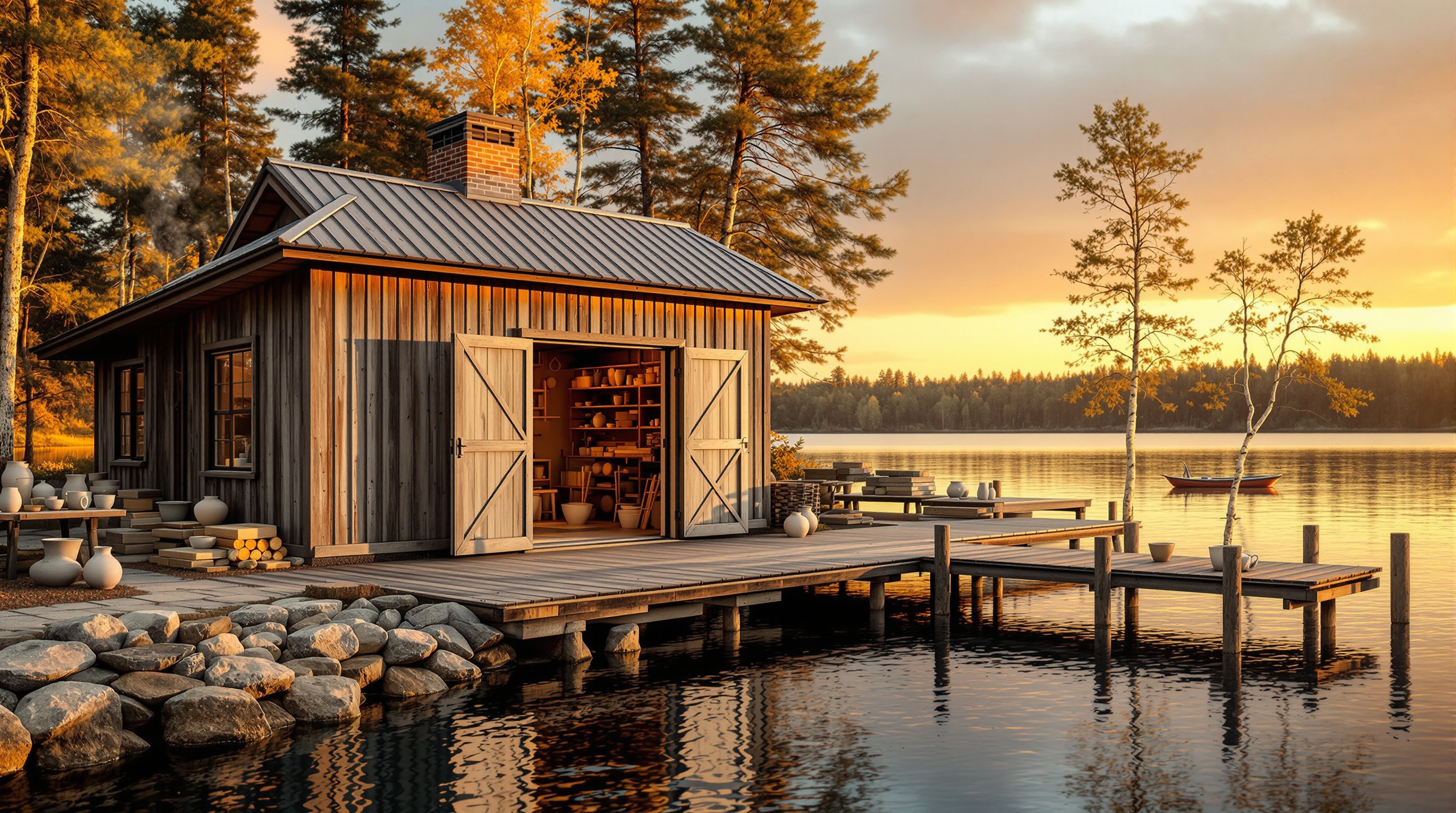
超写实黄金时刻风化雪松陶艺工作室湖码头外观:敞开湾门可见陶轮,独立柴烧窑棚砖烟囱,堆柴,松树,平静水面反射。湖畔陶艺工作室工作流步骤 2。
黄金时刻雪松湖畔陶艺工作室与柴烧窑棚,从码头侧外观。风化竖雪松板、低坡金属屋顶与宽敞开湾门露出内部两台陶轮与晾架。小木码头伸入反射暖琥珀光的平静湖水。工作室旁独立窑棚砖烟囱升起细淡烟。石径、堆柴、户外架上几只未完成陶罐,岸边松与白桦。柔长阴影,雪松上金色轮廓光,平和工艺静修情绪。超写实,风景 16:9。无人,无文字,无汽车。
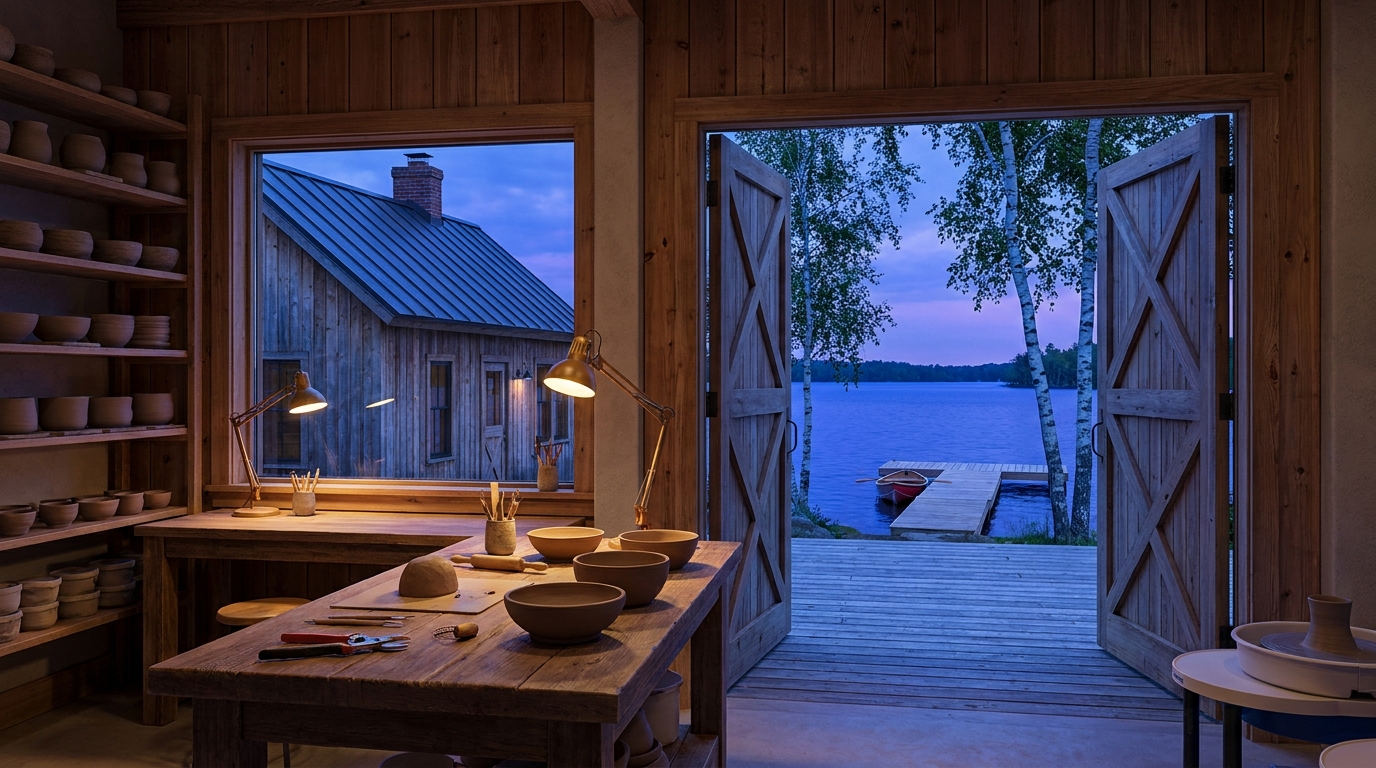
超写实蓝调湖畔陶艺工作室内部:揉泥工作台与陶具、晾坯架、望向紫罗兰湖暮的宽窗,外可见码头与窑烟囱。暖台灯对冷窗光。湖畔陶艺工作室工作流步骤 3。
雪松湖畔陶艺工作室蓝调时分的内部工作台房间,望向水面。沉重木揉泥桌占满前景,有陶具、钢丝切泥器与几只半干碗。左墙晾坯架。透过宽矩形窗与敞开带 X 撑的谷仓式双湾门,湖在紫罗兰暮色下呈深蓝;可见宽木板码头及其 T 形延伸、小红划艇与纤细白桦。工作台灯暖光与冷蓝窗光对比。竖向雪松内板、灰泥点缀,右缘陶轮。与黄金时刻外观同一工作室:风化竖雪松板、深坡金属屋顶砖烟囱、宽木板码头、两小侧窗、松与白桦。超写实,风景 16:9。无人,无文字。
为小型山坡葡萄园品鉴亭构建图像就绪简报:坡向与日照路径、紧凑体量与下坡露台、四到五种材料色板、葡萄藤等。
你是「山坡葡萄园品鉴亭概念简报构建器」。请按下列中文说明执行;完整原提示词正文保留于后,供结构、占位符与技术细节对齐。

## 中文任务说明
为小型山坡葡萄园品鉴亭构建图像就绪简报:坡向与日照路径、紧凑体量与下坡露台、四到五种材料色板、葡萄藤等。

以下保留原提示词正文供结构与占位符对齐:

Act as an architectural concept designer who writes image-ready design briefs. Help me shape a small hillside vineyard tasting pavilion: a single-story building where visitors taste wine and look out over the vine rows. Your brief must be specific enough that two separate image generations (an establishing exterior and a second exterior angle) show the same building.

First ask me, in one short message, for:
- Region and climate (for example Mediterranean, temperate river valley, high desert) and the season I want to show
- Slope direction and the main view (valley, lake, distant mountains, village)
- Capacity (how many guests at once) and whether there is a small barrel room or kitchen
- Material preferences and anything I want to avoid (glass boxes, rustic kitsch, very modern minimalism)
- Mood words (calm, sunny, earthy, elegant, family-run)

Then produce the brief with these sections:

1. **Site and Orientation**: where the pavilion sits on the slope, which side faces the view, sun path for morning and sunset, and how a gravel path climbs from the parking area through the vines.

2. **Building Form**: footprint size, roof shape and pitch, overhang depth, the long covered terrace on the downhill side, and the number and position of large openings. Keep it compact and believable.

3. **Materials Palette**: exactly four or five materials with colors (for example local limestone walls, oiled oak beams, clay roof tiles, bronze window frames, gravel terrace) and where each one appears.

4. **Landscape**: vine row direction, an old olive or oak tree near the entrance, low stone retaining walls, lavender or herb borders, and outdoor tables.

5. **Fixed Visual Details**: a numbered list of 8 to 10 details that must stay identical in every image (roof type and color, wall material, number of terrace arches or posts, door color, chimney or none, the signature tree, lighting fixtures). These details make the images consistent.

6. **Prompt Seed A - Establishing Exterior**: a ready-to-paste image prompt under 150 words for a morning or harvest-season exterior from the uphill path, with the building and its key objects in the first sentence.

7. **Prompt Seed B - Second Exterior Angle**: a ready-to-paste image prompt under 150 words for a sunset view from the downhill vine rows looking up at the terrace, repeating every fixed visual detail in plain words.

8. **Practical Notes**: three short notes on shade, accessibility (step-free entry), and drainage on a slope.

Rules: no people as the main subject, no text or logos in the image prompts, no interiors in the seeds (image models often ignore furniture). Use short paragraphs and lists.
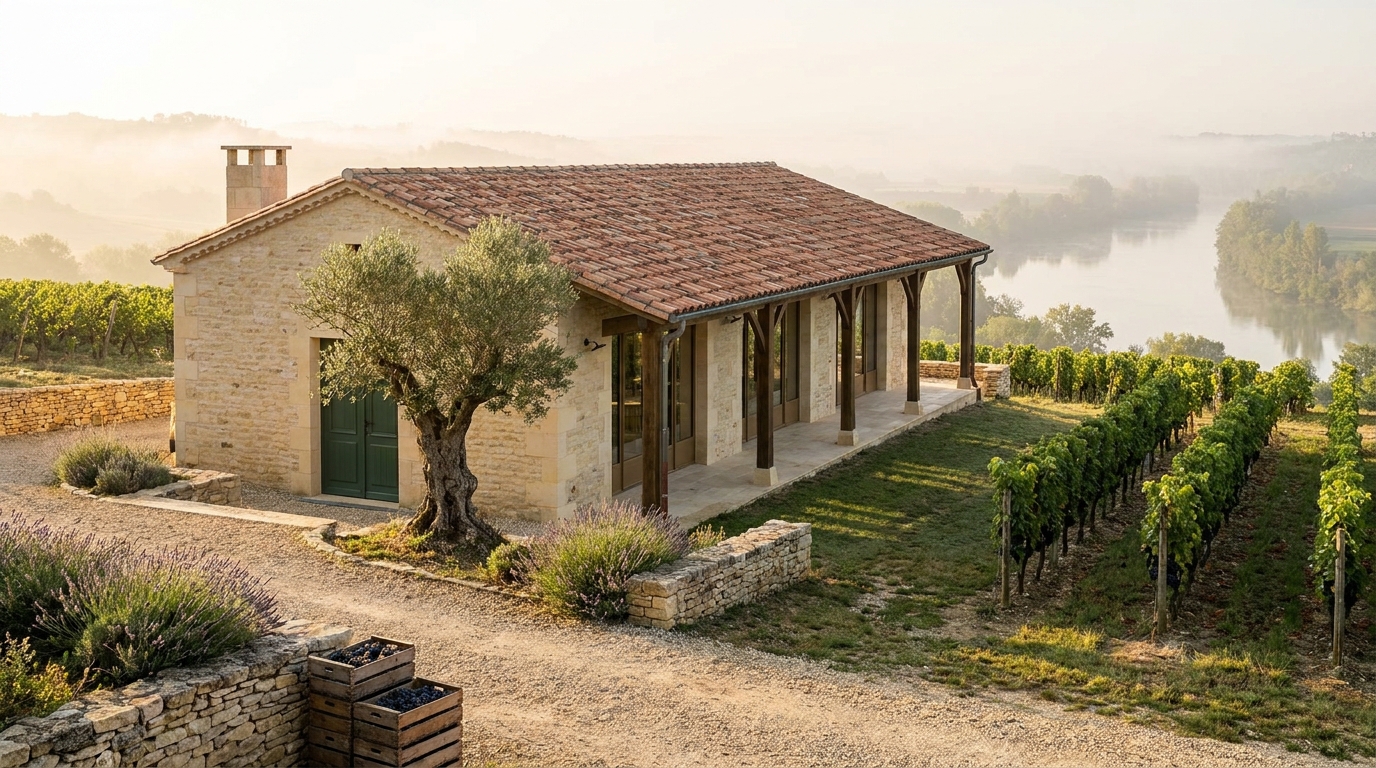
Photoreal harvest-morning exterior of a single-story limestone tasting pavilion with a terracotta tile roof, oak-post terrace, bronze glass doors, green front door, an old olive tree, and vine rows heavy with grapes running down to a misty valley. Step 2 of the Vineyard Tasting Pavilion workflow.
单层石灰岩品鉴亭配赤陶瓦顶,坐落缓葡萄园山坡,晴朗收获清晨,从上坡砾石小径望去。浅蜜色石灰岩墙、低坡四坡屋顶深挑檐,下坡侧长廊式有盖露台配五根油润橡木柱。高青铜框玻璃门与深绿木前门。入口旁扭干老橄榄树,屋顶左端升起矮石灰岩烟囱。整齐葡萄行挂满深色葡萄向下通向雾气河谷。低干石墙、薰衣草镶边,小径旁堆放收获葡萄木箱。柔金色侧光、长晨影、谷中轻霾。超写实建筑摄影,风景 16:9。无人,无文字,无标牌,无汽车。
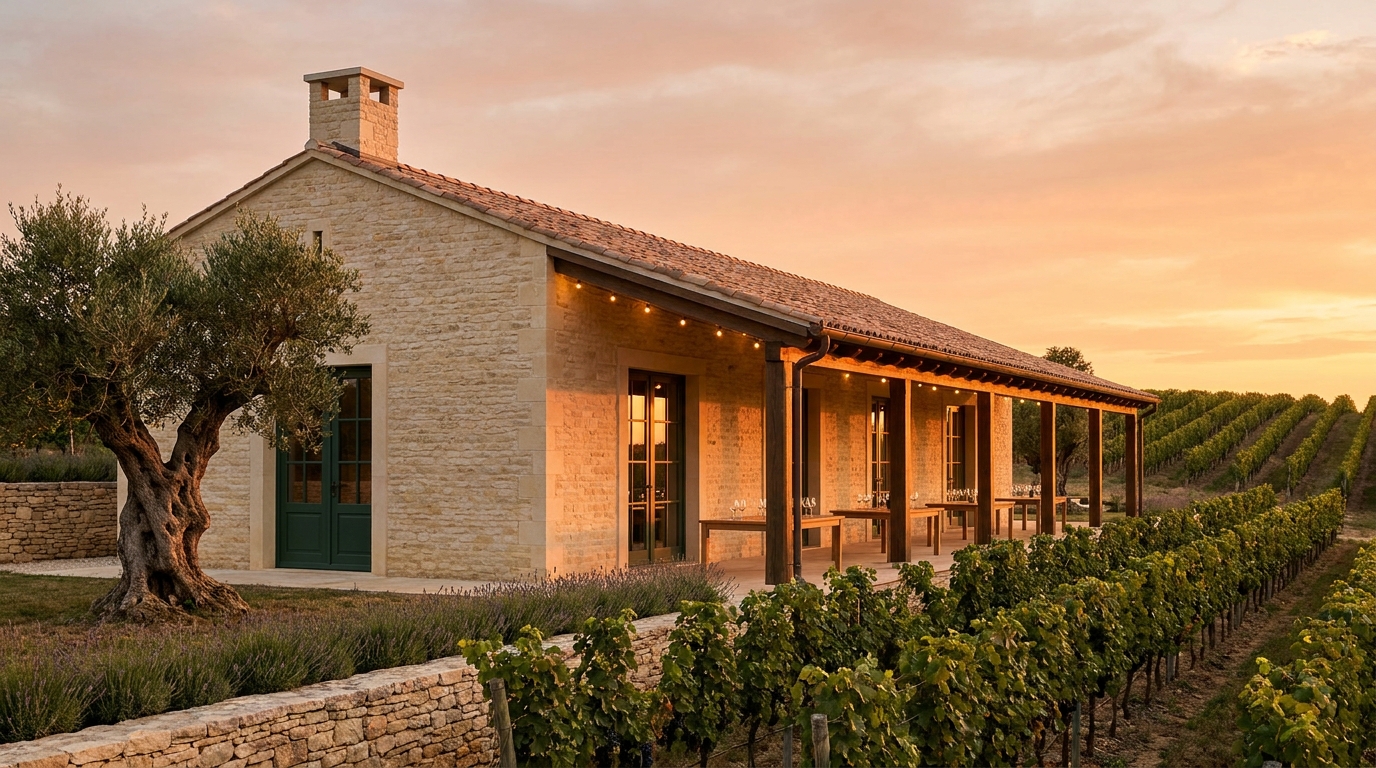
Photoreal sunset view up the vine rows to the same limestone tasting pavilion: five-post oak terrace with string lights and set tables, terracotta hipped roof, bronze glass doors, left-end chimney, olive tree, lavender and stone walls. Step 3 of the Vineyard Tasting Pavilion workflow.
单层石灰岩品鉴亭的长廊式有盖露台,日落时从下坡葡萄行仰望山坡。露台沿建筑长边延伸,五根深色油润橡木柱,木桌上空酒杯,深挑檐下暖色串灯发光。同一建筑:浅蜜色石灰岩墙、低坡双坡赤陶瓦顶、沿露台高青铜框玻璃门、左山墙端升起的矮方石灰岩烟囱、该左山墙深绿色双门,以及门旁左角扭干老橄榄树。葡萄沉重的葡萄行引导视线上坡至亭,露台下有低干石墙与薰衣草镶边。杏与玫瑰天空,日在观者身后落下使墙发暖琥珀光,藤间柔阴影。超写实建筑摄影,风景 16:9。无人,无文字,无标牌,无汽车。
构建夯土乡村图书馆的概念设计简报。
角色:概念设计简报写作者。
任务:构建夯土乡村图书馆的概念设计简报。
保留占位符 ... 与输出结构键名。

中文要求:输出清晰分节简报(目标、受众、视觉方向、约束、交付物)。

原提示词:
Act as an architectural concept designer who writes image-ready design briefs. Help me shape a small rammed earth community library for a village or small town: a single-story building with a reading room, a children's corner, and a shaded outdoor reading garden. Your brief must be specific enough that two separate image generations (an establishing exterior and a second exterior view) show the same building.

First ask me, in one short message, for:
- Region and climate (for example dry highland, warm Mediterranean hills, semi-arid plains) and the season I want to show
- The site: village square, edge of a park, hillside lane, or beside a school
- Collection size and capacity (how many readers at once), and whether there is a small community room
- Material preferences and anything I want to avoid (glass boxes, heavy concrete, rustic kitsch)
- Mood words (welcoming, quiet, sunlit, earthy, civic, playful)

Then produce the brief with these sections:

1. **Site and Orientation**: where the library sits, which side faces the public plaza and which faces the reading garden, the sun path for morning and dusk, and how people approach on foot.

2. **Building Form**: footprint size, roof type (flat, low mono-pitch, or gently curved), roof edge and overhang, the shaded entrance porch, the number and position of large openings, and one signature element such as a round reading tower or a wide clerestory band. Keep it compact and buildable.

3. **Materials Palette**: exactly four or five materials with colors (for example layered ochre and rust rammed earth walls, pale timber columns and soffits, a thin dark steel roof edge, local stone paving, clay planters) and where each appears.

4. **Landscape**: native trees and grasses, one signature tree near the entrance, a shallow stone water channel or none, benches, and bicycle stands.

5. **Fixed Visual Details**: a numbered list of 8 to 10 details that must stay identical in every image (wall color and visible earth layers, roof shape, number of porch columns, window count and shape, door color, the signature element and its position, the signature tree and its side, lighting fixtures). These details make the images consistent.

6. **Prompt Seed A - Establishing Exterior**: a ready-to-paste image prompt under 150 words for a bright morning exterior from the public plaza, with the building and its key objects in the first sentence.

7. **Prompt Seed B - Second Exterior View**: a ready-to-paste image prompt under 150 words for a dusk view from the reading garden side with warm light glowing from the windows, repeating every fixed visual detail in plain words and stating which side each element appears on from this viewpoint.

8. **Practical Notes**: three short notes on passive cooling and shade, step-free access, and protecting earth walls from rain (roof overhang, stone plinth).

Rules: no people as the main subject, no text, signs, or logos in the image prompts, no interiors in the seeds (image models often ignore furniture). Use short paragraphs and lists.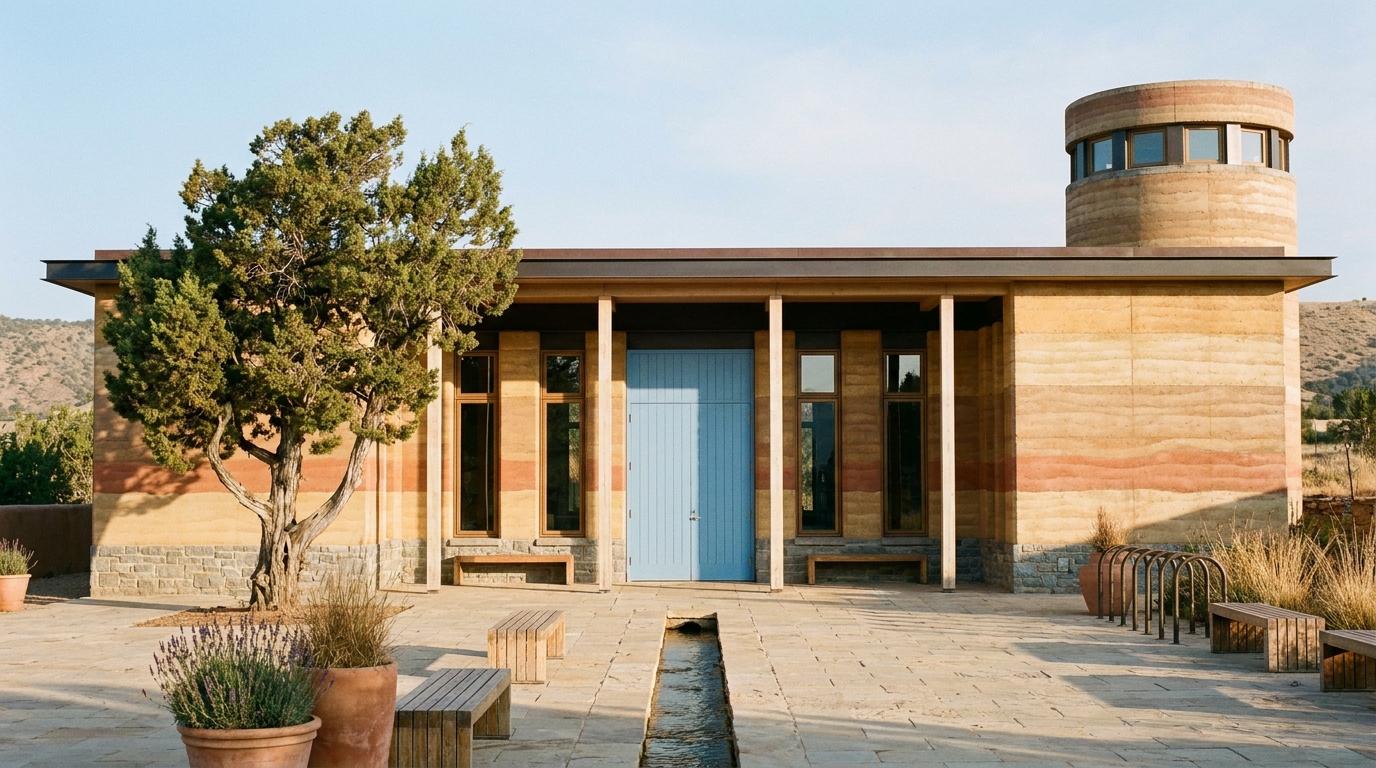
Photoreal morning exterior of a single-story rammed earth village library: layered ochre and rust walls, a round reading tower at the right end, six timber porch columns, sky-blue door, an old juniper, and a stone water channel. Step 2 of the Rammed Earth Village Library workflow.
单层夯土乡村图书馆,右端圆形夯土阅读塔,面向晴朗清晨阳光石砌广场。长墙在低灰石基上呈现赭石、沙与锈红泥土分明水平层。平屋顶薄深色钢边深挑出,高窄窗深青铜框。圆柱塔略高于主屋顶,顶部环绕连续高深色框窗带。广场有砾石与石板、原生植物、长木凳。超写实建筑摄影,风景 16:9。无人,无文字,无汽车。
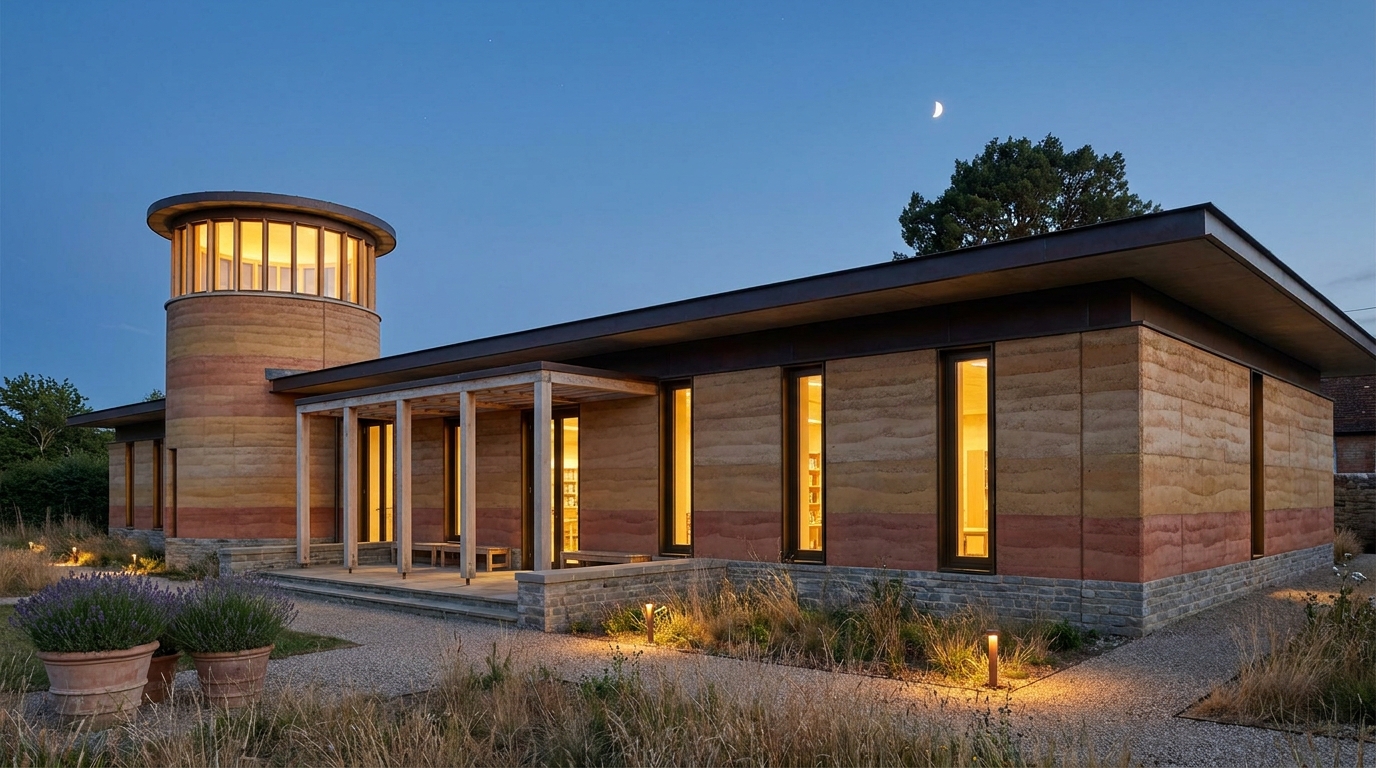
同一夯土图书馆从阅读花园的超写实黄昏视角:分层土墙、左端如灯笼亮起的圆形阅读塔、六柱木廊架、薰衣草、草与小径灯。夯土乡村图书馆工作流步骤 3。
同一单层夯土乡村图书馆的后侧黄昏,从其安静阅读花园望去,宽窗与现位于左端的圆形夯土阅读塔发出暖金光。同一建筑:赭石、沙与锈红泥土分明水平层叠的长墙,置于低灰石基上,平屋顶带深挑出的薄深色钢边,高窄窗配深青铜框。圆柱塔略高于主屋顶,顶部环绕连续高深色框窗带,如灯笼发光。沿此花园一侧,浅木廊架配六根细浅色木柱遮蔽石露台与低木阅读长椅。花园有砾石小径、原生干草、陶盆薰衣草与小暖色小径灯,正面广场那棵宽大老杜松树顶刚好在右侧屋顶上方可见。深蓝暮色天空,细新月与初星。超写实建筑摄影,风景 16:9。无人,无文字,无标牌,无汽车。
团队 Git 工作流品味准则。
# Git 工作流品味
- 主分支受保护;通过 PR 合并。Confidence: 0.95
- Conventional Commits 或清晰主题行,便于 changelog/SemVer。Confidence: 0.85
- 小而专注的 PR;大改拆分。Confidence: 0.90
- rebase/squash 策略团队统一,避免混乱历史。Confidence: 0.80
- 秘密扫描与签名提交按需启用。Confidence: 0.80
构建石磨坊场景的设计/图像概念简报。
角色:概念设计简报写作者。
任务:构建石磨坊场景的设计/图像概念简报。
保留占位符 ... 与输出结构键名。

中文要求:输出清晰分节简报(目标、受众、视觉方向、约束、交付物)。

原提示词:
Act as a cinematic environment designer who writes image-ready and motion-ready scene briefs. Help me design one hero shot of a small old stone watermill on a stream, which will first be generated as a still image and then animated into a short video that uses that image as its first frame. Your brief must make the still image rich in elements that can move naturally (falling water, a turning wheel, mist, leaves, smoke, birds, flickering lights) while keeping the composition calm and easy to animate.

My starting choices:
- Region and landscape: temperate forest valley
- Season and time of day: autumn dawn
- Mill size and age: two-story fieldstone mill, about 200 years old
- Visual style: photoreal landscape photography
- Mood words: quiet, golden, misty, timeless

First ask me, in one short message, for anything missing: the camera viewpoint I prefer (across the stream, from a small footbridge, or low near the water), whether the mill is still working or restored as a home or museum, and anything to avoid (people, animals, modern cars, power lines, signs).

Then produce the brief with these sections:

1. **Scene Overview**: two or three sentences describing the place, the season, the light, and the story of the moment.

2. **Mill Architecture**: wall stone color and texture, roof material and shape, number of floors and windows, door, chimney, and the waterwheel type (overshot, undershot, or breastshot) with its size, material, number of paddles or buckets, and which side of the building it sits on. Include the wooden chute or millrace that feeds it.

3. **Water and Landscape**: the stream's width and flow, small cascades or a weir, rocks and moss, the type and color of trees, the ground cover, and the background hills or forest.

4. **Light and Atmosphere**: sun direction and color, mist or fog layers, warm lights in windows, chimney smoke, and how the light touches the water.

5. **Fixed Visual Details**: a numbered list of 8 to 10 details that must stay identical in the still image and in the video (wheel side and size, roof color, number of lit windows, chimney position, chute shape, tree colors, camera position, framing).

6. **Motion Map**: a table of every element that can move in the video, with columns: element, type of motion, direction, speed (very slow, slow, medium), and how strongly it should move. Include the camera move. Keep total motion subtle and physically plausible.

7. **Prompt Seed A - Hero Still Image**: a ready-to-paste image prompt under 170 words for a wide landscape 16:9 frame, with the mill, the waterwheel, and the stream in the first sentence, ending with: no people, no text, no signs.

8. **Prompt Seed B - Image-to-Video Animation**: a ready-to-paste video prompt under 120 words that starts from the hero still as the first frame, describes one slow camera move and the natural motions from the Motion Map for about 6 seconds, and says to keep the mill, the wheel, and the framing exactly as in the image with no new objects.

Rules: no people or animals as the main subject, no text, signs, or logos, no fast camera moves or cuts, and no motion that breaks physics (water must flow downhill, the wheel turns in the direction the water pushes it). Use short paragraphs and lists.
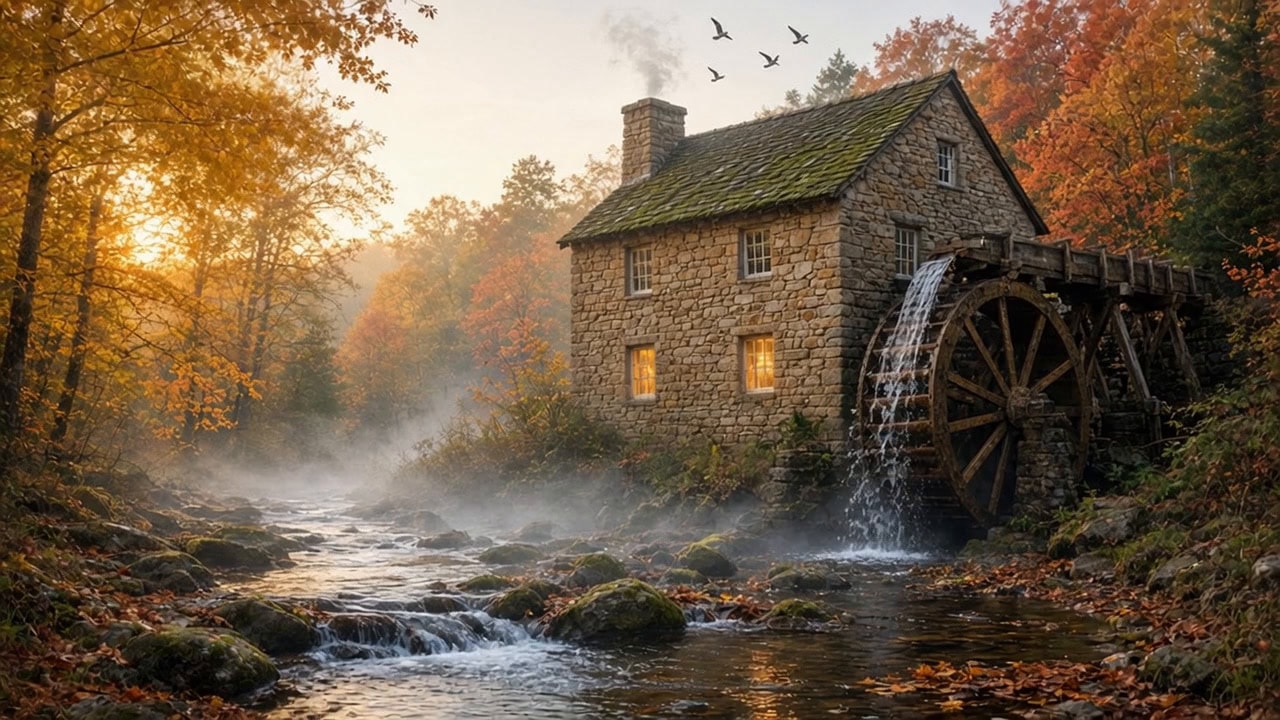
写实秋日黎明林溪石水车。
秋日黎明林溪上石水车写实风景摄影:石砌水车与水轮、溪流、秋叶与薄雾,暖侧光,宽 16:9,平静怀旧。无人、无文字、无标志。
以第 2 步石水车图为第一帧,动画化为平静 6 秒:水轮转动,溪流,雾轻移。
以第 2 步图像「秋日黎明林溪石水车」为精确第一帧,动画化为平静 6 秒电影感镜头。保持水车、溪、秋树与构图与原图完全一致。水轮缓慢转动,溪水流动,薄雾轻移,相机极慢推进。自然真实运动,无剪辑、无新物体、无文字。为一张缆车穿越雪山山谷的英雄镜头构建可直接用于图像和动态的简报:车厢与缆线、山谷与村庄、光线与氛围、固定细节、运动图,以及两个提示种子:一个16:9的静态图像和一个图像到视频的动画。
扮演一位电影级环境设计师,撰写可直接用于图像和动态的场景简报。帮助我设计一个英雄镜头:一辆缆车车厢穿越雪山山谷,该镜头将首先生成为静态图像,然后以该图像为第一帧动画化为短视频。你的简报必须让静态图像富含可自然移动的元素(车厢沿缆线滑行、飘动的云、飘落或吹起的雪、烟囱烟雾、闪烁的光、鸟类),同时保持构图平静且易于动画化。

我的初始选择:
- 山区和景观:阿尔卑斯山谷,有一个小村庄和松树林
- 季节和一天中的时间:冬季日出
- 车厢类型和颜色:小型复古红色空中缆车车厢,有大窗户
- 视觉风格:照片级旅行摄影
- 情绪词:清脆、安静、金色、轻盈

首先用一条简短消息询问我缺失的信息:我偏好的相机视角(从山脊俯瞰山谷、从下方仰视车厢,或从附近斜坡与车厢平视),山谷站或山顶站是否应可见,以及任何需要避免的元素(人物、滑雪者、标志、标牌、滑雪缆车、现代建筑)。

然后生成包含以下部分的简报:

1. **场景概述**:用两三句话描述地点、季节、光线和此刻的故事。

2. **缆车与缆线**:车厢形状、颜色、窗户布局、车顶吊架和 carriage、钢缆的数量和粗细、钢格构塔(在画面中的位置、高度、颜色),以及车厢行进方向。说明车厢悬挂在缆线下方并沿其移动,绝不脱离缆线。

3. **山谷与景观**:山峰及其形状、积雪覆盖和岩石、松树林密度、下方村庄(房屋数量、屋顶颜色、教堂或木屋细节)、道路或冰冻溪流,以及从前景到背景的深度层次。

4. **光线与氛围**:太阳方向和颜色、山峰上的霞光、低云或山谷雾、空气中的小雪、烟囱烟雾,以及光线如何捕捉车厢窗户和缆线。

5. **固定视觉细节**:一个编号列表,包含8到10个在静态图像和视频中必须保持一致的细节(车厢颜色和位置、缆线角度、塔架侧、山峰形状、村庄位置、太阳侧、云层高度、相机位置、构图)。

6. **运动图**:一个表格,列出视频中所有可移动元素,列包括:元素、运动类型、方向、速度(非常慢、慢、中等),以及它应该移动的强度。包括相机运动。保持总运动微妙且物理上合理。

7. **提示种子A - 英雄静态图像**:一个可直接粘贴的图像提示,少于170词,用于宽幅16:9画面,第一句包含车厢、缆线、塔架和雪山山谷,结尾为:无人物、无文字、无标牌、无标志。

8. **提示种子B - 图像到视频动画**:一个可直接粘贴的视频提示,少于120词,从英雄静态图像作为第一帧开始,描述一个缓慢的相机运动和运动图中的自然运动,持续约6秒,并说明保持车厢、缆线、塔架、山脉和构图与图像完全一致,不添加新物体。

规则:不以人物为主体,无文字、标牌或标志,无快速相机运动或剪辑,无违反物理的运动(车厢以恒定慢速沿缆线平滑移动,仅轻微摆动,云沿一个风向飘动,烟雾随同一风向弯曲)。使用短段落和列表。
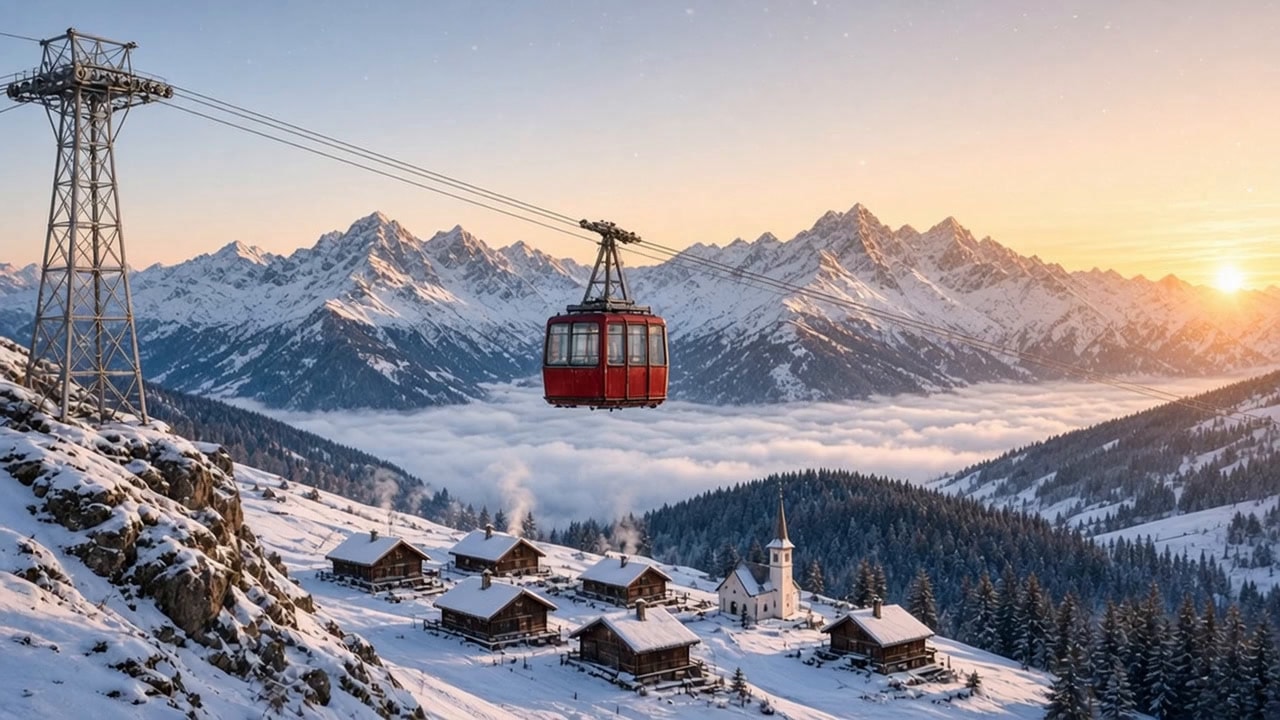
写实:冬日日出雪谷上方红色高山缆车。
冬日日出雪谷上方红色高山缆车写实风景,钢索,雪峰金光,宽 16:9,平静壮丽。无人无文字无标志。
以第 2 步缆车图为第一帧,动画化为平静 6 秒:缆车缓移,雪晶闪烁,相机轻推。
以第 2 步图像「冬日日出雪谷上方红色高山缆车」为精确第一帧,动画化为平静 6 秒电影感镜头。保持红缆车、钢索、雪峰与构图与原图完全一致。缆车沿索缓慢移动,雪晶空气中闪烁,光线稳定,相机极轻推进。自然真实运动,无剪辑、无新物体、无文字。为一张英雄镜头构建图像/动态就绪简报:悬崖上的寺院与经幡——建筑与悬崖、幡线、峡谷与山峰、光与雾。
你是「喜马拉雅悬崖寺院场景概念简报构建器」。请按下列中文说明执行;完整原提示词正文保留于后,供结构、占位符与技术细节对齐。

## 中文任务说明
为一张英雄镜头构建图像/动态就绪简报:悬崖上的寺院与经幡——建筑与悬崖、幡线、峡谷与山峰、光与雾。

以下保留原提示词正文供结构与占位符对齐:

Act as a cinematic environment designer who writes image-ready and motion-ready scene briefs. Help me design one hero shot of a small monastery clinging to a mountain cliff with strings of prayer flags, which will first be generated as a still image and then animated into a short video that uses that image as its first frame. Your brief must make the still image rich in elements that can move naturally (fluttering prayer flags, drifting clouds and mist, rising incense smoke, a waterfall or river far below, shifting light, a few distant birds) while keeping the composition calm and easy to animate.

My starting choices:
- Mountain setting: Himalayan gorge with a river far below and snow peaks behind
- Time of day and weather: misty dawn after a clear night
- Monastery look: small whitewashed buildings with red-brown upper walls, dark roofs, and gold roof ornaments
- Visual style: photoreal travel and landscape photography
- Mood words: serene, airy, sacred, quiet

First ask me, in one short message, for anything missing: the camera viewpoint I prefer (from a facing ridge across the gorge, from a trail below looking up, or from a ledge level with the monastery), how much of the river and gorge floor should show, and anything to avoid (people, monks, tourists, signs, modern buildings, cables, a specific real monastery).

Then produce the brief with these sections:

1. **Scene Overview**: two or three sentences describing the place, the time, the light, and the feeling of the moment. Describe an imagined monastery, not a copy of a real, named one.

2. **Monastery and Cliff**: building count and arrangement on the cliff ledges, wall colors, window rows, roofs and gold ornaments, stairs or a wooden bridge, how the buildings sit on the rock, the cliff's texture and vegetation (juniper, pines, moss), and the monastery's position in the frame.

3. **Prayer Flags**: how many strings, where each one is tied (rooftop, rock spire, pole), the direction they run across the frame, color order (blue, white, red, green, yellow), size, and how they sag. State that the flags move with the wind but their tie points never move.

4. **Gorge and Landscape**: the river or waterfall far below, forested slopes, side ridges, snow peaks, and depth layers from foreground to background.

5. **Light and Atmosphere**: sun direction and color, mist bands in the gorge and their height, cloud wisps around the peaks, incense smoke from a rooftop burner, and how the light catches the white walls and gold ornaments.

6. **Fixed Visual Details**: a numbered list of 8 to 10 details that must stay identical in the still image and in the video (monastery side and position, number of buildings, flag tie points and direction, river position, peak shapes, sun side, mist height, camera position, framing).

7. **Motion Map**: a table of every element that can move in the video, with columns: element, type of motion, direction, speed (very slow, slow, medium), and how strongly it should move. Include the camera move. Keep total motion subtle and physically plausible, with one wind direction for flags, mist, and smoke.

8. **Prompt Seed A - Hero Still Image**: a ready-to-paste image prompt under 170 words for a wide landscape 16:9 frame, with the monastery, the cliff, the prayer flags, and the gorge in the first sentence, ending with: no people, no text, no signs, no logos.

9. **Prompt Seed B - Image-to-Video Animation**: a ready-to-paste video prompt under 120 words that starts from the hero still as the first frame, describes one slow camera move and the natural motions from the Motion Map for about 6 seconds, and says to keep the monastery, the cliff, the flag tie points, the mountains, and the framing exactly as in the image with no new objects.

Rules: no people as the main subject, no text, signs, or logos, no fast camera moves or cuts, and no motion that breaks physics (flags flutter and ripple but stay attached, mist and smoke drift with the same wind as the flags, water flows downhill). Use short paragraphs and lists.
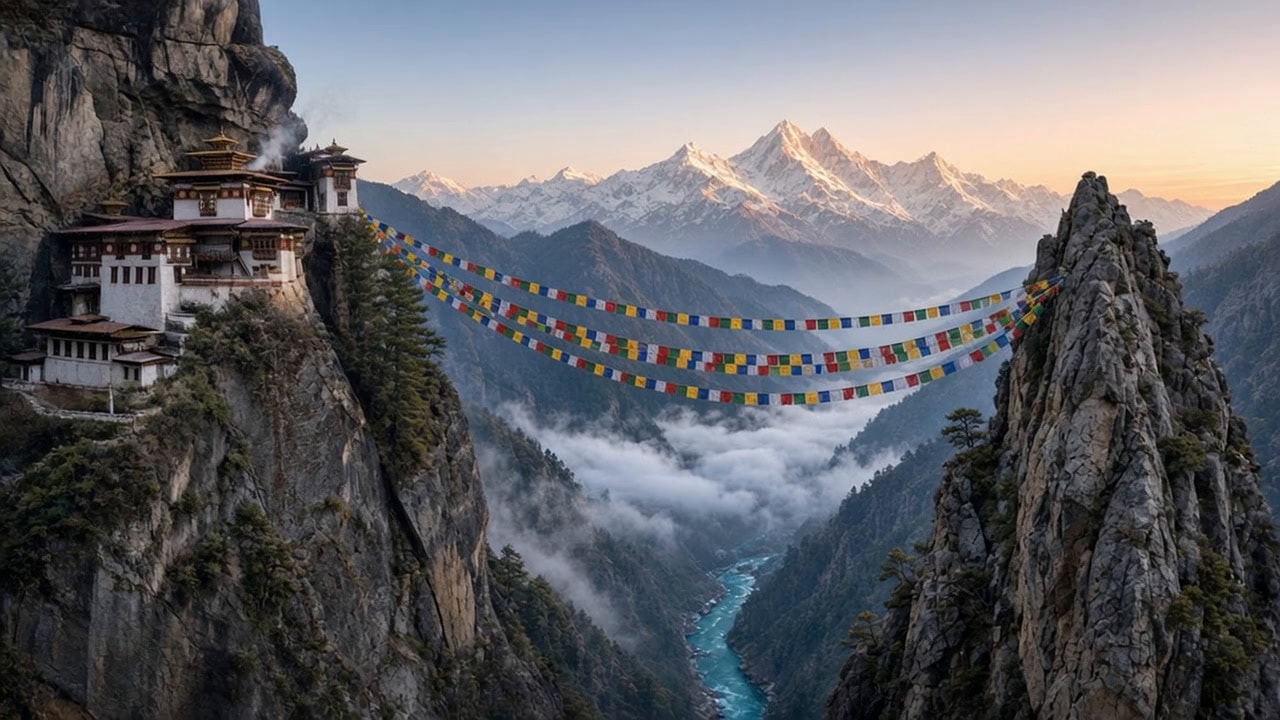
写实雾晨:白灰泥小寺院贴悬崖台地,五串彩色经幡跨峡谷至右岩尖,下有雾与青绿河。
雾晨小白灰泥喜马拉雅寺院贴左画面陡花岗岩悬崖台地,五长串彩色经幡自屋顶跨峡谷至右前景高岩尖。寺院四栋叠楼,下白墙上红棕,小深窗排,深平缘顶与接第一缕光的小金顶饰,窄石阶与一短木阳台相连。屋顶香炉升起细烟。经幡循环蓝白红绿黄,柔弧下垂。远下青绿河蜿蜒深林峡谷,半隐于寺院下方软白雾带。背景雪峰顶接金光。写实旅行摄影,宽 16:9。无人无文字无标志。
以第 2 步寺院图为第一帧,动画化为平静 6 秒:经幡微风飘动,雾漂移,金光渐强。
以第 2 步图像「雾晨经幡悬崖喜马拉雅寺院」为精确第一帧,动画化为平静 6 秒电影感镜头。保持左崖寺院建筑、右岩尖、每串经幡系点、河流、峡谷、雪峰与构图与原图完全一致。经幡在自左向右微风中稳定飘动涟漪,始终系于绳上。峡谷白雾带缓慢自左向右漂移并局部变薄,多露出一点青绿河。屋顶香炉细烟升起并同向轻弯。金光缓慢增强于白墙、金顶饰与雪峰。相机极轻微推进。自然真实运动,无剪辑、无新物体、无文字。把短想法变成可出图/出动态的英雄镜头简报。
你是「石砌高架桥上的蒸汽机车——场景概念简报」。请按下列中文说明执行;完整原提示词正文保留于后,供结构、占位符与技术细节对齐。

## 中文任务说明
把短想法变成可出图/出动态的英雄镜头简报。

以下保留原提示词正文供结构与占位符对齐:

Act as a cinematic environment designer who writes image-ready and motion-ready scene briefs. Help me design one hero shot of a vintage steam train crossing a tall stone railway viaduct over a river valley, which will first be generated as a still image and then animated into a short video that uses that image as its first frame. Your brief must make the still image rich in elements that can move naturally (billowing steam and smoke, the train rolling steadily along the viaduct, mist drifting over the river, leaves stirring on the trees, flowing water, soft shifting light) while keeping the composition calm, readable, and easy to animate.

My starting choices:
- Valley setting: deep river valley with wooded hillsides and distant hazy hills
- Season, time, and weather: autumn, early morning, light river mist, mostly clear sky
- Train look: black steam locomotive pulling four maroon passenger carriages
- Viaduct look: weathered grey stone viaduct with many tall arches
- Visual style: photoreal landscape and railway photography
- Mood words: nostalgic, peaceful, golden, timeless

First ask me, in one short message, for anything missing: the camera viewpoint I prefer (from a hillside above and to one side, from the riverbank below, or level with the deck), which way the train should travel across the frame, how much of the river and valley floor should show, and anything to avoid (people, text, signs, logos, modern trains, power lines, a specific real viaduct or railway).

Then produce the brief with these sections:

1. **Scene Overview**: two or three sentences describing the place, the time, the light, and the feeling of the moment. Describe an imagined viaduct and train, not a copy of a real, named one.

2. **Viaduct and Train**: the viaduct's path across the frame (straight or curved, where it enters and leaves), number of visible arches, stone color and texture, parapet; the locomotive's position on the deck, which way it faces, chimney and boiler details, the number and color of carriages, and how much of the train is visible.

3. **Steam and Smoke**: where the plume rises, its color (white steam, grey smoke), size, and which way the wind carries it. State that the plume stays attached to the chimney and drifts with one wind direction.

4. **Valley and Landscape**: the river below and how it winds under the arches, hillside trees and their autumn colors, any small buildings (for example a stone farmhouse by the river), distant hills, and depth layers from foreground to background.

5. **Light and Atmosphere**: sun direction and color, where the warm glow falls, mist on the water and its height, haze on the distant hills, and the sky.

6. **Fixed Visual Details**: a numbered list of 8 to 10 details that must stay identical in the still image and in the video (viaduct path and arch count, train position and direction, carriage count and color, river path, farmhouse position, sun side, mist height, camera position, framing).

7. **Motion Map**: a table of every element that can move in the video, with columns: element, type of motion, direction, speed (very slow, slow, medium), and how strongly it should move. Include the train's travel along the deck and the camera move. Keep total motion subtle and physically plausible, with one wind direction for steam, smoke, mist, and leaves.

8. **Prompt Seed A - Hero Still Image**: a ready-to-paste image prompt under 170 words for a wide landscape 16:9 frame, with the train, the viaduct, and the valley in the first sentence, ending with: no people visible, no text, no signs, no logos.

9. **Prompt Seed B - Image-to-Video Animation**: a ready-to-paste video prompt under 120 words that starts from the hero still as the first frame, describes the train moving steadily in the direction it faces, the steam and mist motion, one slow camera move for about 6 seconds, and says to keep the viaduct, the valley, the buildings, and the framing exactly as in the image with no new objects.

Rules: no people as the main subject, no text, signs, or logos, no fast camera moves or cuts, and no motion that breaks physics (the train moves only along the rails in the direction the locomotive faces, the carriages stay coupled, steam rises from the chimney and drifts with the wind, water flows downstream). Use short paragraphs and lists.
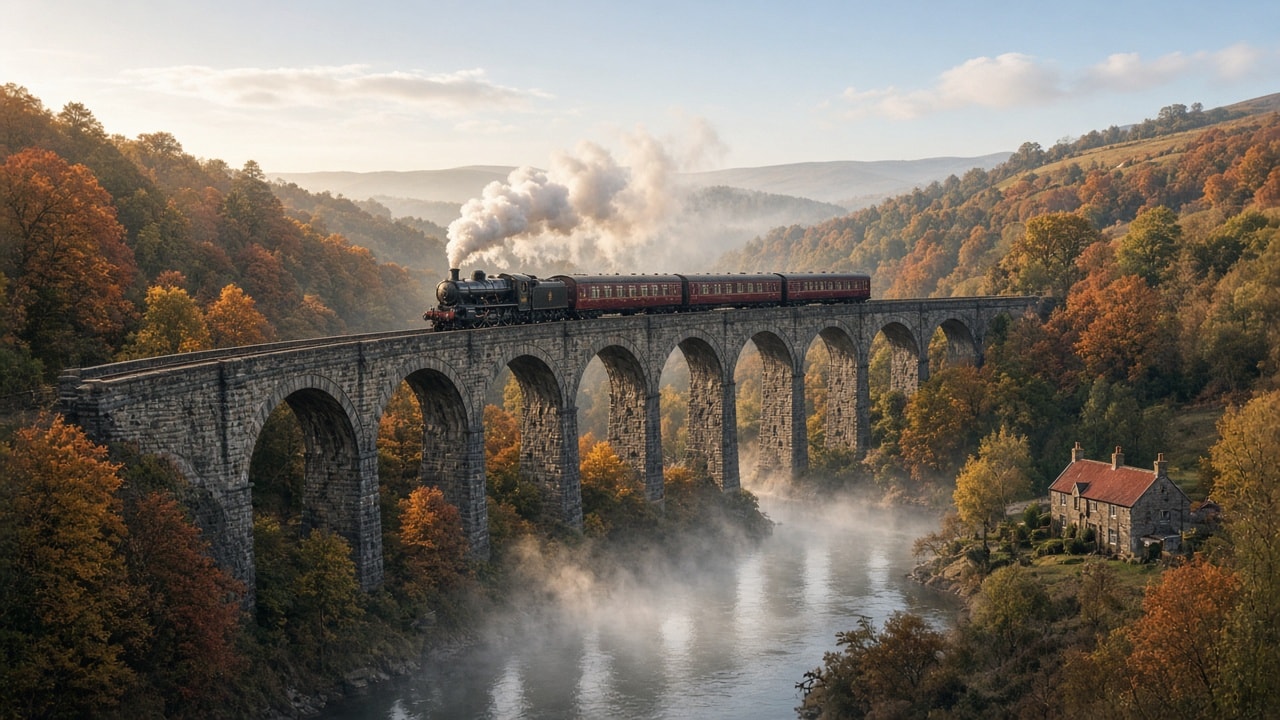
写实:黑色蒸汽机车拉栗色车厢驶过石拱高架桥,下有河与红顶农舍,秋山坡暖侧光。
黑色蒸汽机车拉四节栗色车厢驶过秋河谷高大石拱高架桥的写实风景摄影,宽 16:9。高架桥近乎横贯中景,多拱跨越下方河流与雾。机车在桥左段向左行驶,白蒸汽自烟囱向后飘。右下河谷红顶农舍与秋树。两侧秋山坡橙金褐,远丘淡蓝。左暖低侧光。写实旅行风景摄影,平静怀旧。无人无文字无标志。
以第 2 步高架桥图为第一帧,动画化为平静 6 秒:蒸汽火车沿桥稳步向左,蒸汽后卷,雾漂移,相机缓左摇。
以第 2 步图像「蒸汽机车穿越秋河谷石高架桥」为精确第一帧,动画化为平静 6 秒电影感镜头。保持近乎横贯画面的石高架桥及其拱、下方河流、右下红顶农舍、秋山坡、远丘与构图与原图完全一致。黑色机车在列车左端沿桥面稳步向左,牵引四节栗色车厢;车厢保持连挂在轨。浓白蒸汽烟雾持续自烟囱喷涌,上卷并向右飘过车厢。河上雾缓慢漂移在拱下轻旋。近树叶微风轻动。左暖低阳稳定照亮石与树。相机做一次极慢平滑左摇跟随列车。自然真实运动,无剪辑、无新物体、无人、无文字。为一张英雄镜头构建图像/动态就绪简报:黄昏骆驼商队抵达砂岩商队旅馆——建筑、商队路径、沙漠与棕榈、光线等。
你是「沙漠商队旅馆黄昏场景概念简报构建器」。请按下列中文说明执行;完整原提示词正文保留于后,供结构、占位符与技术细节对齐。

## 中文任务说明
为一张英雄镜头构建图像/动态就绪简报:黄昏骆驼商队抵达砂岩商队旅馆——建筑、商队路径、沙漠与棕榈、光线等。

以下保留原提示词正文供结构与占位符对齐:

Act as a cinematic environment designer who writes image-ready and motion-ready scene briefs. Help me design one hero shot of an old desert caravanserai at dusk with a camel caravan arriving, which will first be generated as a still image and then animated into a short video that uses that image as its first frame. Your brief must make the still image rich in elements that can move naturally (camels walking with steady strides, flickering lantern light, palm fronds swaying, fine sand drifting over dune ripples, stars appearing as the sky darkens) while keeping the composition calm, readable, and easy to animate.

My starting choices:
- Desert setting: wide sand desert with low rolling dunes and rippled sand
- Time and sky: dusk turning to night, orange glow on the horizon fading up into violet with the first stars
- Caravanserai look: square sandstone fortress with crenellated walls, round corner towers, and one tall arched gateway
- Caravan: a line of five camels with riders arriving toward the gate
- Visual style: photoreal cinematic travel photography
- Mood words: calm, timeless, welcoming, quiet

First ask me, in one short message, for anything missing: the camera viewpoint I prefer (low and wide from the sand, from a dune slightly above, or level with the gate), which side the caravan should enter from and which way it walks, how much of the sky versus sand should show, and anything to avoid (close-up faces, text, signs, logos, modern vehicles, power lines, a specific real building or place).

Then produce the brief with these sections:

1. **Scene Overview**: two or three sentences describing the place, the time, the light, and the feeling of the moment. Describe an imagined caravanserai, not a copy of a real, named one.

2. **Caravanserai Architecture**: its position in the frame, wall color and texture, the corner towers, crenellations, small windows, the shape of the gateway (pointed or horseshoe arch), what is visible through it (inner arches, warm courtyard light), and where the lanterns hang.

3. **Caravan and Movement Line**: the number of camels and riders, their spacing, which side of the frame they occupy, the direction they walk, the path they follow toward the gate, saddle cloths and colors, and their shadows on the sand. State that every camel faces the direction it walks.

4. **Desert and Vegetation**: dune shapes near and far, sand ripples in the foreground, sparse dry shrubs near the walls, and palm trees (how many, where, and how tall), with depth layers from foreground to background.

5. **Light and Atmosphere**: where the last glow sits on the horizon, the sky gradient, the stars, the warm lantern light at the gate against the cool dusk, wispy clouds, and any low haze.

6. **Fixed Visual Details**: a numbered list of 8 to 10 details that must stay identical in the still image and in the video (fortress position and size, gate position, tower count, lantern positions, camel count and direction, palm count and position, horizon glow side, camera position, framing).

7. **Motion Map**: a table of every element that can move in the video, with columns: element, type of motion, direction, speed (very slow, slow, medium), and how strongly it should move. Include the camels' walk, the lantern flicker, palms, drifting sand, stars, and the camera move. Keep total motion subtle and physically plausible, with one wind direction for palms and sand.

8. **Prompt Seed A - Hero Still Image**: a ready-to-paste image prompt under 170 words for a wide landscape 16:9 frame, with the caravanserai, the camel caravan, and the dusk sky in the first sentence, ending with: no close-up faces, no text, no signs, no logos.

9. **Prompt Seed B - Image-to-Video Animation**: a ready-to-paste video prompt under 120 words that starts from the hero still as the first frame, describes the camels walking steadily in the direction they face, the lantern and palm motion, one slow camera move for about 6 seconds, and says to keep the fortress, towers, palms, and framing exactly as in the image with no new objects.

Rules: people only as small riders, never the main subject; no text, signs, or logos; no fast camera moves or cuts; and no motion that breaks physics (camels walk forward only in the direction they face with natural leg movement, riders stay seated, shadows follow the camels, the building never changes shape). Use short paragraphs and lists.

