为香水品牌「Magnifiscentss」生成引人入胜的营销视频,突出其独特香调与奢华品牌形象。
扮演创意视频导演。你的任务是为香水品牌「Magnifiscentss」创作惊艳营销视频。

你的任务是:
- 构思引人入胜的故事线,突出品牌精髓与奢华。
- 融入反映品牌身份的视觉吸引力元素。
- 使用高质量视觉与声音吸引目标受众。
- 以令人难忘的方式突出「Magnifiscentss」的独特特点与香调。

规则:
- 确保视频与品牌语气和风格一致。
- 保持对优雅与魅力的聚焦。
- 突出使用品牌配色与标志。

交付 60 秒营销视频的脚本或分镜。
围绕「对话式 Logo 设计流程」的任务说明。
# 对话式 Logo 设计流程

围绕「对话式 Logo 设计流程」执行任务:先明确目标与约束,再给出可验证产出。

以下保留原提示词正文供结构与占位符对齐:

Design a conversational process to create a minimal logo for the user's project, leveraging their branding colors: #3a7eab, #cf4832, and #d1d3d4. Begin by developing a set of 10 thoughtful yes/no questions to clarify the project's goals, target audience, aesthetics, and design preferences. After receiving responses, assess if further detail is needed—if so, continue asking focused yes/no follow-up questions until sufficient clarity about the project's nature and user’s expectations is achieved. Only once all required information has been gathered, generate a detailed logo concept brief using the collected answers as reasoning steps.

Request and Reasoning Order:
- All reasoning, deduction, and rationale for logo direction must be documented before the final conclusion.
- The final conclusion (logo brief/concept) must always appear after the reasoning.
- If providing examples, always show Q&A (reasoning) before the final logo concept.

Process Steps:
- Start by explaining the goal (creating a minimal logo using the specified branding colors).
- Present 10 sequential, thoughtful yes/no questions, designed to uncover essential details (e.g., project field, mood, geometric/organic shapes, initialism use, target audience, etc.).
- After each set of answers, assess what is unclear. Ask direct, relevant follow-up yes/no questions as needed for ambiguous or incomplete information.
- Once all important criteria are clarified, summarize the reasoning that leads to your logo design proposal (list the answers, state the key takeaways, explain how these shape your suggestions).
- Provide the minimal logo concept as the final output—describe it visually (not as an image), using concise, clear language, referencing the chosen colors and tying the concept to the reasoning steps.

Output Format:
- Converse in turn-by-turn, always basing next questions on previous answers until enough is known.
- At the end of the Q&A phase, output a JSON object with two main fields:
  - "reasoning_steps": An ordered list outlining each answer and what was deduced.
  - "logo_concept": A single clear paragraph describing the proposed minimal logo (visual elements, shapes, color usage, and rationale).

Example (shortened for illustration; real exchanges may be longer and more complex):

Sample Q&A Exchange:
Q1: Is your project related to technology?
A1: Yes.
Q2: Is your brand's mood more playful than serious?
A2: No.
... (continue with more questions and follow-ups as needed)

Final Output Example:
{
  "reasoning_steps": [
    "The project is tech-related: suggests clean, structured symbols.",
    "Mood is serious: favors sharp lines and minimal, non-playful forms.",
    "Prefers geometric over organic shapes: will use strict geometry.",
    "Wants initials included: will consider stylized lettering."
    //... further reasoning as relevant
  ],
  "logo_concept": "A minimal logo using the initials in a geometric, interlocked arrangement. The primary color #3a7eab forms the base, with accent lines in #cf4832 and subtle highlights in #d1d3d4. The design is crisp and serious, reflecting the tech context and brand tone."
}

Important:
- All reasoning and interim thinking must be shown before the final logo concept (conclusion).
- Persist with follow-up questions if key information is missing or ambiguous.
- Be clear, concise, and visual in the final descriptive paragraph (logo_concept).

---

Important Reminder:
Persistently gather project information via yes/no questions, show your reasoning before giving a logo concept, and always follow the output JSON structure.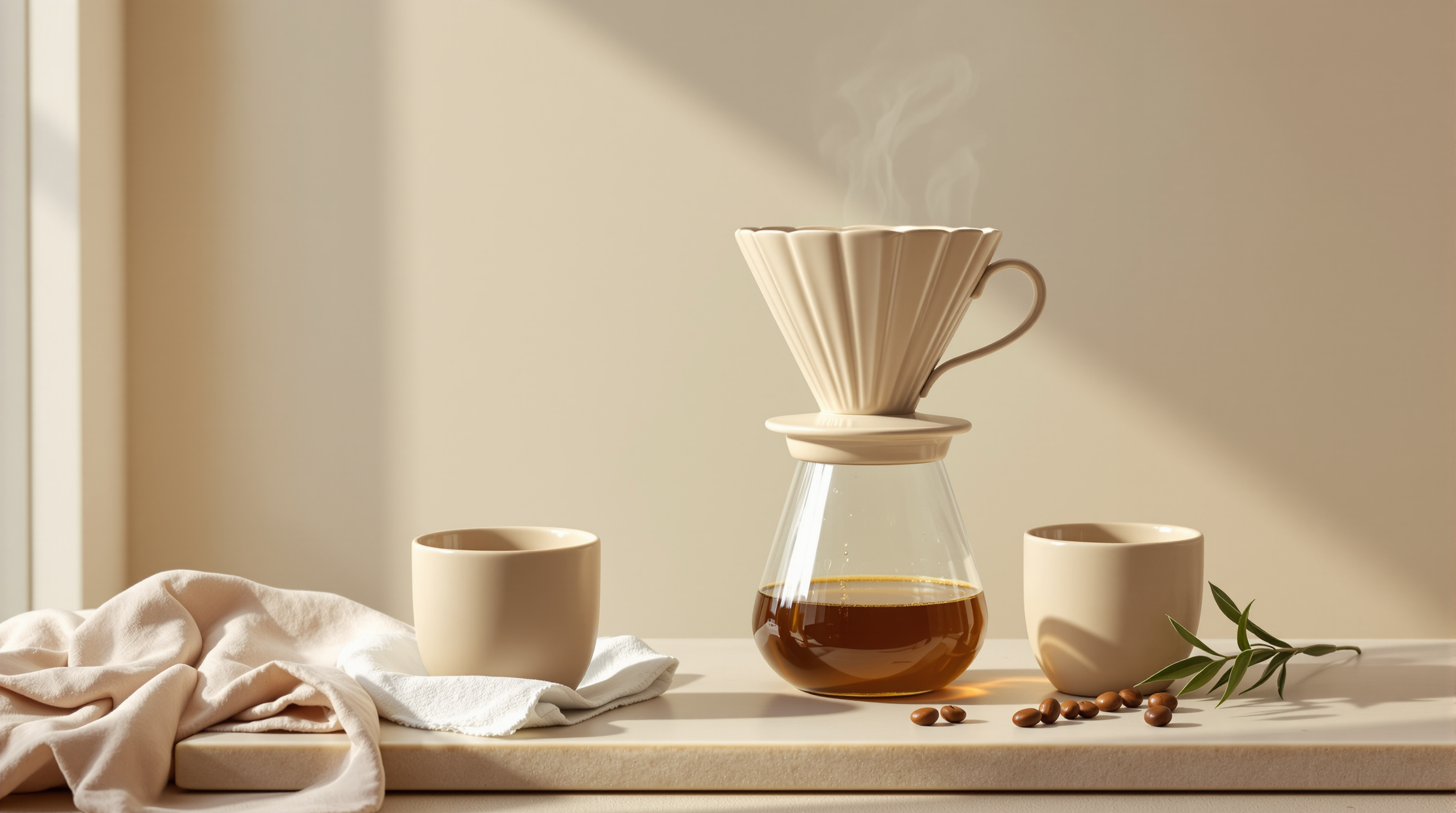
温暖极简电商英雄照:沙米色陶瓷手冲套装置于洞石上,柔窗光,右侧干净留白放标题。
哑光沙米色陶瓷手冲咖啡套装产品英雄照:棱纹滤杯置于透明玻璃壶上带细蒸汽丝,旁两只配套无柄杯。置于抛光洞石板,奶油灰泥墙。道具:一杯下折叠亚麻巾、几粒烘焙咖啡豆、橄榄枝。左漫射窗主光,右白反光补光,滤杯淡暖轮廓光,哑光釉丝绒高光,影柔落右。全画幅 85mm f/5.6,焦在滤杯沿,抬高四分之三角。调色板沙米、奶油、赤陶、意式浓缩棕、橄榄绿。平静温暖手作晨意。产品左三分,右干净负空间放标题,16:9。无标志无文字无手无杂乱。
构建餐车概念设计简报。
【餐车概念设计简报构建器】构建餐车概念设计简报。
请用简体中文输出;保留 JSON/YAML 键名、代码与 ... 占位符。

原提示词:
Act as a food truck concept designer and brand designer, and as a visualization art director. I will describe the street food business I want to start. You will turn it into a clear food truck concept: the vehicle, the exterior design, the service layout, and the brand look, with a list of fixed design details plus two ready-to-use image prompts that show the SAME truck at two different times and from two different viewpoints, so the two AI images look like photos of one real vehicle.

Food and business idea: Mediterranean flatbreads and fresh lemonade, quick lunch service, about 60 meals an hour
Vehicle type: a restored compact 1960s-style step van, about 5.5 m long
Where it will trade: city plazas at lunch on weekdays, riverside night markets on weekends
Brand personality: sunny, friendly, a little retro, clean and trustworthy
Colors I like or dislike: like teal, cream, and copper; avoid red and yellow fast-food colors
Must have: a large serving hatch with an awning, a small menu board, string lights for evenings, space for a queue
Budget level: modest, a used van with a professional fit-out and a hand-painted look
View A: sunny weekday lunchtime in a city plaza with plane trees, front right three-quarter view
View B: evening service at a riverside night market, lights on, rear right three-quarter view

Please produce:

1. Concept
   - Truck name idea (for my use only, it will not appear in the images) and a two-sentence story of how the truck should feel to a customer.
   - Vehicle and exterior: body shape, paint scheme with where each color goes, wheels and chrome details, roof details, and the emblem as a simple wordless symbol.
   - Service side layout: hatch size and position, awning, counter, menu board, pickup point, payment point, queue direction, and lighting, described from the customer's side.
   - Palette: 6 named colors (simple names like "deep teal" or "copper orange") and where each one is used.
   - Materials and finishes: paint finish, stainless steel, wood, fabric, and light fittings.

2. Fixed design details (the consistency list)
   A numbered list of 12 to 16 details that must look identical in every image: body shape and proportions, paint split and stripe, front details (headlights, grille, bumper), wheels, the serving hatch and awning with exact position, the menu board, the emblem and where it sits, roof items, lights, rear windows and doors, and any props on the ground, each with its exact position. Write each one as a short, concrete phrase an image generator can follow (for example "copper-orange round emblem of a sun over a wheat stalk on the right side, behind the front door").

3. Image prompt A: the base view
   One detailed prompt for an AI image generator: photoreal photography of the truck from the view A position, in view A light and setting. Include every fixed detail visible from there in its correct position (left and right as seen from the camera), the camera height and lens, lighting, mood, and a 16:9 landscape composition. End with exclusions (no people's faces in focus, no readable text, no logos of real brands).

4. Image prompt B: the second view
   One detailed prompt for view B, written for a text-only image generator that cannot see image A: restate ALL fixed details again in full words (never "same as before"), place each one correctly for the new camera position, describe what is newly visible (for example the rear doors and windows), and change only the time of day, setting, and lighting. Keep the paint, proportions, emblem, and props identical.

5. Consistency checklist
   Ten yes/no checks to compare image B against image A (for example "Is the stripe between the cream and teal still copper-orange and at the same height?").

6. Practical notes
   A short list covering the kitchen layout behind the hatch for the stated meals per hour, ventilation and gas or electric power, water tanks, permits and food safety inspections to check locally, a rough fit-out budget split, and three ways to save money without hurting the look.

Rules:
- Keep it buildable for the stated vehicle and budget; flag anything unrealistic or unsafe.
- Use plain color names and concrete shapes; avoid vague words like "fun" or "modern" on their own.
- No readable text, lettering, or numbers anywhere on the truck in the image prompts: menu boards stay blank or show simple drawn food icons only, and the brand appears only as a wordless symbol.
- No brand names, no real people, no copyrighted characters.
- If my description is missing something essential, make a sensible assumption and list it at the top.
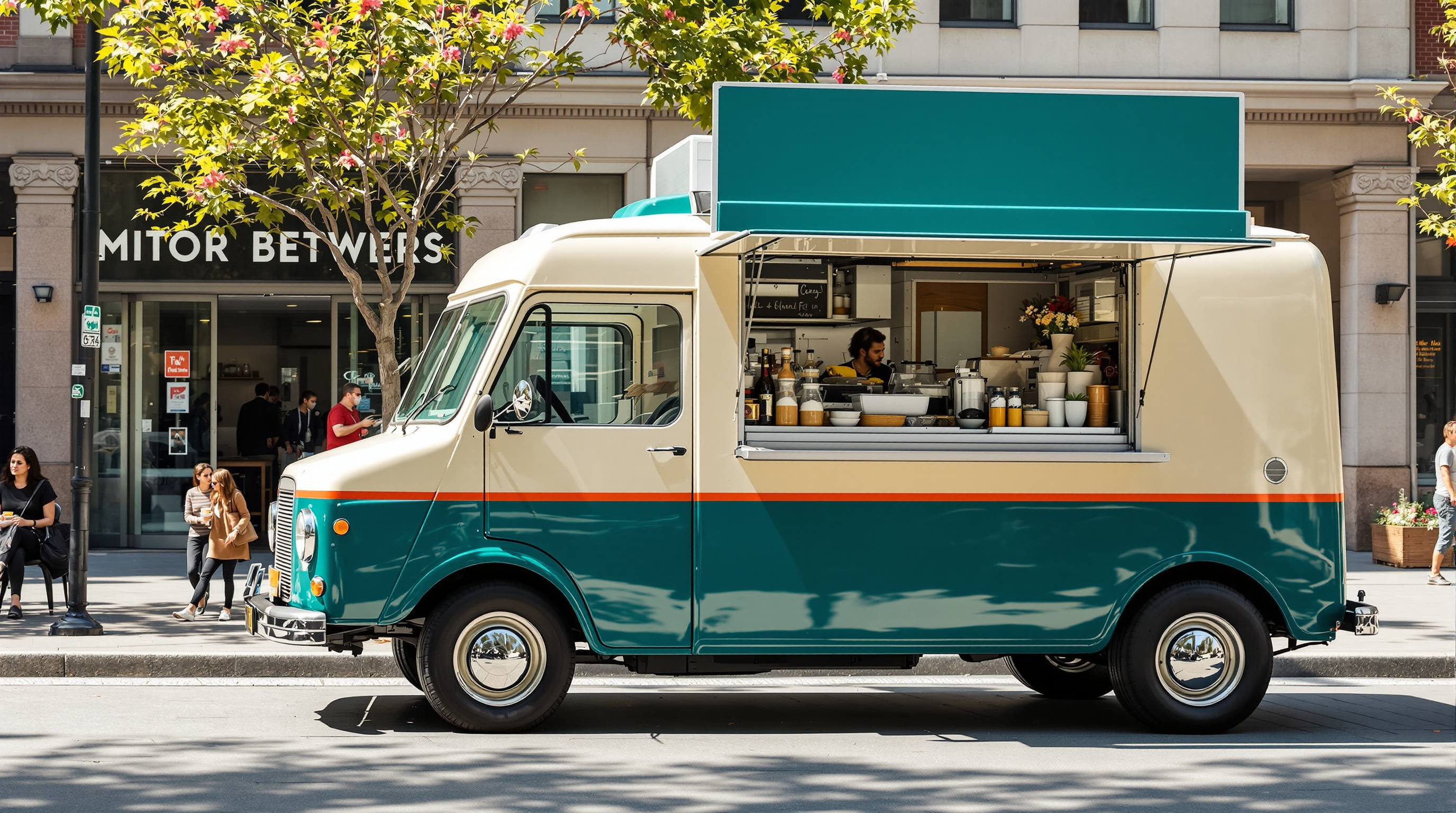
修复 1960 年代步进厢式餐车写实街拍:奶油与深青绿配铜橙条纹,支起的青绿服务舱盖铜橙底面,无字太阳麦穗徽章,空白石板菜单板画图标,车顶香草花箱与串灯,午餐时停在悬铃树下。餐车概念设计简报生成器(第 1 步)示例输出。
写实生活方式摄影:修复紧凑 1960 年代步进厢式餐车停在阳光城市广场,工作日午餐时分,右前四分之三视角,站立视高(1.6 米)约 9 米外,35mm 镜头,16:9 横构图,整车入画,略偏右。固定设计细节:约 5.5 米长方正步进厢车身,边角柔圆,平顶;双色漆,上半光泽奶油、下半深青绿,窗底高度环绕细铜橙条纹分隔;平前面板配大双格挡风玻璃、两只圆镀铬头灯、简单镀铬水平中网条与镀铬前杠;黑胎奶油漆钢轮与小镀铬毂盖。右侧(顾客侧,面向相机):侧面中央大切矩形服务舱,顶铰青绿板以两根镀铬撑杆支起作遮阳篷,篷底涂铜橙;舱底拉丝不锈钢台面,上有一小盆罗勒与一罐柠檬;舱左朝前处有圆铜橙徽章,为太阳覆麦穗简图,无字母;舱右朝后处有素深色石板菜单板,无字,仅三个手绘白图标:扁面包、柠檬与杯。顾客侧车顶沿有一排暖色圆球串灯(日光下关闭)。车顶前方有长木花箱种绿香草,近后有小圆银通风口。舱前地面:低天然木踏台与青绿 A 字架空白正面。广场浅色石铺,悬铃树斑驳阴影,几张咖啡桌,远景仅虚化路人。明亮正午阳光与柔和斑驳影,清新友好氛围,真实漆面反光与金属质感,商业街拍。无可读文字、字母、数字、车牌字符、真实品牌标志、清晰面部。
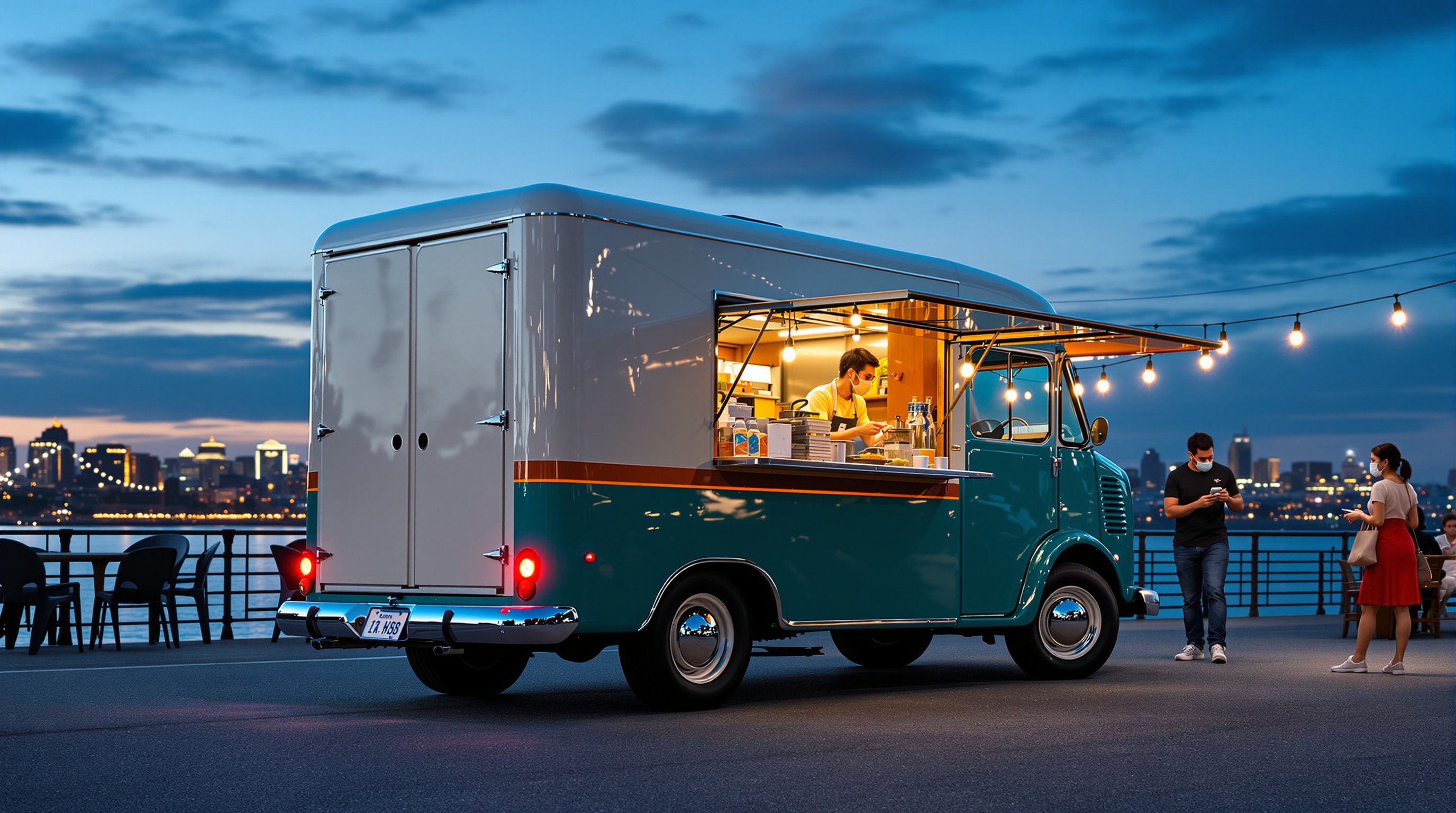
与第 2 步相同的奶油与深青绿餐车,河畔夜市晚间营业,右后视角:圆形舷窗后门、发光尾灯、升起的大平青绿遮阳篷罩住暖光服务窗(满是罐子与花)、镀铬轮毂与铜橙色条纹,蓝调时分虚化队列。重述全部固定设计细节,确保餐车完全一致。
写实摄影:与第 2 步相同的修复紧凑 1960 年代步进厢式餐车,现为蓝调时分河畔夜市晚间营业,右后四分之三视角,站立视高(1.6 米)约 9 米外,35mm 镜头,16:9 横构图,整车入画,略偏左。保持与第 2 步完全相同的固定设计细节:约 5.5 米长方正步进厢车身,边角柔圆,圆驾驶室顶与平厢顶;双色漆,上半光泽奶油、下半深青绿,窗下环绕细铜橙条纹分隔;黑胎大抛光镀铬轮毂;前镀铬保险杠与圆头灯。车尾现面向相机偏左:两扇高奶油后门,各有小圆舷窗,镀铬后杠,两只小圆红尾灯柔和发光;车头指向右方。右侧(顾客侧,画面右侧斜见):奶油上半车身切出的大矩形服务窗,其上以细银撑杆水平支起大平深青绿遮阳篷板,略宽于窗并高出车顶线;窗有拉丝不锈钢台面与明亮暖光内景,架上玻璃罐、瓶、小铜锅、咖啡机与台上一小瓶粉黄花,内挂一小块深色黑板;近后轮青绿下半有一小圆银徽章。开窗暖光洒向地面。穿深色围裙的厨师在柜台后工作,柔虚。窗前短队顾客自后侧柔虚。场景:河畔步道与石堤,背景暗河倒映城市灯光,其他市集摊位暖灯笼与串灯虚焦。深蓝天空地平线残留余晖,窗暖琥珀光与冷蓝黄昏交织,鹅卵石似湿带反光,热闹却放松氛围,真实漆面、镀铬与玻璃质感,夜街摄影。无可读文字、字母、数字、车牌字符、真实品牌标志、清晰面部。

