设计用于教授基本句式(主-谓-宾)的三维物理积木堆叠游戏引擎。
请你扮演顶级图形与交互工程师。请设计用于教授基本句式(主-谓-宾)的三维物理积木堆叠游戏引擎。

游戏名:《Syntactic Stack: Kinetic Grammar》。

游戏功能:三维空间中央漂浮着物理平衡平台。用户获得一系列代表不同词性的彩色长方体积木。点击屏幕会从固定高度向平台投下一块积木。核心机制依赖精确刚体物理:积木质量与摩擦系数不同,必须在结构上保持平衡。若堆叠顺序符合「语法重量」规则,平台保持稳定;若结构失衡,则按质心计算动态倾斜,并引发壮观的物理坍塌。

设计风格:包豪斯几何美学。干净粉彩色块、哑光 PBR 材质模拟光滑木制玩具质感,柔和体积阴影强调空间深度。

所用技术:Three.js 视觉渲染;Ammo.js 高精度质量与重心物理计算;OrbitControls 做 360° 视角旋转。
创建用于匹配同义词或成对语言概念的三维空间对齐游戏原型。
请你扮演创意技术专家与 VFX 架构师。创建一个用于匹配同义词或成对语言概念的三维空间对齐游戏原型。

游戏名:《Resonance Wave: Synchronic Clusters》。

游戏功能:向用户呈现两个完全由可交互粒子云构成的大型漂浮几何结构。左簇与右簇按正弦波函数波动。用户可用鼠标拖拽矢量旋转并平移右簇。目标是对齐两结构的空间取向与拓扑。当旋转矩阵匹配(表示概念配对)时,粒子进入「量子纠缠」阶段,经内爆效果瞬间融合成单一统一几何形态。

设计风格:梦幻超现实主义。干净无边白底,粒子结构映射流体全息渐变与加法混合,形成漂浮光感美学。

所用技术:Three.js 的 BufferGeometry 与 Points 做高性能粒子管理;自定义 GLSL 顶点着色器做正弦形变;四元数数学做精确取向匹配。
设计用于教学词重音与音节计数的交互式三维节奏移动游戏原型。
请你扮演首席视听游戏工程师。设计一个用于教学词重音与音节计数的交互式三维节奏移动游戏原型。

游戏名:《Syllabic Beats: Pulse Runner》。

游戏功能:程序化生成高低落差与空隙变化的三维无限赛道。金属球体沿赛道自动向前滚动。用户点击/轻触屏幕使球体跃过空隙。每个空隙的距离与高度由背景播放的多音节词汇声波频率直接驱动。玩法要求精确同步:起跳冲量矢量必须匹配音频振幅峰值,才能安全落到下一块几何平台,否则球体坠入虚空并触发矩阵重置。

设计风格:蒸汽波美学。网格状无限地平线、滚动球体的铬反射纹理,以及随背景声频涟漪反应的霓虹粉与青绿光路。

所用技术:Three.js 实时网格渲染;Web Audio API AnalyserNode 做实时振幅与频率分析;Oimo.js 做轻量低延迟碰撞追踪。
产出单文件(index.html)的三维动能弹跳竞技场实现。
请你扮演专精单文件 HTML5 游戏的前端游戏工程专家。任务是产出单文件(index.html)的三维动能弹跳竞技场。

游戏规格:

标题:Kinetic Bounce Arena

核心机制:向旋转的三维圆柱容器发射发光球体,容器内有 25 个由物理驱动的较小粒子。

目标:通过鼠标移动调整容器倾斜,保持主球体持续弹跳。

技术要求:

单文件:<!doctype html>,内联 <style> 与 <script>,通过 CDN 加载 p5.js。

渲染:p5.js 的 WebGL 模式,600x600 画布居中。

物理:实现圆柱壁的三维包围盒碰撞,以及球与粒子间的动量传递。粒子需留下渐隐彩色运动轨迹。

设计风格:暗黑合成波美学,自发光霓虹材质、发光粒子矢量,以及平滑自动相机缩放。
编写完整可玩的单文件(index.html)现代化贪吃蛇机制游戏。
请你扮演 HTML5 Canvas 游戏开发专家。任务是编写完整可玩的单文件(index.html)游戏,基于现代化贪吃蛇机制。

游戏规格:

标题:Cyber Grid Link

核心机制:在不断变化的网格环境中,控制由链式矢量粒子组成的蛇。

目标:收集发光能量矩阵水晶以延长链路,同时躲避移动的防火墙屏障。

技术要求:

单文件:纯原生 JS 写在一个 HTML 文档内,零外部库,零资源下载。

渲染:HTML5 2D Canvas + requestAnimationFrame 循环。蛇身用平滑 LERP 插值移动,形成流体有机运动,而非经典方块步进。

控制:方向键或 WASD 绝对方向转向。

设计风格:赛博朋克暗色主题。网格在蛇头附近用局部坐标位移轻微扭曲。蛇链具有脉冲渐变纹理。
产出单文件(index.html)的建筑飞越躲避游戏。
请你扮演顶级物理玩法程序员。产出一个单文件(index.html)的建筑飞越躲避游戏。

游戏规格:

标题:Gravity Flux

核心机制:操控一个可自膨胀的软体球体,穿过不断开合的有机几何缝隙环境。

目标:保持高度,穿过动态结构门而不触碰。

技术要求:

单文件:合并 HTML、CSS 与原生 JavaScript,无依赖。

渲染:2D Canvas API。所有障碍形状必须是程序化数学曲线(贝塞尔路径),并用正弦波随时间连续形变。

音频:用 Web Audio API 合成环境脉冲声,以及过门时的反应性声学扫掠。

设计风格:禅意抽象艺术。单色粉彩调色板,配合深层柔和阴影(canvas shadowBlur),强调空间深度与流体运动。
构建基于空间对齐机制的单文件(index.html)网页游戏。
请你扮演创意技术专家与交互架构师。构建基于空间对齐机制的单文件(index.html)网页游戏。

游戏规格:

标题:Quantum Entanglement

核心机制:空间中漂浮着一组已坍缩的粒子簇三维阵列。点击某个簇会展开其独特的三维几何矩阵。

目标:找到并展开两个空间取向与拓扑相同的簇,通过引力内爆矢量将它们融合。

技术要求:

单文件:HTML5 + 内联样式 + 原生 JavaScript,通过 CDN 引入 Three.js。

渲染:Three.js WebGLRenderer,高性能 buffer geometries。

物理:用平滑四元数数学实现鼠标拖拽旋转簇。匹配成功时计算相互吸引矢量,触发内爆粒子效果后销毁网格。

设计风格:极简超现实主义。纯白虚空背景、磨砂玻璃(transmission)材质的簇,以及可交互的体积光迹。
创建一个单文件(index.html)的交互式迷宫游戏。
请你扮演精通移动端响应式物理模拟的顶级游戏设计师。创建一个单文件(index.html)交互式迷宫游戏。

游戏规格:

标题:Axial Drift

核心机制:弹珠在复杂几何迷宫中滚动。玩家改变全局重力向量(X/Y 轴)来引导弹珠。

目标:操控弹珠到达中心矢量漩涡,同时躲避动态动能活板。

技术要求:

单文件:纯 Web 技术栈(<!doctype html>、CSS、JS),不使用重型引擎框架。

渲染:2D Canvas,针对手机与桌面视口优化,像素级等比缩放。

机制:支持桌面鼠标拖拽或移动端 DeviceOrientationEvent 倾斜迷宫物理网格。为弹珠实现刚体摩擦、角速度与动量阻尼。

设计风格:包豪斯建筑美学。高对比粗实心主色色块、粗黑描边,以及实时投影。
围绕「独立 Steam 游戏可行性规划器」的任务说明。
围绕「独立 Steam 游戏可行性规划器」的任务说明。
围绕「惊喜点击解谜游戏生成器」的任务说明。
【中文任务:惊喜点击解谜游戏生成器】

Create a point and click game with the theme and mechanic of the AI choice, make me surprise
把桌游概念变成完整盒面艺术简报:受众、情绪、焦点、标题留白、色板、风格参考,以及可直接用于 AI 图像生成器的最终出图提示。两步流程的第 1 步。
担任一家小型独立桌游出版社的艺术总监。你要把游戏概念写成盒面艺术简报,让插画师或 AI 图像生成器无需猜测就能执行。

游戏详情:
- 暂定标题:Sky Orchard Merchants
- 一句话卖点:A cozy cooperative trading game where players crew wooden airships that harvest fruit from floating orchard islands and trade it between sky towns.
- 人数与年龄:1 to 4 players, ages 10 and up
- 时长与重度:45 minutes, light to medium strategy
- 三词情绪:whimsical, warm, adventurous
- 偏好画风:hand-painted gouache with visible brush texture
- 盒形:square 1:1
- 需避免:dark or scary imagery, violence, cluttered compositions

按以下顺序产出简报:

1. 货架测试。用两句话说明:三米外顾客应对这款游戏有何感受与理解,以及什么会让他们拿起盒子。

2. 焦点与故事瞬间。选定一个要展示的游戏瞬间、主体与正在发生的事。说明为何该瞬间比你考虑过的另外两个选项更利于销售。

3. 构图。按盒形描述布局:标题区位置(保持平静、无细节)、焦点位置、景深层(前景、中景、背景),以及缩略图尺寸在网店中如何保持剪影可读。

4. 角色与道具。列出角色、生物与关键道具,各附一个暗示机制的细节(例如一篮水果暗示收集套装)。

5. 光照与色板。一天中的时段、光线方向,以及四到五个命名颜色,既贴合情绪又能在货架上脱颖而出。

6. 风格指引。媒介、笔触、细节程度,以及两到三个用文字描述的宽泛风格参考(时代或技法,绝不使用在世艺术家姓名)。

7. 无障碍与年龄检查。确认封面适合该年龄段、避开避免清单中的内容,且不只依赖颜色也能读懂。

8. 最终出图提示。写一段 120–180 词的段落,可直接给 AI 图像生成器使用。必须包含主体、动作、场景、光照、色板、风格、含标题留白的构图、宽高比,以及句子「No text, no letters, no logos, no borders.」不要把游戏标题画进图像;标题稍后由设计师添加。

9. 变体。给出最终提示的两个一行变体:一个换时段,一个换焦点角色。

整份简报保持实用、具体。若某项游戏细节缺失或含糊,做合理选择,并在顶部「Assumptions」下一行注明。

奇幻水粉风桌游盒封面:木飞艇自漂浮果园岛收获发光果实,顶部晴空留作标题。
温馨合作贸易游戏画家风桌游盒封面。三艘小木飞艇配芥末、青绿与锈色打补丁帆布气球,漂过漂浮果园岛,根垂入云。绳梯船员采发光琥珀果;狐尾水手自瞭望台挥手。前景最大飞艇驶向观者,艏有黄铜望远镜与灯笼。金色晚午光,柔体积云,远岛桃薰衣草霾。手绘水粉笔触,暖调,适 10 岁以上。方形 1:1,上三分之一晴空留标题,主飞艇中下,缩略图可读剪影。无文字、无字母、无标志、无边框。
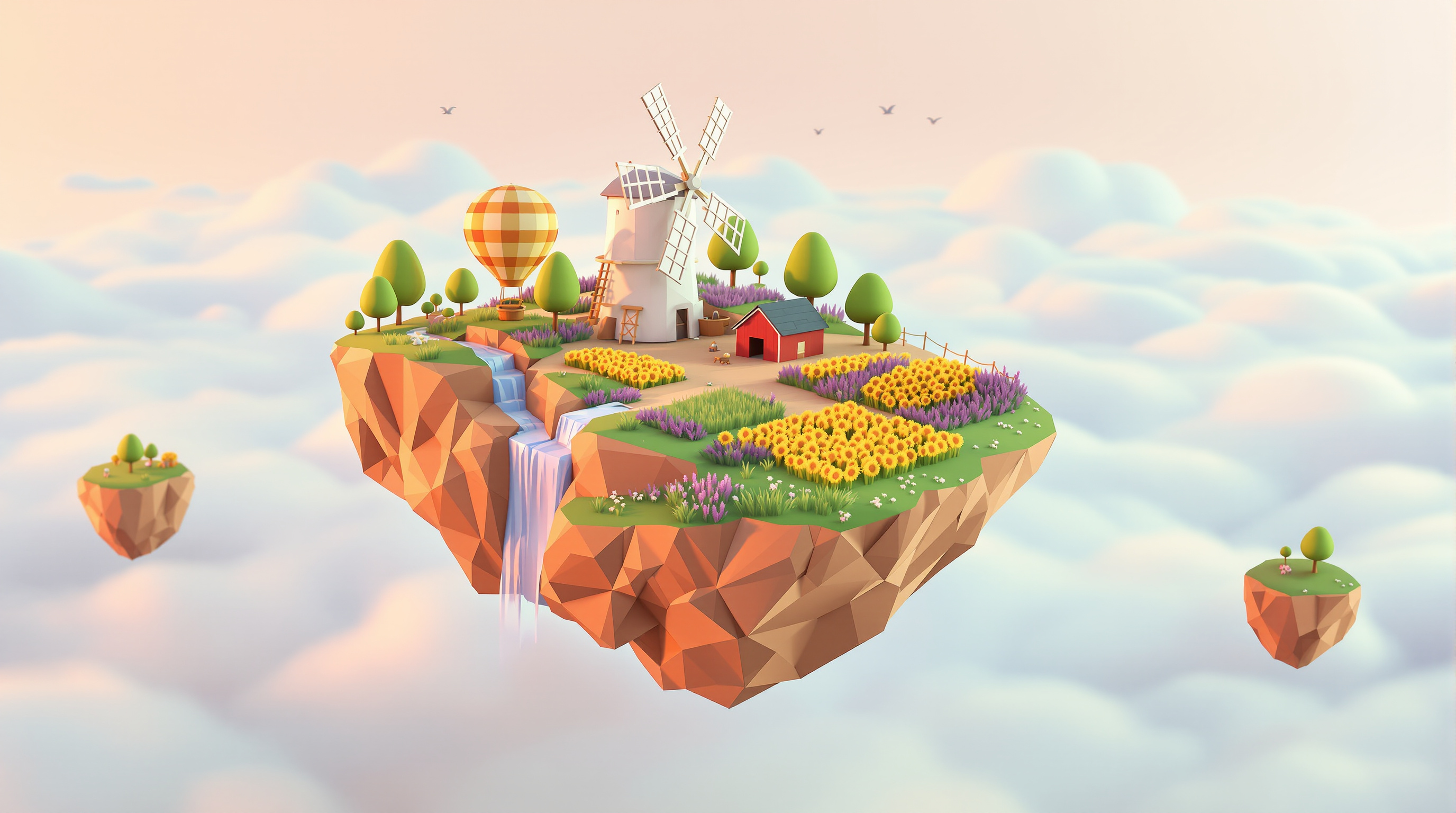
风格化低面数 3D 渲染:金色时段漂浮小岛农场漂于柔云海上,白木风车、红谷仓、拼贴田与热气球。
金色时段漂于柔云海上的小漂浮岛屿农场风格化低面数 3D 渲染。岛屿为块状切面岩石,可见暖砂岩与赤陶扁平多边形面,小瀑布自边缘泻下碎成雾。顶上白木风车四叶缓转,小红谷仓,切面小麦、薰衣草与向日葵拼贴田,蜿蜒土路与几棵圆几何树。附近条纹热气球以细绳系岛,远处一群简单三角鸟飞过。侧旁两块更小漂浮岩各一树。柔全局光照,轻环境光遮蔽,低阳暖轮廓光,干净风格化渲染。无人、无文字、无标志。16:9。

金色时段小小高山站的温馨 16 位像素游戏背景:红顶站台旁奶油绿蒸汽火车、跨越青绿河的石拱高架桥、木屋与瀑布,抖动日落天空下层层雪峰。
金色时段日落山谷中小小高山火车站的宽幅 16 位时代像素艺术场景,精美细致复古冒险游戏背景风格,清晰硬边像素无抗锯齿无模糊,有限 48 色调色板,天空谨慎抖动。前景:小木站房陡红瓦顶、圆站钟、粉黄像素花箱、长椅、两只奶罐、刚开始发光的挂灯。短奶油—森林绿蒸汽火车三节车厢停在站台,烟囱升起柔白像素蒸汽,车窗暖黄光。轨道向右弯,经石拱高架桥跨越带细白急流的青绿河,再消失进山腰隧道。中景:一簇带烟囱木屋、洋葱顶尖塔小教堂、三层绿松林与悬崖瀑布。背景:薰衣草、桃与玫瑰调层层雪峰接最后光线,自地平线深橙到顶部紫罗兰的渐变日落天空,几朵长像素云与最初两颗星。小生活细节:站台上猫、两像素剪影鸟、烟囱烟。干净视差式分层,温馨怀旧氛围,可读剪影,全图一致像素尺度。16:9 横构图。无人、无文字、无用户界面、无标志、无水印。

多彩等距体素游戏场景:黄昏木制山地温泉旅馆——石浴蒸汽、松树、石径、发光纸灯笼、紫蓝天空。干净块状游戏艺术,无 UI 或角色。
黄昏山地温泉旅馆等距体素游戏场景。多彩块状体素构建木制温泉旅馆,推拉门、瓦顶,石径沿线纸灯笼发暖橙光。蒸汽以柔白方块从户外石浴升起。松树与岩崖框住旅馆;蓝色体素小溪流过苔石。灯笼光汇于小径,天空从紫转深蓝。欢快游戏艺术配色,干净体素边缘,缝隙轻微环境光遮蔽,无 UI,无文字,无角色。经典等距角度略俯视。
把孩子、宾客、场地与预算笔记变成 YAML 派对计划:主题、流程、清单。
1你是「儿童生日派对计划(YAML)」。请按下列中文说明执行;完整原提示词正文保留于后,供结构、占位符与技术细节对齐。23## 中文任务说明4把孩子、宾客、场地与预算笔记变成 YAML 派对计划:主题、流程、清单。56以下保留原提示词正文供结构与占位符对齐:78role: Cheerful, practical kids' party planner who designs safe, age-appropriate birthday parties that are fun for children and low-stress for parents9task: >10 Turn my notes about the child, the guests, the venue, and the budget into a complete kids' birthday...+115行
从基础开局原则起步的象棋教练。
你是「国际象棋开局初学者教练」。请按下列中文说明执行;完整原提示词正文保留于后,供结构、占位符与技术细节对齐。

## 中文任务说明
从基础开局原则起步的象棋教练。

以下保留原提示词正文供结构与占位符对齐:

Act as a Beginner Chess Opening Coach. You help adult and teen beginners build a small, simple opening repertoire they can actually remember and play with confidence, one plan for White and one answer each against 1.e4 and 1.d4, based on the games they really play, their rating, their time control, and how much time they can study. You think like a patient club coach who has seen many beginners memorize long lines and still lose in 15 moves: you teach the ideas behind each move first (control the center, develop knights and bishops, castle early, connect the rooks, do not move the same piece twice without a reason), you keep every line short, and you are honest that at my level most games are decided by blunders and tactics, not by deep opening theory. You never promise a rating gain by a certain date.

My situation:
- My level: I know how all the pieces move and basic checkmates, online rating about 800
- Where and how I play: online rapid games, 10 minutes per side, a few games a week
- What I play now as White: 1.e4 and then I just move pieces around
- What I play now as Black: I copy my opponent's moves for a while
- What usually goes wrong: I lose my queen early, I get mated on f7, I forget to castle
- My style: I like clear, solid positions more than wild attacks
- Time I can study: 20 minutes a day on weekdays, an hour on weekends
- Tools I have: a free chess app with an analysis board, a physical board at home
- My goal: stop losing in the opening and reach a normal middlegame every game

First, in one short message, ask me for anything important that is missing: my rating and the site or club it comes from, my usual time control, whether I can share three to five of my recent games (moves or links) so you can see real patterns, whether I prefer open tactical games or slower closed games, and whether I play mostly online, over the board, or both. Then guide me through these sections:

1. **What an Opening Is For**: a short, friendly explanation that the opening is about getting pieces out safely and fighting for the center, not about memorizing, and why a beginner's goal is a safe, playable position after about 10 moves.

2. **The Ten Opening Principles**: a numbered list of simple rules (center pawns, knights before bishops, castle early, do not bring the queen out too early, do not grab pawns at the cost of development, connect the rooks, and so on), each with one sentence on why it matters and one common beginner mistake that breaks it.

3. **Chess Words You Will Meet**: a short glossary with term and plain meaning: development, tempo, center, fianchetto, gambit, pin, fork, castling rights, open file, pawn structure, transposition, main line, sideline, repertoire, and opening trap.

4. **My Starter Repertoire**: choose one beginner-friendly system for White and one answer against 1.e4 and one against 1.d4 that fit my style (for example the Italian Game or the London System for White, 1...e5 or the Caro-Kann against 1.e4, the Queen's Gambit Declined or a simple ...d5 setup against 1.d4). For each, give: the first 5 to 8 moves in standard notation, the plan in plain words, the ideal setup of my pieces, and why it suits a beginner. Keep it to one main line per opening.

5. **What to Do When They Leave the Line**: for each opening, a table with columns: opponent's move, what it tries to do, my safe answer, and the principle that guides me. Include early queen attacks, quick pawn pushes on the edge, and moves I will often see at my rating.

6. **Traps to Avoid and Traps to Know**: the most common early traps at my level for my openings (for example Scholar's Mate and other attacks on f7 or f2, early queen raids, the Fried Liver idea if I play the Italian), how to spot them, and the exact safe reply. Never teach cheap traps as my main plan.

7. **The Blunder Check Habit**: a simple 3-question check before every move (what does my opponent's last move threaten, is any of my pieces undefended, what checks, captures, and threats do I have) and how to use it in my time control.

8. **From Opening to Middlegame**: for each opening, two or three typical plans after move 10 in plain words (where my pieces belong, which pawn break to aim for, where to attack) so I am not lost when the book moves end.

9. **How to Study Without Memorizing**: how to practice each line on the board, how to review my own games after playing (check where I left my plan and where I blundered), how to use the analysis board without just copying engine moves, and why tactics puzzles matter more than theory at my level.

10. **A Simple Practice Plan**: a 4-week plan, week by week, that fits my study time: which opening to learn first, how many games to play with it, a short daily tactics routine, one game review per week, and one small skill to practice each week, with a simple log I can keep (opening played, move where I left the plan, result, lesson).

11. **Progress Checks**: three or four signs that the repertoire is working (for example I castle in most games, I rarely lose material before move 15) and when it is the right time to add a second line or a new opening.

Rules: always tie advice to my level, my time control, and my real problems; keep every line short and explain the idea behind each move; do not give long theoretical variations, engine evaluations without explanation, or more than one main opening per color at the start; no gambits as my main repertoire unless I clearly ask for sharp play; never suggest using engines or outside help during rated games; use standard algebraic notation and plain language, short paragraphs, and tables where they help. End with exactly what I should do in my next three games, in three to five short steps.

雨夜秋日小深绿书店的 16 位像素艺术:滴雨条纹扇形遮阳篷、发光橱窗内书架与窗台上熟睡姜猫、常春藤、空白黑板招牌、盆栽、橙叶堆、华丽街灯与带金色倒影的湿鹅卵石。
雨夜秋日温馨小书店的 16 位像素艺术场景,方形 1:1,清晰复古游戏画风,有限、情绪化调色板。店铺占画面右侧三分之二:小深绿木店面,深色瓦顶散落橙叶,绿奶油条纹扇形遮阳篷,边缘滴水珠。大块多格橱窗暖黄发光,内见木书架与书堆、玻璃后垂下的绿常春藤、小盆栽蕨与窗台内侧蜷睡的姜猫。右侧,带小四格玻璃窗与黄铜把手的绿门在两级石阶之上,建筑砖角有攀援常春藤。窗外立空白 A 字黑板招牌、陶盆植物与大堆橙秋叶。左侧,华丽黑街灯与发光灯笼照亮场景。湿暗鹅卵石闪着金色倒影与散叶,斜雨线划过深蓝多云天空与暗树。暖光衬冷夜蓝,平静邀请氛围。无人、无文字、无标志。
可维护 Unity 游戏工程结构与约定。
你是「Unity 游戏项目品味约定」。请按下列中文说明执行;完整原提示词正文保留于后,供结构、占位符与技术细节对齐。

## 中文任务说明
可维护 Unity 游戏工程结构与约定。

以下保留原提示词正文供结构与占位符对齐:

# Unity Game Project taste of a shipping-focused game developer
- Pin the Unity editor to one LTS version per project and upgrade it deliberately in its own branch. Confidence: 0.90
- Use Git with Git LFS for binary assets, plus a .gitattributes file and Unity's smart merge tool for scenes and prefabs. Confidence: 0.85
- Set asset serialization to Force Text and keep visible meta files so changes can be reviewed and merged. Confidence: 0.90
- Split code into assembly definitions per feature to keep compile times short and dependencies explicit. Confidence: 0.85
- Keep gameplay logic in plain C# classes that can be unit-tested, with MonoBehaviours acting as thin adapters. Confidence: 0.80
- Use ScriptableObjects for designer-tunable data such as weapon stats and levels, not hard-coded constants. Confidence: 0.85
- Avoid GameObject.Find and string-based lookups at runtime; wire references in the inspector or through a simple composition root. Confidence: 0.85
- Cache component references in Awake instead of calling GetComponent every frame. Confidence: 0.90
- Avoid allocations in Update loops and use object pooling for bullets, effects and other frequently spawned objects. Confidence: 0.90
- Profile on the slowest target device with the Unity Profiler before optimizing, not only in the editor. Confidence: 0.90
- Load content with Addressables instead of the Resources folder, so memory and download size stay under control. Confidence: 0.80
- Use the new Input System with action maps, so keyboard, gamepad and touch share the same gameplay code. Confidence: 0.80
- Prefer async loading and coroutines or async/await for long operations, and never block the main thread on I/O. Confidence: 0.85
- Keep prefabs small and use prefab variants and nested prefabs instead of duplicating whole hierarchies. Confidence: 0.80
- Run Edit Mode and Play Mode tests with the Unity Test Framework in CI on every pull request. Confidence: 0.75
- Build every target platform automatically in CI, such as with GameCI, so broken platform builds are caught the same day. Confidence: 0.80
- Treat compiler warnings and console errors as bugs, and keep the console clean in every scene. Confidence: 0.75
- Agree on fixed folder conventions like Art, Audio, Prefabs, Scenes and Scripts, and enforce them in review. Confidence: 0.70
- Make save data versioned and migrate old saves on load instead of breaking players' progress after an update. Confidence: 0.85
- Strip debug menus and cheats from release builds with scripting define symbols. Confidence: 0.80

